




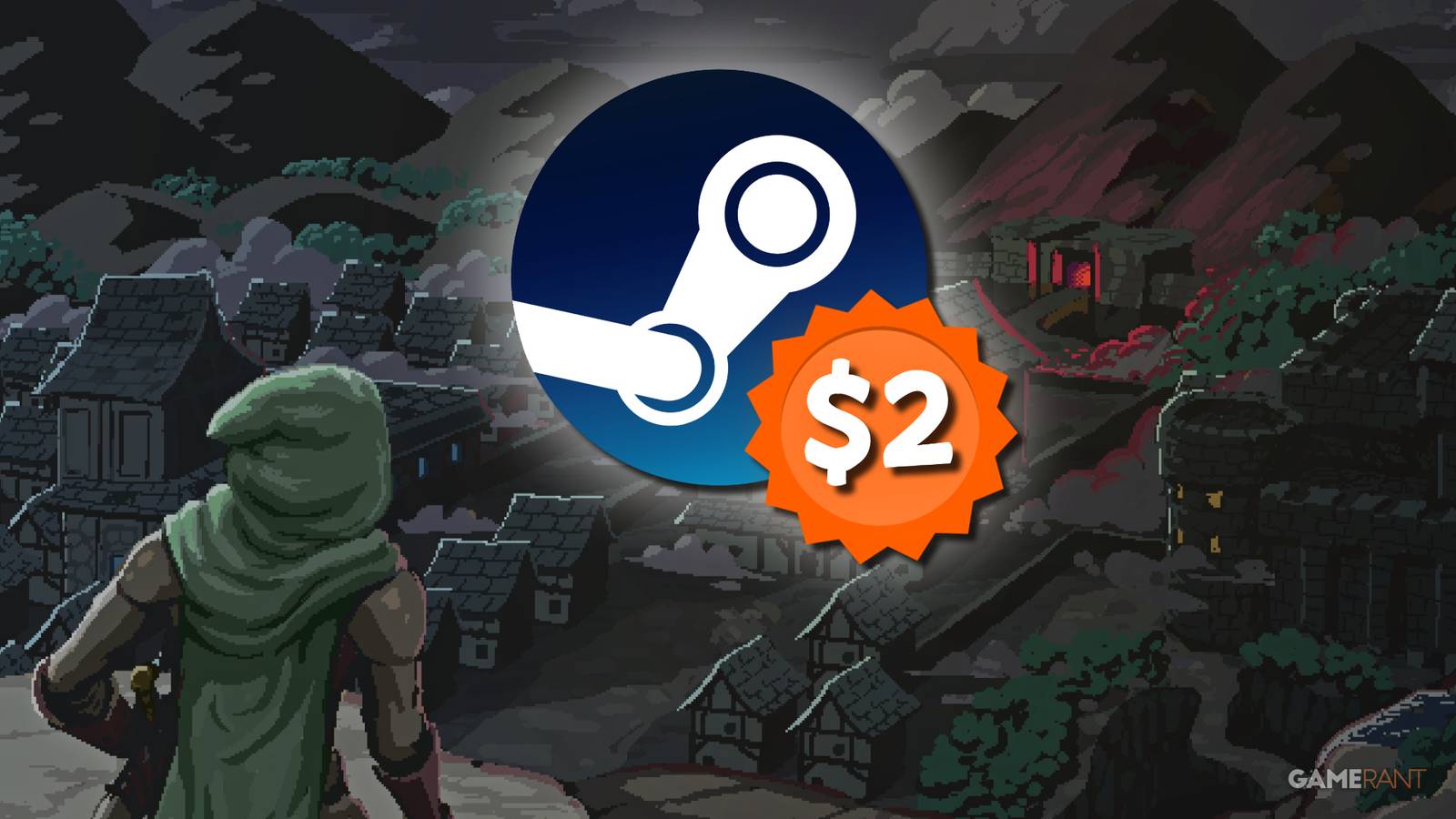
For as long as I can remember, Barony has been loitering on the edges of my Steam store page. It’s one of those games I kept meaning to buy and kept finding reasons not to; the retro, blocky art style did most of the bouncing; it reads as simple, almost disposable, the kind of thing you scroll past on the way to something shinier. That said, I finally ran out of excuses when the Steam Summer Sale knocked Barony down to $2, and though I’m certainly late to the party, what a party it is.
Underneath that pixelated exterior was not the cute little dungeon crawler the screenshots promised. Barony is an expansive, punishing, systems-obsessed roguelike that honors the most archaic corners of the RPG genre while still feeling good to play in 2026. For $2, it might be the most game-per-cent I have ever bought, and I own Minecraft.
12 Best Free Co-Op Games You Can Play On Steam
You don’t need to spend cash to game with your friends. Check out the very best free co-op games on Steam.
What $2 Actually Gets You With Barony
For context, Barony is an indie first-person roguelike RPG from Turning Wheel LLC, a tiny remote studio that launched it back in 2015 and has refused to stop working on it since. It actually crossed a million copies sold this year, and a slow-burn success like that only happens when a game earns a cult following one delve at a time. And from what I can tell, eleven years of updates have turned a rough 2015 release into something far stranger and deeper than its current price tag suggests.
According to the developer Sheridan Rathbun, Barony‘s list of inspirations is quite extensive, ranging from titles like Spelunky to System Shock 2. My personal elevator pitch is a Dungeons and Dragons campaign filtered through the bones of early first-person RPGs — think the dungeon-crawling DNA of TES: Arena or Daggerfall in a modern package, welded to the merciless logic of Rogue and NetHack (the latter being Barony‘s “biggest inspiration” according to Rathbun). In many ways, it is a love letter to an era of design most studios spent the last two decades sanding the edges off of.
The narrative setup hasn’t been particularly relevant to my time with the game, but it is commendably thematic as a piece of pure pulp fantasy: an undead lich named Baron Herx has cursed the town of Hamlet, and you descend into his dungeon to end him. Barony knows what it is, though; the story is a thin excuse to send you somewhere dark and dangerous. Most of what’s fascinating about this game happens in its systems, not its script.
Barony Contains Very Little Hand-Holding and Fewer Apologies
The first thing I noticed playing Barony was that it’s got an eight-part tutorial that covers every element of the game, from the intricacies of spell-slinging to hunger and how to throw rocks; as clunky as that may have seemed at first, it was entirely necessary in retrospect. Regardless of which class you choose, you will die in Barony—a lot—but the game refuses to feel bad about it, so you shouldn’t either. Permadeath is the spine of the whole experience, and the dungeons are procedurally generated, so every run is a fresh set of traps, monsters, and bad decisions waiting to be made; you may starve or eat rotten food, get flattened by a boulder, or lose it all by identifying a cursed potion with your taste buds rather than with a scroll.
That last bit is where the archaic trappings of all those old school RPGs earn their keep, because in much the same way, Barony‘s systems do not flatten themselves to be approachable. Items arrive unidentified, effects stack in ways that will either ruin or rock your afternoon, and part one of the recent Instruments of Destruction update rebuilt the entire magic system around three schools of magic and roughly eighty spells. Whether you are a human sword-and-board Barbarian, an accursed, hungering Vampire, or a duck-loving Myconid Hermit—Barony assumes you are smart enough to figure it all out, which is both a compliment and a threat.
Note: The second part of the Instruments of Destruction update launches later this year, alongside two new biomes, new secret levels, new music, and more.
Co-op, and a Class for Every Kind of Masochist in Barony
In terms of the nitty-gritty, there are 13 classes in the vanilla game that are human-based, 26 that span multiple races when all three DLCs are considered, and they all range from the reassuringly normal to the wildly chaotic. You can roll a standard warrior, wizard, or rogue if you want a softer landing, or you can pick the sexton, the joker, or the arcanist and accept that you have chosen violence. Each one reshapes how a run actually plays, which is the major engine behind the game’s replayability.
Who’s That Character?
Identify the silhouettes before time runs out.
Barony is unique in the sense that, despite its intense systems, the game also supports four-player co-op—online, split-screen, and crossplay—which turns the game on its head, making it feel even more hectic. Shared spaces and friendly fire mean your party is as likely to kill you as the monsters are, but Barony’s pacing really does seem to even things out more than it doesn’t. Still, it is a co-op roguelike, so the funniest deaths remain the ones your friends cause on purpose.
Barony’s Three Quality, Totally Optional DLCs
Now, Barony has been out for over a decade, and it’s still in live development, so it does have paid DLC—three pieces of it, to be exact—but they are modestly priced and quality in their own right. Myths and Outcasts and Legends and Pariahs each add four new monster races and signature classes, from vampires and succubi to goblins and insectoids, while the newer Deserters and Disciples piles on five more of each. They double the number of ways you can build and break a character, but they remain totally optional for those who are worried about missing out on the “core” experience.
Whether you are a human sword-and-board Barbarian, an accursed, hungering Vampire, or a duck-loving Myconid Hermit — Barony assumes you are smart enough to figure it all out, which is both a compliment and a threat.
The expansions add a meaningful layer of complexity, but in this specific instance, they also inflate that bargain past two dollars in a hurry. The base game at ninety percent off is the easy yes; a fuller experience with the add-ons climbs toward the cost of a normal indie game, sale or no sale. If you want the complete monster-race buffet, the math stops being quite so absurdly in your favor, but again, it’s not particularly necessary either way. In my case, Barony impressed me enough that I almost felt obligated to go in on it—Turning Wheel LLC earned my money fair and square, which, in this industry, feels surprisingly rare these days.
Barony Is the Easiest $2 You’ll Spend at the 2026 Steam Summer Sale
Ultimately, Barony at this price is a steal regardless of who you are, but it should be said that this may not be a comfortable recommendation for everyone. The difficulty curve of this co-op title is immense, the interface shows its age, and a bad early run can end before you have learned anything useful. Barony is a game that requires patience and careful improvement from the player; if you need a game to meet you halfway, this one will leave you standing in the lobby.
But the way I see it, that is exactly the point Barony is making—and if you lean into it and start speaking the game’s language, it can be immensely rewarding. If you are already on board with all of that, though, Barony is the total package: a feature-dense, decade-refined RPG that asks for patience, and rewards that patience with the kinds of emergent gameplay that some titles charge $60 to fake. For the price of a gas-station coffee, Barony is one of the most lopsided trades I have made in years.
Barony is currently available for $2 during the Steam Summer Sale.