


The PS1 launched more than 30 years ago. Time is a cruel mistress, not only to adults wondering where the years have gone, but also to the games they played during their childhood. Sony entered the industry right at the onset of the 3D boom, a massive shift in visual style that came with growing pains that permeate throughout the PS1 library. Frankly, eternal titles like Tekken 3, Spyro the Dragon, Ape Escape, CTR, and Gran Turismo are exceptions, and quite a few of the greatest PS1 games have aged awkwardly.
To be clear, a PS1 masterpiece is still a masterpiece even if it plays poorly decades later, as it would be completely unfair to measure a 1996 release by the standards of 2026. However, that doesn’t make it any easier to revisit these games, especially if you don’t carry any nostalgia or have access to a superior version. At this point, these PS1 games are mostly historical pieces, which isn’t a bad thing.
5
Driver Will Drive You Mad
Honestly, Learning To Drive In Real Life Might Be Simpler
- The hardest tutorial ever?
- A technical miracle for the time, but a painful playthrough nowadays.
Reflections Interactive’s Driver was absurdly impressive in 1999. Two years before GTA 3 codified the open-world genre, Driver pulled off the impossible and did something similar on 32-bit hardware. Obviously, the PS1 couldn’t render sprawling worlds in the same way as its console replacement(s), but Driver still managed to stuff recognizable versions of Miami, San Francisco, LA, and New York onto the system.
The lack of on-foot gameplay certainly helped, but that doesn’t diminish what Reflections accomplished considering the hardware limitations. I mean, the PS1 had 2MB of system RAM! Beyond its scale, Driver sought to bring to life Hollywood car chases, something it accomplished better than most other games. The driving had weight to it as well, with its car physics incorporating sim elements rather than opting for arcade gameplay. Honestly, really cool stuff all around.
So, why is it unplayable nowadays? Well, Driver seems to actively hate the player. OK, that’s probably not true, but it sure seems to love breaking your spirit. Infamously, the game starts with one of the most difficult tutorials of all time, which you need to complete to play the rest of the campaign. Trapped in a garage and stuck on a 60-second timer, you must complete a bunch of stunts like a Burnout, a Slalom, and a 360, with absolutely no guidance. Any small mistake causes a failure, and you will make mistakes.
Let’s say you escape this underground hell and actually get to play the main game; well, you better be ready for controls and physics that have not stood the test of time. I know I praised both of those elements earlier, but just because they were amazing in 1999 doesn’t mean they are actually fun nowadays. Driver also loves to throw a billion cops at you, particularly in the second half of the campaign.
4
Armored Core: Master of Arena Is A Masterpiece That Makes You Hurt
FromSoftware’s Best PS1 Game
- That FromSoftware magic, on a D-pad.
- Best mech game of 1999.
Pre-Souls era, FromSoftware spent more than a decade floundering with intermittent success, two of which happened on the PS1. King’s Field hasn’t aged particularly well, but it isn’t really a masterpiece; however, Armored Core: Master of Arena deserves that accolade, as it arguably represented the peak of the mech genre in 1999.
FromSoftware used everything it learned from the original Armored Core and Project Phantasma to build the most complex and advanced mech game on the market, and its sim elements have actually aged pretty darn well. The garage system provided incredibly deep customization, as you had to combine parts while taking into account every gram and how it impacts the mech’s overall performance. Master of Arena also came with a lot of content, offering both a campaign and a pretty extensive campaign mode.
Unfortunately, FromSoftware was slow to adapt to the times, so Master of Arena uses the D-pad and shoulder buttons for movement despite the DualShock coming out in 1997. In Japan, some players started using the Armored Core Grip, which has you rest your index and middle fingers across all four shoulder buttons simultaneously while your thumb mashes the face buttons. It’s not comfortable.
Also, Master of Arena is a FromSoftware game, so it’s hard as heck, punishes very small mistakes, and includes plenty of difficulty spikes that will impale you. Armored Core fixed most of its issues during the PS2 era, and there is really no need to suffer through Master of Arena.
Let Down By Its Control Scheme
-
-
 Image via Sony
-
 Image via Sony
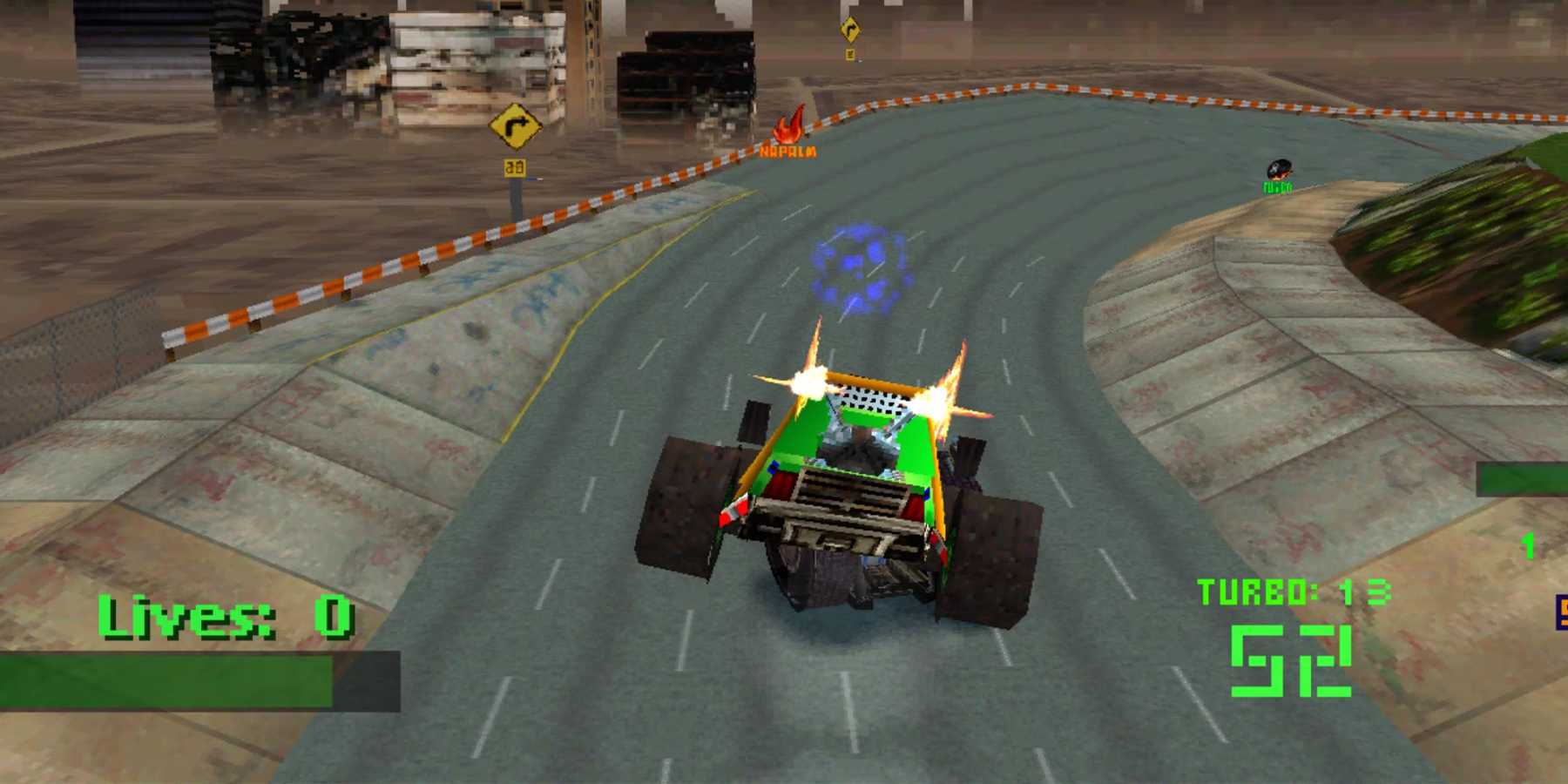
- As a single-player game, Twisted Metal 2 is largely unplayable nowadays, unless somebody is a glutton for punishment.
- Still fine as a co-op game, though.
You might be wondering why I went with the sequel rather than the original Twisted Metal, which has definitely aged worse. While good, the first game mostly feels like a proof-of-concept prototype rather than a fully fleshed-out experience; meanwhile, Twisted Metal 2 is a complete masterpiece that paid off its predecessor’s potential.
Now, I will say that you can probably still have a great time playing Twisted Metal 2 in split-screen co-op, and I don’t imagine that’s going to change anytime in the future. However, trying to play the single-player tournament on the original hardware is a recipe for pain and frustration. As it dropped before the DualShock became a thing, the game uses the D-pad, which raises bigger issues than just annoying controls.
If you want to survive the greater difficulties, you need to master the energy moves, which all require three inputs on the D-pad. Not only is this hard to pull off on its own, but you also use those buttons to steer, which creates its own set of issues. This challenge level is amplified by AI opponents that mostly ignore the “free-for-all” mentality and make a beeline solely for you.
2
Medal Of Honor Has Aged Well In Every Way Except The One That Matters The Most
As A Historical Piece, This PS1 Classic Holds Up
-
 Image by GameRant; Source: Electronic Arts
-
 Image by GameRant; Source: Electronic Arts
-
 Image by GameRant; Source: Electronic Arts
- It also comes down to the controls.
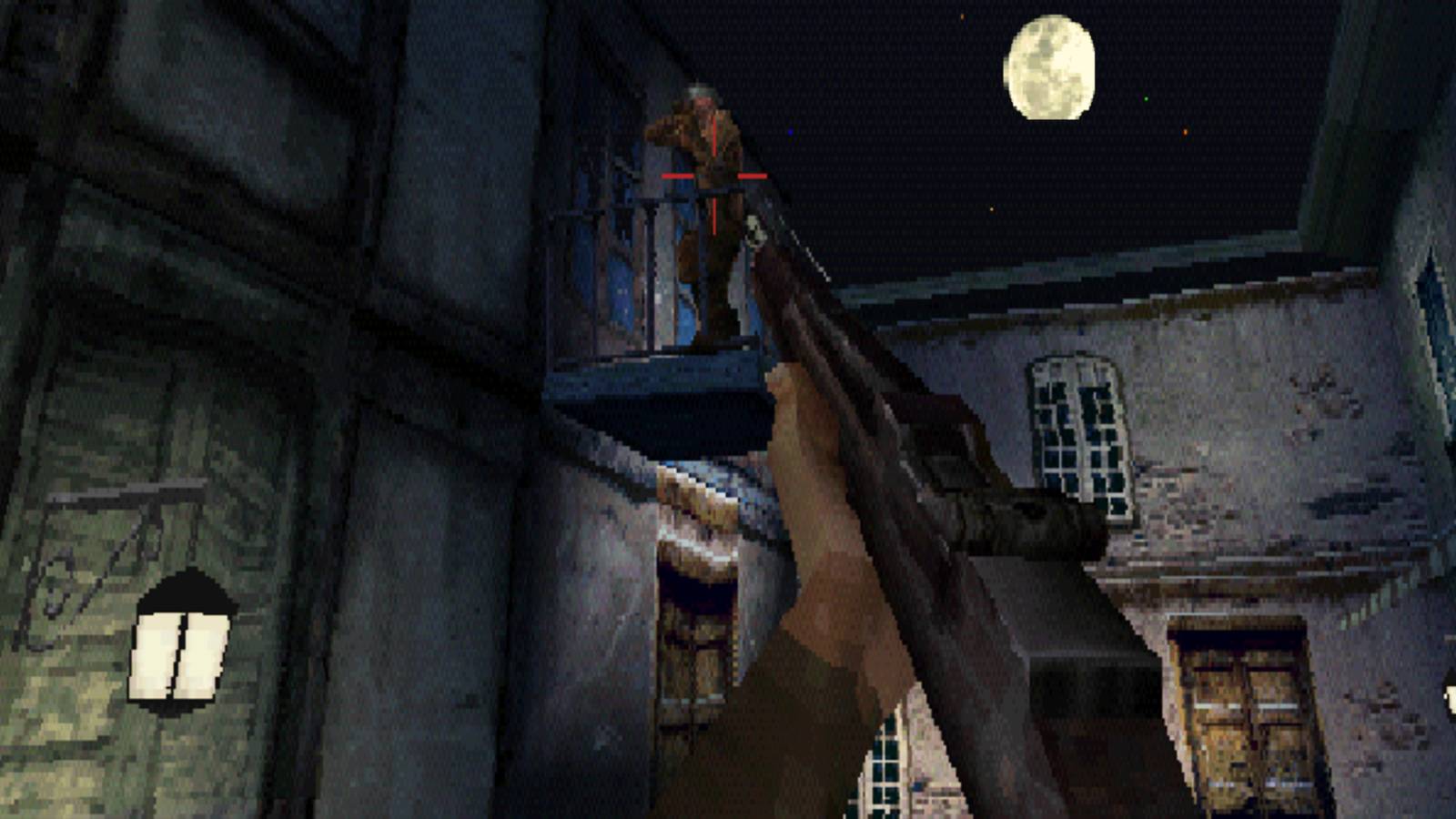
Playing it today, Medal of Honor feels special. While it’s obviously dated, the campaign’s attempts at historical authenticity still ring true, with the game treating World War 2 with the solemn reverence it deserves. Everything surrounding the core gunplay is phenomenal, and even some gameplay elements, like the sound of the weapons, have aged incredibly well. Although primitive, Medal of Honor‘s hitboxes still work as intended, allowing you to shoot enemies at specific body parts to cut them down to size.
Medal of Honor will always be a masterpiece that deserves to be remembered as the genesis of the military shooter genre, but it’s also a console FPS game that came out before Halo standardized the modern control scheme. With the default movement controls revolving around the D-pad and L1/R1 buttons, you don’t feel fully in control of your character, in the sense that you cannot act and react quickly enough to deal with fairly competent enemies.
Honestly, you could probably get used to that system if it weren’t combined with manual aiming, which completely kills any momentum. If you want to be extra precise or just look up, you press R2 to summon a floating crosshair that can be steered with the D-pad. While doing this, you are rooted to your spot, turning you into a sitting duck. Medal of Honor gives you quite a bit of health to compensate, but this system never becomes fun.
Medal of Honor includes an alternative control profile (Configuration 4) that is exactly like modern FPS controls, so you can go with that. However, the game wasn’t designed around this control scheme, so it still doesn’t feel particularly good.
1
Tomb Raider Is All About Boxes
I Mean Grid Boxes

- This one is first only because I consider it to be the biggest masterpiece in this article.
Oh, boy, I think this pick is the one that might be polarizing. Tomb Raider is comfortably among the best PS1 games, and an argument could be made that you should remove “PS1” from that statement. Core Design created a 3D space with cinematic scope far beyond what had been seen on the console at the time. While the sequels would lean more into action, the original adventure is defined by an unsettling atmosphere, challenging puzzles, exploration, and slow-paced platforming.
Tomb Raider doesn’t really play like any game released in the last two decades, and that’s where the barrier to entry comes in. Anybody who goes into the PS1 version expecting something that plays similarly to a traditional 3D platformer will be in for a rude awakening. It isn’t just that you control Lara Croft using tank controls, but the game is designed specifically around grids, meaning you need to perform an exact sequence to accomplish a specific act. If you want Lara to long jump, she must run for exactly two tiles to generate the momentum she needs. Basically, you have to do math.
Don’t get me wrong, this system was a stroke of genius that Core Design used to great effect, but it’s also one that feels incredibly alien nowadays. The modern remaster found in Tomb Raider 1–3 introduces a modern control scheme that makes things a bit more accessible, but the original is a tough task for new players.