


Horror games have spent decades coming up with increasingly disturbing monsters, from the grotesque creatures of Silent Hill to the nightmarish enemies found throughout Bloodborne. There’s something undeniably effective about being pursued by something that shouldn’t exist, but I’ve always found that human antagonists can be equally unsettling. Hunter’s Moon, a new PS5 horror game released on October 26, explores this idea through a 17th-century English witch hunt. Rather than relying on supernatural creatures, it makes ordinary people the source of its horror, drawing on a period of history when accusations of witchcraft could have deadly consequences.
In Hunter’s Moon, players take control of Lilith Thorne, a woman accused of witchcraft who must survive a night of persecution in a Yorkshire village. The game takes inspiration from Bloodborne, although its approach to horror is quite different from FromSoftware’s gothic action RPG. Instead of fighting terrifying creatures, players must navigate a community where fear and superstition have turned the locals against them. What makes the premise so interesting to me is that the people hunting Lilith don’t necessarily see themselves as villains. They’re convinced that witchcraft is real, and that belief gives them all the justification they need to pursue someone they consider dangerous.
Hunter’s Moon Takes an Unexpected Lesson From Bloodborne
One of the most surprising things about Hunter’s Moon is that its central gameplay idea came from Bloodborne. Writer-director Alicia Contestabile was inspired by the way players can knock on doors and listen to NPCs speaking through windows in FromSoftware’s game. These interactions provide glimpses into the lives of Yharnam’s inhabitants, making the city feel populated even when its streets are filled with monsters. Contestabile wondered what would happen if an entire game revolved around those conversations, and why the people inside the buildings might refuse to come outside. That question eventually led to the idea of playing as someone the villagers believe is a monster.
Put the consoles in the correct order.
I really like this reversal because it changes how the player experiences a familiar horror setting. In Bloodborne, the people hiding behind doors are often frightened of the dangers outside, and the player is the one exploring those dangerous streets. Hunter’s Moon takes that same sense of isolation and gives it a historical explanation. Lilith is feared because she’s been accused of witchcraft, and the villagers’ suspicion shapes how they respond to her presence. The game also features around 100 speaking roles performed by 48 voice actors, allowing its community to feel more substantial than a collection of anonymous enemies. Listening to the people around Lilith becomes an important part of understanding the situation she’s trapped in.
There’s a particular kind of dread that comes from knowing the people pursuing you genuinely believe they’re doing the right thing.
Although Bloodborne helped inspire its gameplay, the central concept behind Hunter’s Moon came from Waking the Witch, a book by author Pam Grossman exploring the history and cultural significance of witches. Contestabile’s research eventually led her to the English witch hunts, including the East Anglian trials associated with Matthew Hopkins, the self-proclaimed Witchfinder General. These events provide a disturbing historical foundation for the game because the people accused of witchcraft were persecuted by other human beings. The accusations didn’t need to be true for the consequences to be devastating, and those responsible could convince themselves that they were protecting their communities.
-
 Source: Twin Swans
-
 Source: Twin Swans
-
 Source: Twin Swans
This is where I think Hunter’s Moon is especially effective as a horror game. Its antagonists are ordinary people whose beliefs have made them capable of terrible things. The hunters aren’t supernatural beings, and the game deliberately avoids presenting witches as magical figures with extraordinary powers. Instead, it explores the vulnerability of someone accused of something they cannot reasonably disprove. There’s a particular kind of dread that comes from knowing the people pursuing you genuinely believe they’re doing the right thing. A fictional monster can be frightening because it’s impossible to understand, but the motivations behind the witch hunts are disturbingly recognizable.
Hunter’s Moon Is an Ambitious Debut From a Small Indie Studio
One of the more impressive things about Hunter’s Moon is that it’s the debut game from Twin Swans, a studio that never had more than 10 people working on the project at any point during development. Writer-director Alicia Contestabile first pitched the game in 2020, eventually securing support from PlayStation despite the challenges of establishing a new studio with an original IP. The team developed the game in Unity, using Behaviour Designer to create more sophisticated NPC behavior throughout its 17th-century Yorkshire village. With 48 voice actors performing around 100 roles, Hunter’s Moon is surprisingly ambitious for such a small production. I think it’s encouraging to see PlayStation supporting a project like this, particularly when so much of the industry seems focused on established franchises.

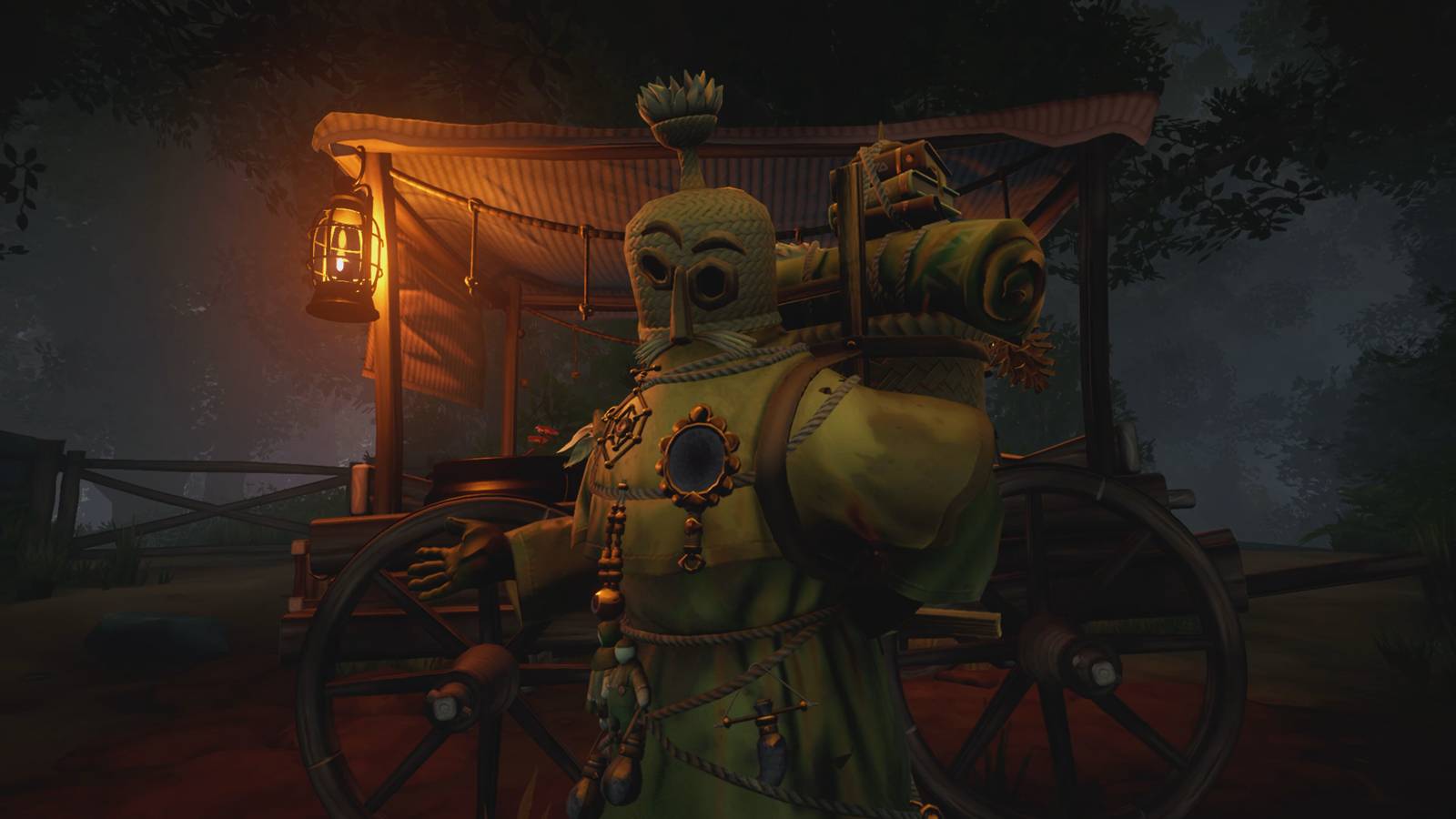
The game’s distinctive visual style also came out of some clever development decisions. Contestabile drew inspiration from stop-motion animation, particularly the films of Laika, to create characters that resemble puppets rather than realistic human beings. This approach allowed Twin Swans to avoid the demands of detailed facial animation, using masks and shadowy environments to keep its characters expressive without requiring a much larger team. Contestabile had previously worked as a producer on The Stanley Parable: Ultra Deluxe, which similarly experimented with simplified character designs. What I particularly like about Hunter’s Moon is how these practical limitations complement its horror. The masked villagers and unusual animations give the game an unsettling identity of its own, showing how a small studio can use its constraints creatively rather than attempting to compete with the production values of much larger developers.
Ultimately, Hunter’s Moon is a reminder that horror games don’t always need monsters to make players feel vulnerable. Its Bloodborne-inspired interactions give players an interesting way to explore a community that has already decided they’re dangerous, while its historical setting makes the consequences of that suspicion feel uncomfortably real. What I find most compelling is the idea that the villagers don’t need to understand themselves as cruel people to behave cruelly. They’re acting according to beliefs that have been accepted by the surrounding society, and that makes their actions difficult to dismiss as simple villainy. For all the frightening creatures video games have created over the years, Hunter’s Moon demonstrates why ordinary human behavior can sometimes be the most disturbing source of horror.
Hunter’s Moon is available exclusively on the PS5.