


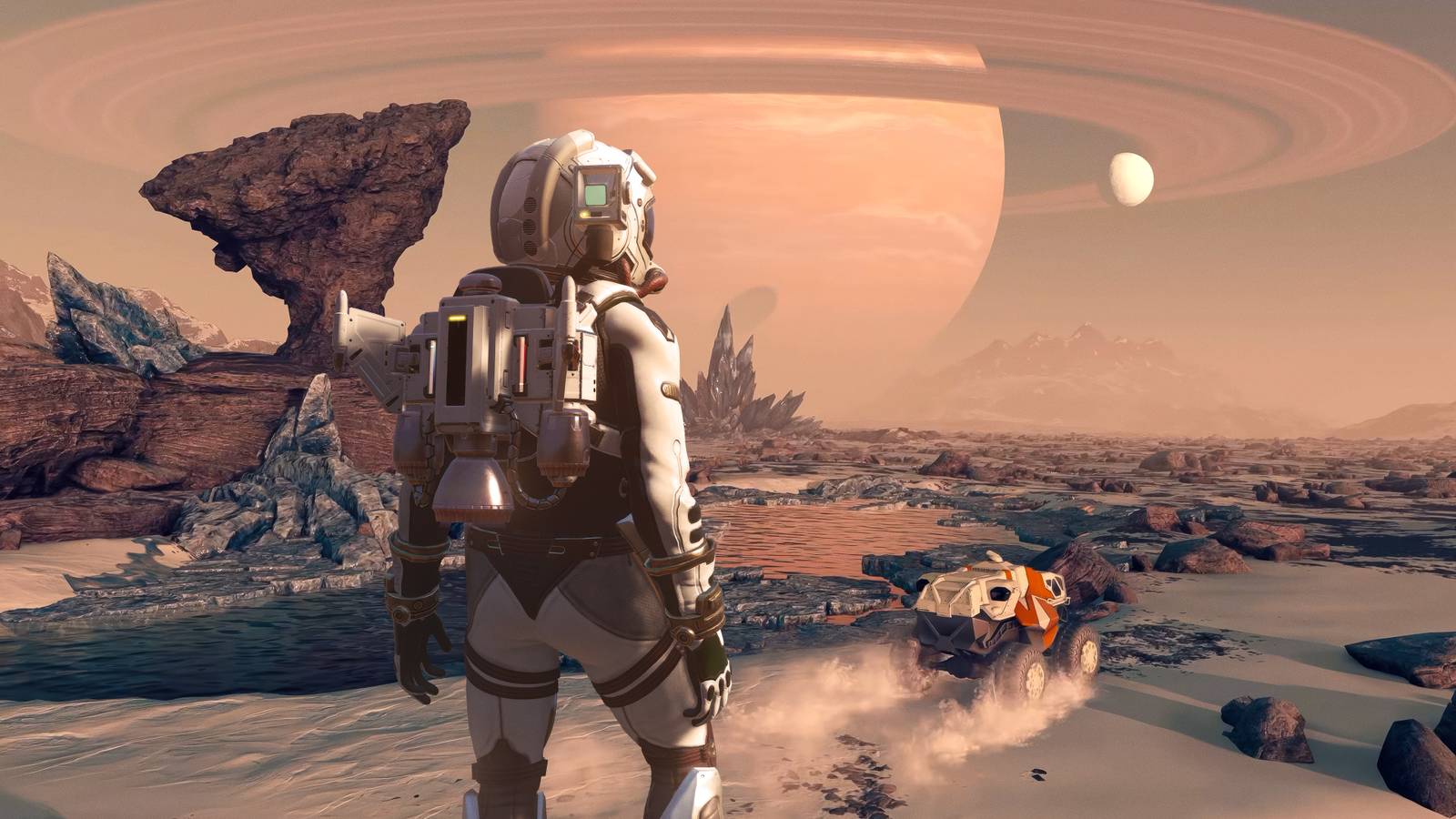
It’s hard to believe that No Man’s Sky is 10 years old, but that day has finally come. For over a decade, Hello Games’ ambitious space adventure has managed to overcome a notoriously rough and controversial launch and is now one of the best open-world sci-fi games around. Reaching such a significant milestone shows just how strong No Man’s Sky‘s exploration is, and what’s even wilder is that Hello Games confirmed that players have barely even explored 1% of the game’s planets. That’s baffling to think about, and it has left me thinking about the aspects that make No Man’s Sky so different from another exploration-focused sci-fi adventure: Starfield.
At this point, it’s well known that Starfield was a disappointment to a lot of gamers. Starfield isn’t a bad game by any means, but it also wasn’t the vast interstellar adventure that Bethesda had many expecting. The staple Bethesda loading screens interrupted the pacing and immersive quality that No Man’s Sky has in spades, and the world simply felt lifeless for many of the players who gave it a try. Starfield has plenty of strong suits, but No Man’s Sky hitting its 10th anniversary is a reminder of how much growth the former still has ahead of it before it meets many gamers’ expectations.
No Man’s Sky and Starfield Are Both Huge Worlds, But One Game Clearly Does Expansive Exploration Better Than the Other
I’m fully aware that No Man’s Sky and Starfield are two completely different types of sci-fi games, but Hello Games and Bethesda essentially made the same promises leading up to launch. The funny thing is that neither game met player expectations when debuting. However, No Man’s Sky managed to fight its way out of the initial bad reputation and pave the way for an experience that has been going strong for an entire decade now.

Guess the games from the emojis.
Guess the games from the emojis.
Easy (120s)Medium (90s)Hard (60s)
Both games use procedural generation to make such large-scale worlds, so it’s fascinating that one is far more immersive than the other. It doesn’t take long to realize that No Man’s Sky‘s planets have more to offer than Starfield‘s, which makes the latter even more frustrating. Starfield‘s more barren and repetitive world has often made me come to the conclusion that Bethesda simply went too big with its world this time around. That may be the case, but that isn’t exactly the full story. Starfield may be the biggest Bethesda game map, but No Man’s Sky proves that a large-scale world can work incredibly well.
No Man’s Sky’s Massive World Works Because of Hello Games’ Focus on Updates
There is one main reason that No Man’s Sky has managed to become a 10-year success story, and it’s the fact that Hello Games has consistently brought forth tons of massive post-launch updates. No Man’s Sky updates are serious business. They have completely transformed the game over the years and have made the procedural generation much stronger because of Hello Games tweaking the system and improving it over time.
Starfield has also heavily relied on fan-made Creations to help expand the game’s scope and content. On the one hand, the Creations platform allows the most passionate fans to have fun with the game by building upon Starfield‘s world the way they want to. However, on the flip side, relying so much on the game’s community also creates an issue where Bethesda may not be incentivized to make sweeping changes the same way that Hello Games has done with No Man’s Sky.
Starfield, on the other hand, has only featured two small DLCs and a handful of post-launch updates. Granted, these changes have definitely made improvements, but it’s nowhere close to the same scale and consistency as Hello Games’ No Man’s Sky support. While Starfield updates have added features like the REV-8 vehicle and Autopilot for more satisfying traversal, No Man’s Sky has added major features like new weather types, expanded biome varieties, included more realistic water physics, and even introduced things like the Purple Star System.
This is really just the tip of the iceberg, too. Hello Games is dedicated to focusing a huge amount of attention on continuously expanding No Man’s Sky‘s world and giving it deeper layers. Games with huge maps don’t feel so empty when there are plenty of things to discover and explore and the world is constantly evolving.
Starfield May Be a One-Off Game for Bethesda, But the Developer Can Still Take a Few Important Notes from No Man’s Sky
It’s hard to say if a sequel to Starfield is in the cards for Bethesda. The game featured some great moments, like the ship building, but it simply didn’t hit the same heights as the developer’s past games. That doesn’t mean that Starfield‘s mixed reception and No Man’s Sky‘s success can’t be used as learning opportunities, though.
Starfield isn’t a bad game by any means, but it also wasn’t the vast interstellar adventure that Bethesda had many expecting.
The Elder Scrolls 6 Needs to Avoid Starfield’s Mistakes
Now that Starfield has had its time in the spotlight, The Elder Scrolls 6 has been on a lot of Bethesda fans’ minds. Even though No Man’s Sky isn’t an RPG, the game can still be a great blueprint for how Bethesda should approach both The Elder Scrolls 6‘s world and how the company considers player feedback. Hello Games took player feedback to heart when the game first launched, and the team made aggressive moves to improve the original version’s shortcomings. Bethesda doing this with Starfield is probably out of the question now, but that willingness to listen can still be applied to The Elder Scrolls 6.
With it being eight years since The Elder Scrolls 6 announcement, expectations are going to be incredibly high. The game can hopefully be the new Elder Scrolls game that fans have been dreaming of, but that can only happen if Bethesda takes a more in-depth approach to world building. There’s a chance that The Elder Scrolls 6‘s map could be even bigger than Starfield‘s, but size won’t mean anything if the world doesn’t have the same layers that make No Man’s Sky‘s universe so immersive.

- Released
-
August 9, 2016
- ESRB
-
T for Teen: Fantasy Violence, Animated Blood