








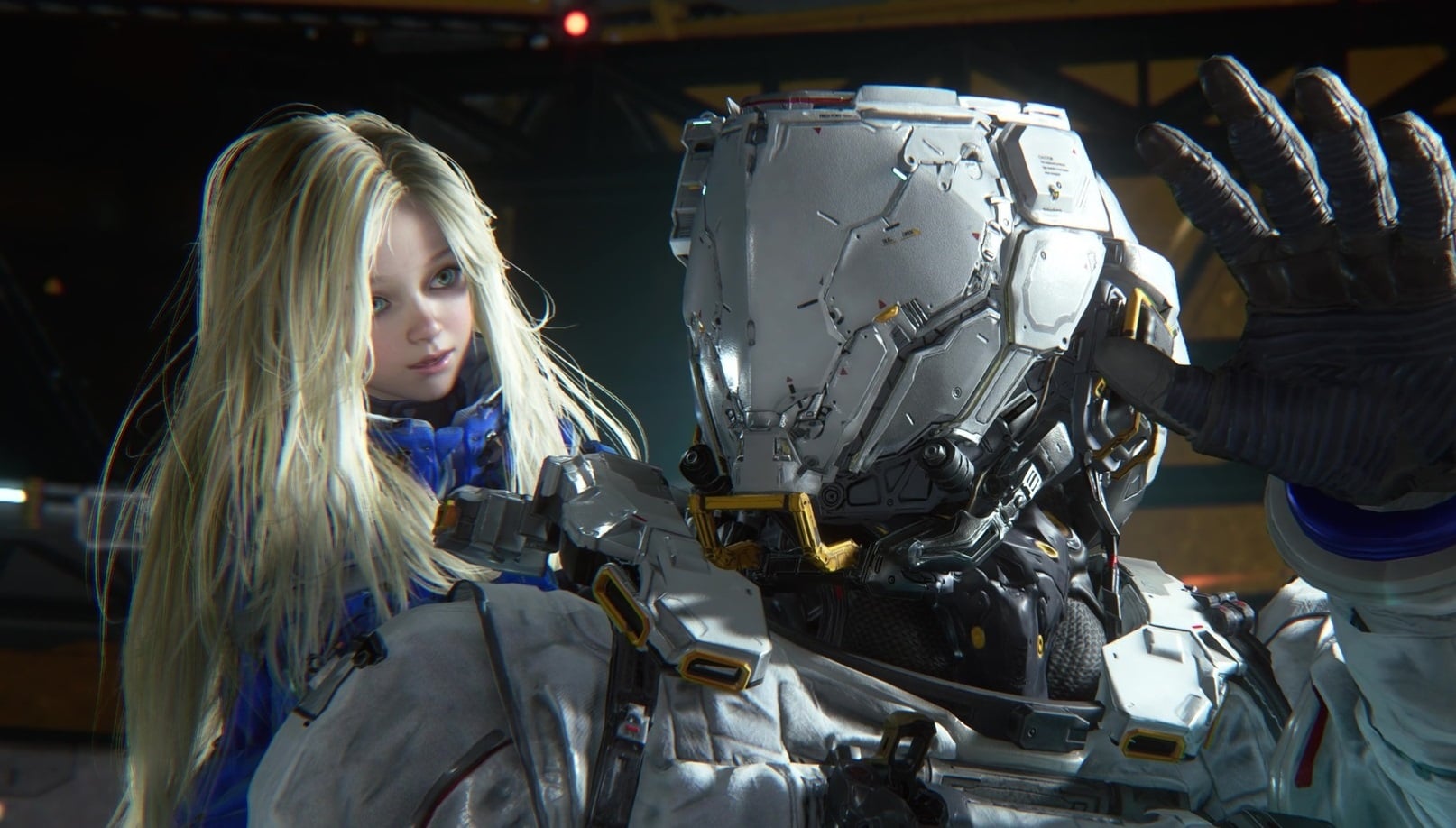
Released last month, Capcom’s Pragmata has quickly become a success, with the company announcing it had hit 1 million sales right after release and that it crossed the 2 million mark soon after. Starring the dynamic duo of a cosmonaut engineer and a child android working together to take down renegade robots on the moon, it leans into a quirky gameplay style that’s something of a real-time combat-puzzle, equal parts hacking game and shooter. It’s also developed a bit of a reputation for being the latest addition to the “sad dad” pantheon, typified by games like The Last of Us and the recent God of War entries.
First revealed in 2020 during the original PS5 showcase, Pragmata’s release has been a long time coming. However, for lead actor David Menkin—the performer behind Hugh Williams, the aforementioned engineer—his on-boarding to the game was fairly recent, and he carried the task of building up what he initially saw as a “simple” character.” During our interview with Menkin, he spoke about his experience coming on board, how the positive response has impacted him, and why he feels the game’s inherent optimism and positive male lead counter the label of “sad dad game.”
“I’m used to working in this field, and I’ve had people reach out to me in the past about my work, but people have really wanted to reach out for Pragmata, and they’ve sent me some beautiful messages, ” said Menkin. “I’m not quite used to it on this level, but it is really nice that so many people have picked up on what they liked about the game. A big part of everything I’ve read is the bond with Hugh and Diana. Some people don’t think that bond is a necessary part of the game, but to do heroic things, you need a reason. You need a reason to go into impossible circumstances, and this aspect of the game has resonated with so many people. Everybody wants to be that ‘Space Dad.’”
With previous credits as Preston Marlowe in Battlefield: Bad Company 1 & 2, Dag in Assassin’s Creed Valhalla, Luke Skywalker in the Lego Star Wars series, and with a new role in the bullet-hell shooter Luna Abyss coming this month, Menkin is no stranger to acting in video games. But for Pragmata, the onboarding process was a bit different from other games—he and the other actors started with a traditional table read. This process, which is normal in TV, film, and theater, is less common in video games.
According to Menkin, the table read was vital for establishing the connection between the game’s two lead actors. Working with Grace Saif, who plays the android Diana, they developed that rapport and chemistry, a core aspect of the storytelling in Pragmata. And it’s also something he hopes will continue to evolve as actors and game developers collaborate on other games.
“When Grace joined our read, I could tell that I needed to up my game as an actor, because she’s gonna eat me alive, and she still did [laughs],” recounted Menkin. “I just hung on for dear life, but I had an amazing team from Capcom to work with—the narrative team was wonderful, and the performance directors—Holly Reddaway and Frances Loy—let us do many takes; we were doing 7 to 10 takes to get it right. Just when I thought I was nailing the lines, they would come up and ask me, ‘Have you considered what this would mean to someone if they had a life in their hands, and also their life was as in a child’s hands?’ And bit by bit, it sort of grew and grew. It was extremely demanding, but one of the most fulfilling jobs I’ve ever done.”
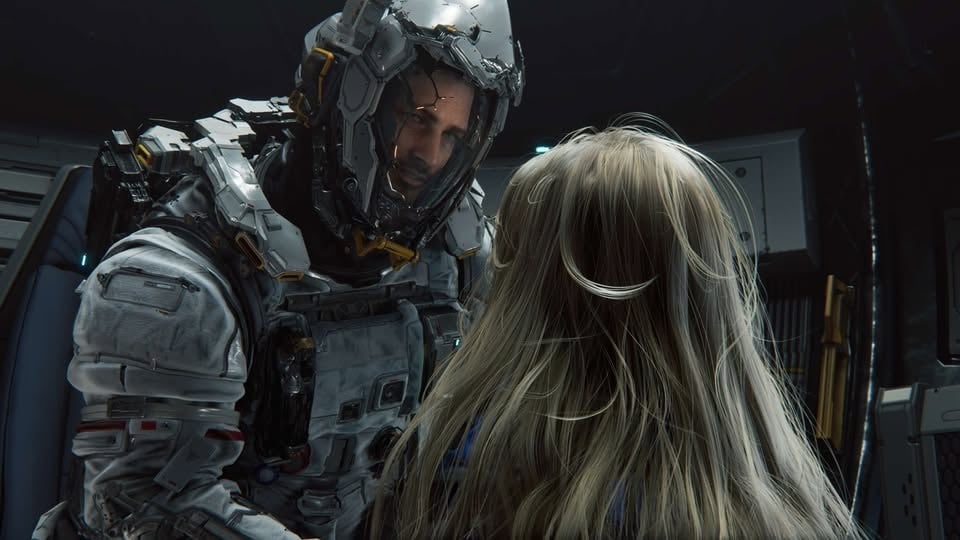
Upon its release, in the midst of reactions from players and critics, some dubbed it a “sad dad” game. It’s not hard to see some shared DNA with earlier games that have earned that moniker. Much like The Last of Us, God of War (2018), and Bioshock Infinite, Pragmata focuses on a protagonist who is tasked with looking after a younger supporting character. However, while the previously mentioned games deal with dark themes and anti-hero protagonists seeking some form of redemption, with moments in which the lead characters impart tough-love wisdom to the younger generation, Pragmata is a noticeably more light-hearted game, with a protagonist who is not world-weary but rather hopeful. Hugh Williams is also a source of optimism for Diana, whom he recognizes as a person, and not just a machine, who helps him survive the chaos on the moon.
For Menkin, Pragmata wasn’t a “sad dad” game, but he understands the parallels with those games. For his part, he appreciated working with the creatives on Pragmata‘s story to portray Hugh as a character with no dark side, but rather as someone making the best of his and Diana’s ordeal.

“Yeah, like everybody else, I think The Last of Us developed so beautifully as a game—you play as a terrible guy that he had to become to survive, which you’re not fully aware of when you start,” he said. “You see the loss, and you understand that he has become someone who is pretty much looking out for himself and his partner—he really did some bad shit to survive. That is an amazing driving force as you play, and when you learn more about them, it makes you realize, ‘Am I playing as a good guy in bad circumstances, or am I playing as somebody who is trying to redeem himself?’
“But for Hugh in Pragmata, that’s not the case at all. It’s something that we had talked about while we were recording—they just made it very clear to me that this is a regular guy who is really good at his job, and he’s there to fix situations when things go bad,” he continued. “He’s a worker and a regular guy who likes to be at home, he has a dog that he misses, and I think that when people started playing it, they likely felt that he seemed quite simple as a character. But I like the fact that he’s just a good guy, that there was no malice there [with his character or his drive]. Like no one has been ‘fridged,’ and he feels terrible about his team being killed off. But he has a goal: to communicate with Earth and get home. But then that evolves once Diana is introduced and becomes his partner in that journey. At that point, he often asks her, ‘What do you want? Ok, you want to go to Earth with me? Sure. Let’s go, and then we’ll deal with the consequences later.’”
In many ways, Menkin’s view of Pragmata‘s optimistic storytelling and the bond between its two leads align with the game’s overall theme: try your best and be responsible with the time you have. It offered an unexpectedly poignant message for a Capcom-style puzzle-combat shooter, but, according to Menkin, the overall theme carried through the game thanks to the dev team.
“I was born in ‘77, so I’m Gen X, but I grew up with the beginnings of CDs and DVDs, then the internet, and stuff like that. My generation was big on making things, and I guess I’m part of the “West Wing” generation, where if you do good things and try to help other people, good things will happen. I understand that people growing up at this moment might not feel the same way, but with this game, I think the team purposely didn’t let me know much about themselves or how much they put into it. I think there were a couple of dads, some moms, some uncles, and some aunts who made this game at Capcom. I have a feeling that it’s a game made by grown-ups.”
