





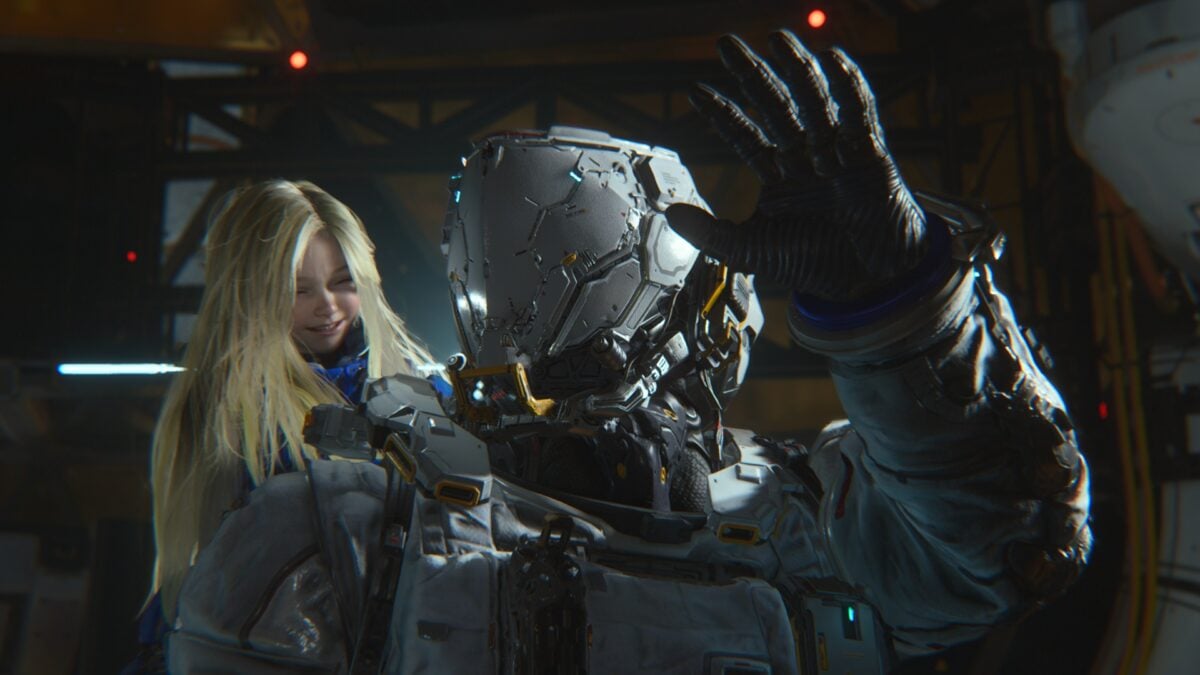
In my review, I called Capcom’s new puzzle shooter Pragmata a “Dad Game for fathers who actually like their kids.” In the time since that review was published, however, I’ve seen some discuss the game as if its central relationship places it squarely in the lineage of certain “dad” games from 10 and 15 years ago, rather than in response to them. The New York Times’ review, for instance, calls it a “sad dad” game, likening it to The Last of Us and BioShock Infinite, but I fundamentally disagree with that reading. On the contrary, I think Pragmata reads like it was made by people who think that fatherhood rules, actually, and that getting to provide a young mind with insight, fun, and dreams is a meaningful thing that enriches a person’s life rather than a burden forced onto them. It’s a viewpoint which comes through in a number of ways, not least of which is the fact that dad things become a core part of what you do in the game, in between shooting and hacking your way through a space station. Rather than acting gruffly reluctant to take on the role as many of his video game forbears have done, Hugh embraces it.
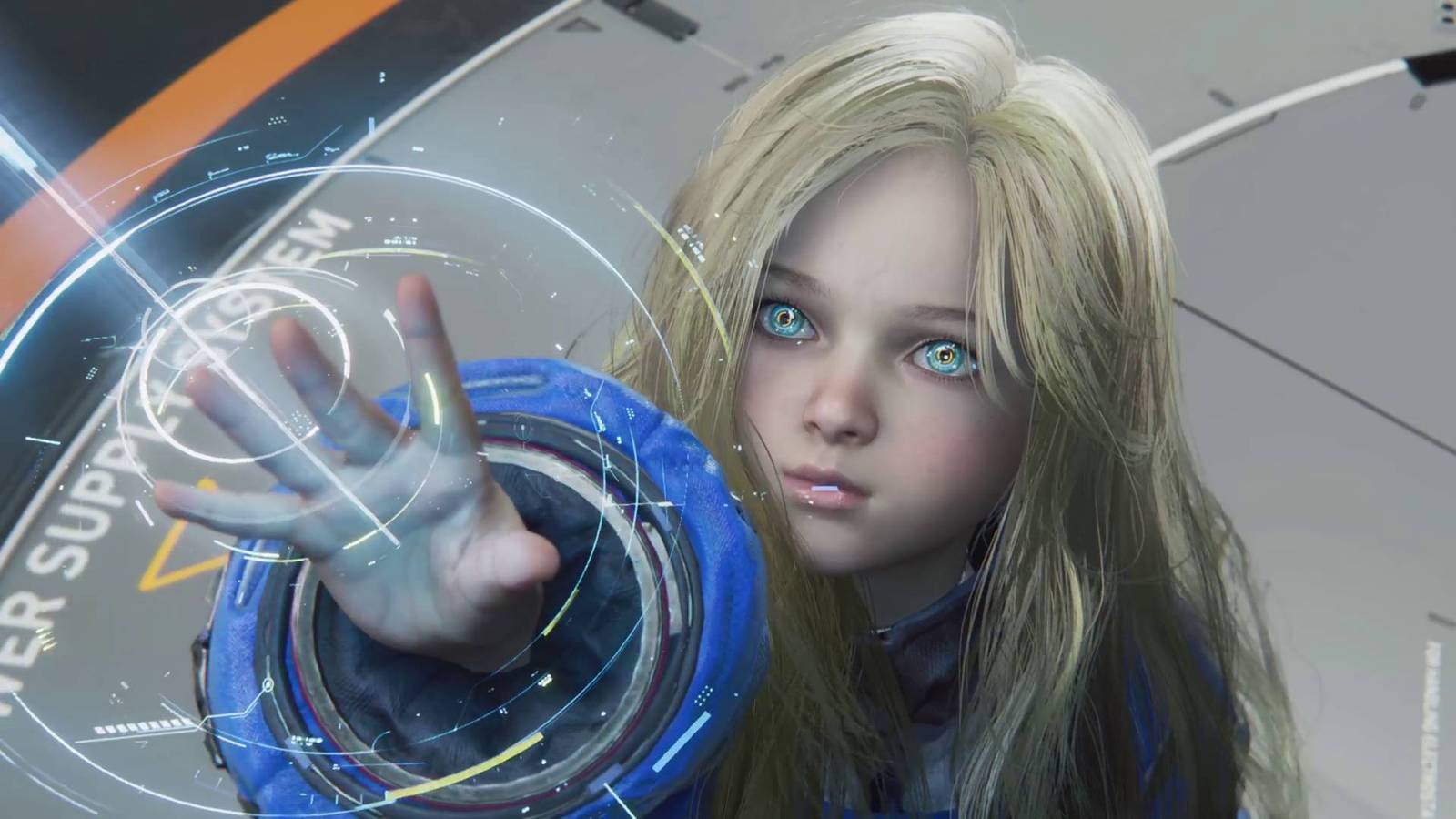
Compared to most Dad Games, Hugh and Diana’s relationship is pretty much drama free. There’s no point at which Diana runs away on her own, believing she can get by without Hugh’s protection, and the space marine never once treats the child-like android as an annoyance or burden. He’s kind of a natural, actually. Diana is bubbly and curious, and rather than groaning as she rattles on about her latest hyperfixation, he smiles, nods, and asks her to chat more. Nurturing that curiosity and excitement is literally a gameplay mechanic in Pragmata, and while you may roll your eyes at how gamey it feels, I found it really endearing.
the pragmata child has dealt lethal damage to my heart pic.twitter.com/c1QwVBVPUe
— Mako Fukasame 🦈👩🏫 | Vershion AU (@MakoFukasame) April 17, 2026
One of the major collectibles in Pragmata are “Read Earth Memories.” These are holograms that form into tangible items at Hugh and Diana’s home base. There are multiple sets, each ultimately building a “room” for Diana to play in with props like crayons to color with or a slide to ride. Diana has always lived on a space station and has no memories of playing with children’s toys, so Hugh is giving her something she’s never experienced, and looks forward to a future in which he can give her more of these moments after they escape back to Earth.
Nearly every time you go back to the pair’s shelter, Diana is ready to yap Hugh’s ear off about whatever’s on her mind, whether that be what they’ve been up to recently or a question she has about life on Earth. She has a naivete about her because she’s basically been raised in a box and doesn’t really understand that bad things happen and that someone could betray her or hurt the ones she cares about. Diana is an innocent untainted by cynicism and teen angst, and Pragmata makes protecting that happy-go-lucky attitude one of its primary directives. Getting Diana out alive isn’t enough; that feisty spirit is just as much worth defending, whether it’s by shooting a robot with bullets or by sticking the drawings she brings to you after you get through portions of the game on a wall so she feels like the next Pablo Picasso.
A lot of Dad Games make their child figures either relatively passive observers of the player’s actions, or magic support characters who throw something helpful into a fight at random moments or when you specifically prompt them to. Pragmata may not get into the same kinds of complicated nuance that games like The Last of Us and God of War do, but but I appreciate that Hugh wants to spare Diana the kind of angst and suffering that characters like Ellie and Atreus experience, preserving her childlike whimsy for as long as possible. Hugh is gunning for Dad of the Year. He is, at least, the Best Dad on the Moon.
