


Season creep is a real problem. You’ve no doubt already seen holiday decorations for sale three months before the actual holiday arrives and felt a little mystified. One of the two big annual sources of retail season creep is, well, creepy season: Halloween starts in the summer now, to the point where “summerween” is some new thing we apparently have to know about. The only real benefit to this is that it lets us experience the best annual theme park special event a little bit earlier every year. Universal’s annual horror extravaganza, Halloween Horror Nights, routinely starts in August now, and hey, what feels more like the traditional Autumn harvest than the 90-degree nights of Orlando in late summer?
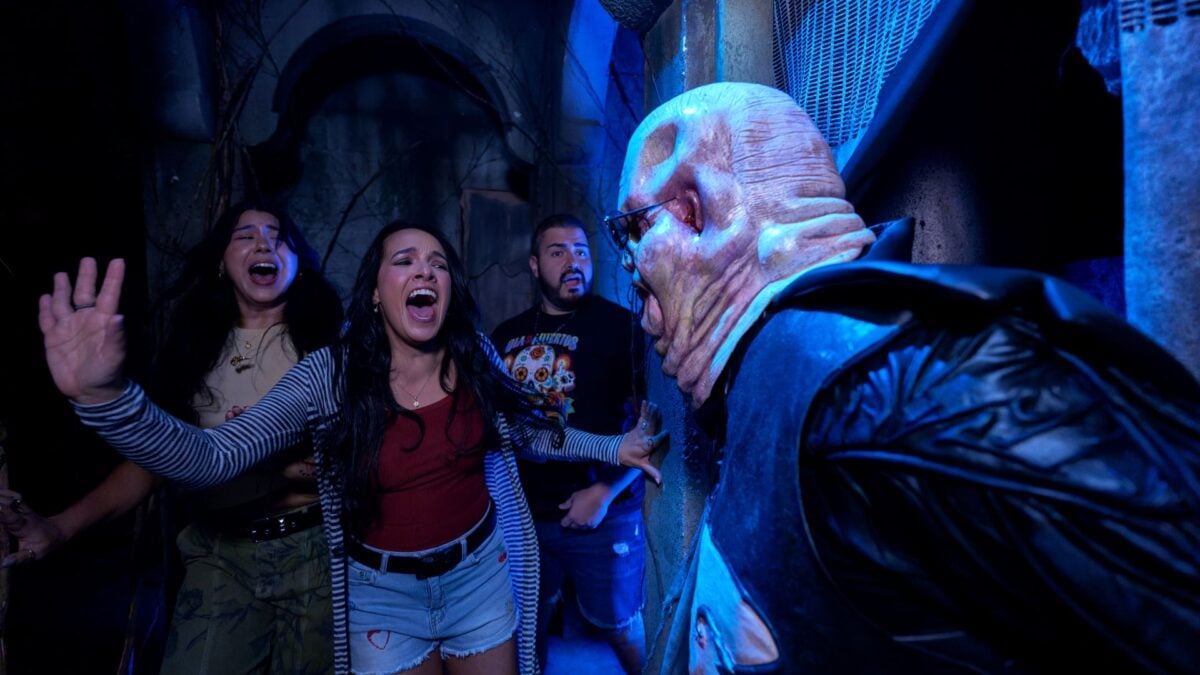
This year’s Halloween Horror Nights is the 35th at Universal Studios Florida. What started as a three-night event in 1991 is now a 50-date haul that runs from late August up to the first day of November, with 10 haunted houses, two shows, multiple open-air “scare zones,” an immersive “tribute” store, and a random assortment of other pop-up experiences throughout the park. Its brand of horror leans heavily on shock tactics and jump scares—the easiest aspects of horror films to recreate in a theme park—but what makes its best haunted houses special is the theming and design work. A good Halloween Horror Nights house is like visiting another world for a few minutes—one where almost everybody exists solely to scream at you, but also one that shows you things you’ll otherwise never see (or feel) in person. Like theme parks in general, there’s a bit of overlap with video games and how they strive to immerse you in an otherworldly environment. And this year’s Halloween Horror Nights took the game connection further than ever before with Fortnitemares, a scare zone based on Epic’s cornerstone, where actors in horror-tinged Fortnite skins scared passersby in a stretch of park lightly themed to the game.
The haunted houses are the true draws, though. These indoor, maze-like spaces let Universal Creative unleash its multidisciplinary skills in service of frightening the hell out of eager guests. There’s typically an even split between houses based on movies or other intellectual property and houses based on original ideas created by Universal’s theme park designers. You can usually expect a couple of iconic big-name horror franchises alongside recent hits, and usually one outlier IP based on a musician or video game. (Last year’s event had a house based on the deceased professional wrestler Bray Wyatt.) As a true believer in the theme park as a unique, still-developing art form of its own, I usually find the original houses to be more impressive than the IP-based ones; Universal Creative clearly relishes the opportunity to play with horror convention and jump across genres, exploring what’s artistically possible within the framework of a haunted house. That’s still true in 2026, with the three least memorable houses all being adaptations. This year’s most vibrant and artistically unified house is based on IP, though—or, to be more accurate, the work of one of the most important rock musicians of all time. That speaks to the quality of this year’s music house, but also underlines how this year’s event is just a little bit lacking compared to those of the last few years. Most years feature at least one original house that is legitimately jaw-dropping (I don’t use that term lightly; I’m talking actual moments of mouth-agape “how the hell did they do this” surprise or beauty), but none of this year’s offerings hit that level. My favorite house of 2026 would rank high any year, but it wouldn’t come in at number one in any other year of the last decade.
This might be a bit of a down year, but it’s still Halloween Horror Nights. It still rocks. (And you’ll still probably want to book two nights and spring for the express pass; the lines get obscene for these things.) If you’re a horror fan, or a theme park aficionado who can handle fake gore and jump scares, you’ll find something to love here. And if you’ve already been this year, you’ll no doubt disagree with something in the ranking below.
10. Stranger Things 5
Universal wraps up its Stranger Things houses (for now; no franchise truly stays dead in the 21st century) with the least impressive of the bunch. Beyond Stranger Things itself being played out, this house doesn’t have the kind of stand-out set piece or show-stopping moment that Halloween Horror Nights’ previous trips to Hawkins had. It just feels a little undercooked, like the event as a whole this year. Good job on the “fully flowering” demogorgons, though. Other than that, the highlight remains the show’s synthy theme music.
9. Evil Dead Burn
Apparently they’ve been making Evil Dead movies without Sam Raimi at the helm. Who knew? It looks like Evil Dead Burn came and went just a couple of months ago; its house has a pretty cool animatronic head at the start, a decapitated bit of business that looks at you and mutters some stuff I couldn’t make out, but that’s the only real highlight. It doesn’t have any of the personality or humor you associate with Evil Dead, although apparently that’s true of the movie it’s based on, too. Universal locks these houses in well in advance, up to a year and a half before they actually open, which means having to forecast what movies will actually be a hit. A known franchise like Evil Dead probably seemed like a safer bet than Obsession or Backrooms, but you know Universal really wishes it had a house based on either one of those other movies instead.
8. Sinners
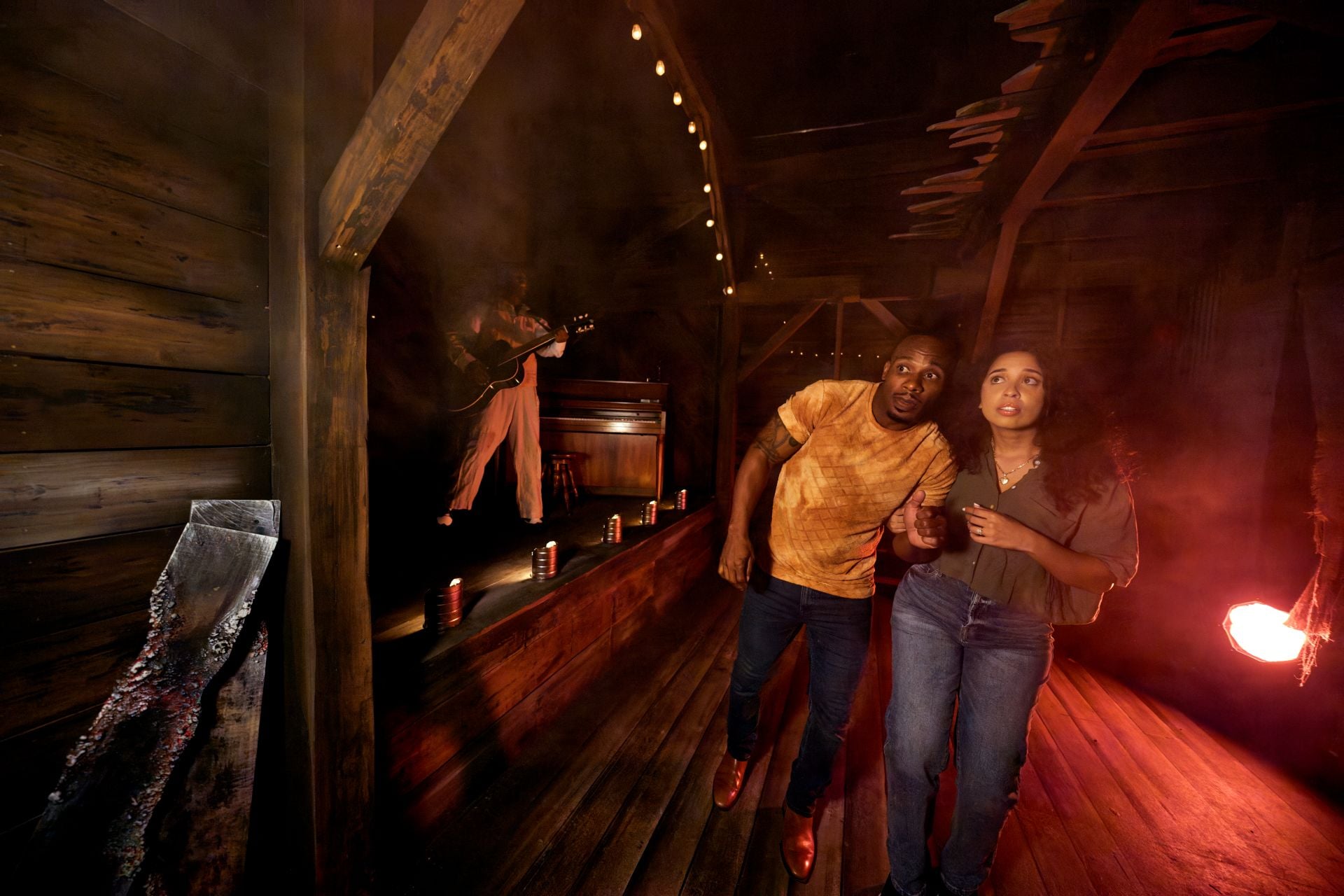
This was my single biggest disappointment of the night. It nails the environmental design—Clarksdale and Club Juke both look real and lived-in in that way old places do, before prefab cookie cutter design became the architectural norm—but it underwhelms in almost every other regard. The way it handles the unforgettable “piercing the veil” scene sums up this house’s failings; don’t expect any of the time-hopping transcendence from the movie, no appearances from Parliament-esque spaceman guitarists or G-funk synths or Chinese dancers, just a Miles Caton stand-in fake-strumming a guitar in front of screens that show a loop of wooden walls going up in flames. The Sinners house gives the barest summary of the movie’s story, without capturing any of its depth or complexity, and very little of its sense of style. Bummer!
7. Cybergoria
This original house has a cool idea: you’re a patient of a cryogenics facility where sick people freeze themselves before death in hopes of science finding a cure for what ails them, with a team of robot assistants to keep things running and help ease you back into waking life whenever you’re thawed out. Only it all turns into a blood-splattered hellscape when the robots decide the best way to keep humanity alive into the future is by ripping the flesh off the patients’ bodies and molding it around their own metal forms. So there’s a touch of AI apocalypse fear in the mix here, with some pretty grisly robot characters who have chunks of flesh dangling from them. Unfortunately the execution is uninspired. It’s one of a couple of original houses this year that are basically a series of straight halls with actors jumping out at you, and it’s the lesser of the two. It’s definitely gory, though, if that’s what you’re most interested in.
6. Madlands: Caged Criminals
And here’s the other, marginally better original house I just alluded to. It shoots for an ’80s Mad Max apocalyptic style—all punk hairdos and spiky, studded homemade armor—but with animal theming. The world’s collapsed, it’s some point in the near future, and survivors have reorganized into violent gangs that live in an abandoned zoo. The gangs are styled after the animals that used to live in whatever enclosure they’ve taken over, so the scare actors that jump out at you look like Road Warrior rhinos or Mad Max monkeys. Oh, and they’re all cannibals, of course. It’s a hodgepodge of familiar ideas and aesthetics, and a fairly straightforward house, but it looks just cool enough to make an impression, and the original punk-rock score gives it a sound that sets it apart from the rest of this year’s houses. It’s a little flat but largely a totally acceptable Halloween Horror Nights house.
5. Hellraiser
We’re solidly on good turf here; the prior two houses on this list both have their strong points, but the next five are all worth waiting in line for. At a press conference, Universal’s creatives gushed about Hellraiser being one of the dream IPs they just couldn’t land until now, and you can see that excitement in the house. They went all-out with this one, which is incredibly gory and doesn’t shy away from the movies’ sexual and sadomasochistic themes. It might be the most perverse Halloween Horror Nights has ever gotten. If there’s a flaw, it’s that it’s a little too directly an adaptation of the first three movies, without many surprises. Still, such sights it shows you!
4. Invasion: Alien Abduction
I tend to especially like two things in a Halloween Horror Nights house: beautifully designed spaces that feel real despite being like nothing you’ll see in the real world, and jokes. Invasion: Alien Abduction isn’t this year’s funniest house—more on that in a moment—but it is genuinely funny how its murderous little green men hop around the farm house they’re besieging. One of my favorite moments in HHN history came a few years ago, in a house about a 1950s household being attacked by giant bugs mutated by an untested space-age insecticide; at one point a giant cockroach burst through a wall like the Kool-Aid Man, doing a stompy little dance while pumping its arms up and down. There are about four moments in Invasion: Alien Abduction that recall that scene, only with aliens half as big as that cockroach. Throw in some unexpected design work, like a heavily slanted bedroom that feels like something out of an old carnival funhouse, and you’ve got one of this year’s better houses. And there’s a moment near the very end that’s one of the best gag scares in HHN history.
3. Jack & Oddfellow: Chaos & Control
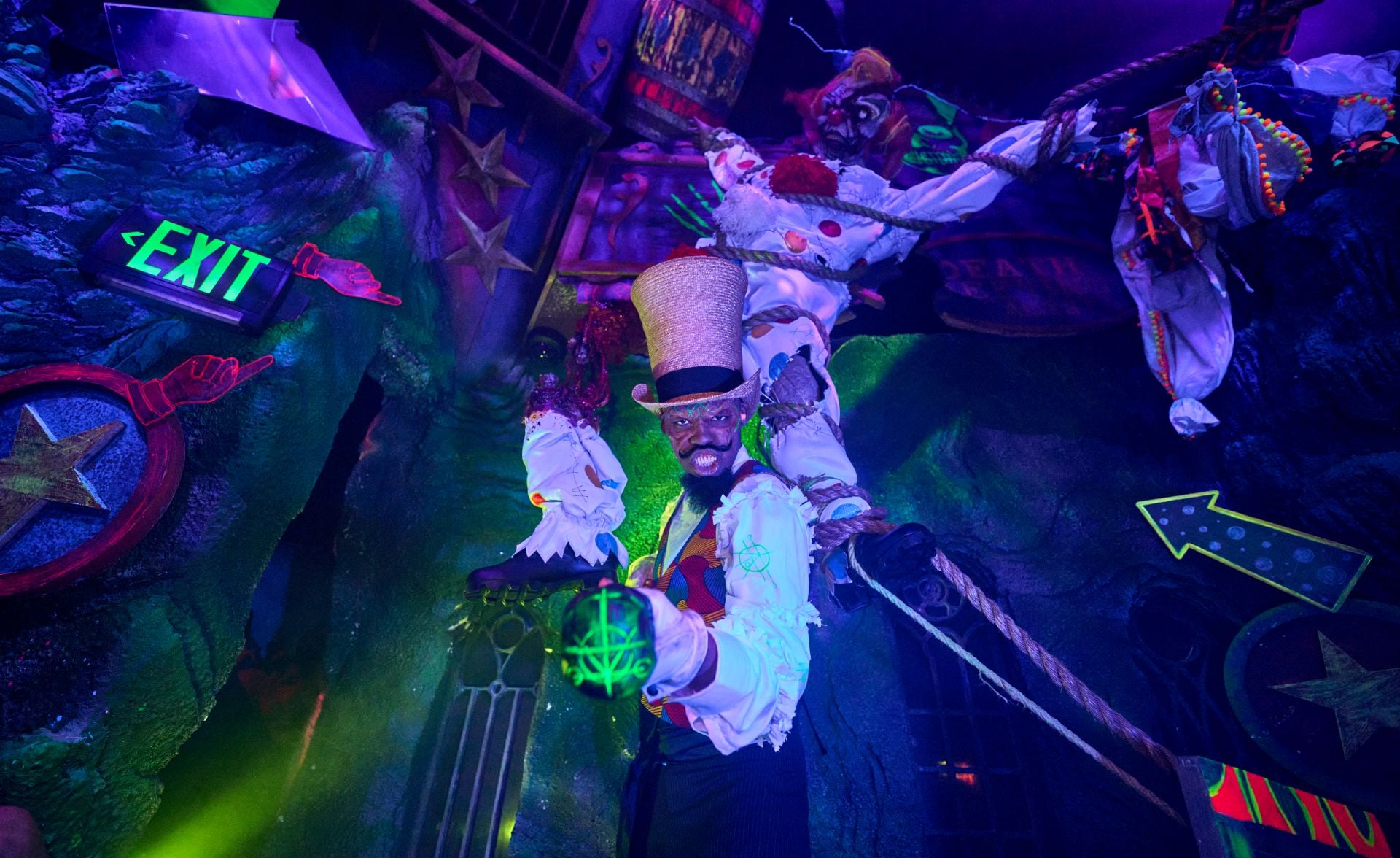
Halloween Horror Nights’ original houses aren’t always one-offs. Universal’s been building its own original HHN lore for a long while, and it’s dominated by the “icon” characters Jack the Clown (a scary clown) and Dr. Oddfellow (a top-hatted carnival owner and maybe sorcerer who collects souls and has a portal to another dimension… so, yeah, kinda similar to Disney’s Dr. Facilier, without all that voodoo and hoodoo). Previous Halloween Horror Nights established that the backstories of these two characters were connected, and Chaos & Control explores their past through a haunted house. The story’s pretty hard to follow (and, honestly, Halloween Horror Nights’ internal lore is the least interesting thing about its original houses), but the house is a visual delight, with several homages to carnivals and old-school funhouses. (If you can’t handle rotating hallways or slanted rooms, you might want to skip this one.) You don’t have to know or care one bit about these two characters to be wowed by the design work that went into this anarchic, visually inventive house.
2. H.R. Bloodengutz Presents: A Halloween Fright-Tacular!
Remember what I said about comedy houses? Yep, I love ’em, and H.R. Bloodengutz might be the funniest one Universal has ever done. A sequel to a house that debuted all the way back in 2010, Halloween Fright-Tacular stars a local TV station’s Monster Chiller Horror Theatre host, who happens to be a murderous psychopath who escaped from an asylum and took over the station on Halloween. Every room is a scene from a different cheesy old horror or sci-fi flick, with video introductions from H.R. Bloodengutz himself airing on boxy old TVs before each room. This house is squarely more interested in laughs and vibes than scares; at least two of the rooms, one that looks like a tiki bar and another like a ’70s discotheque, don’t even attempt to scare guests at all. When it does try to scare you, it pulls it off very well, but if you’re exclusively interested in frights—or have a bad (or no) sense of humor—this might not be the fright-tacular for you. But you’ll dig this house if you love kitsch, bad movies, and old UHF station monster movie hosts (when I was a kid I’d watch Dr. Paul Bearer’s Creature Feature on a station out of St. Petersburg, years before Percival Pringle III used that name as the Undertaker’s manager in the WWF).
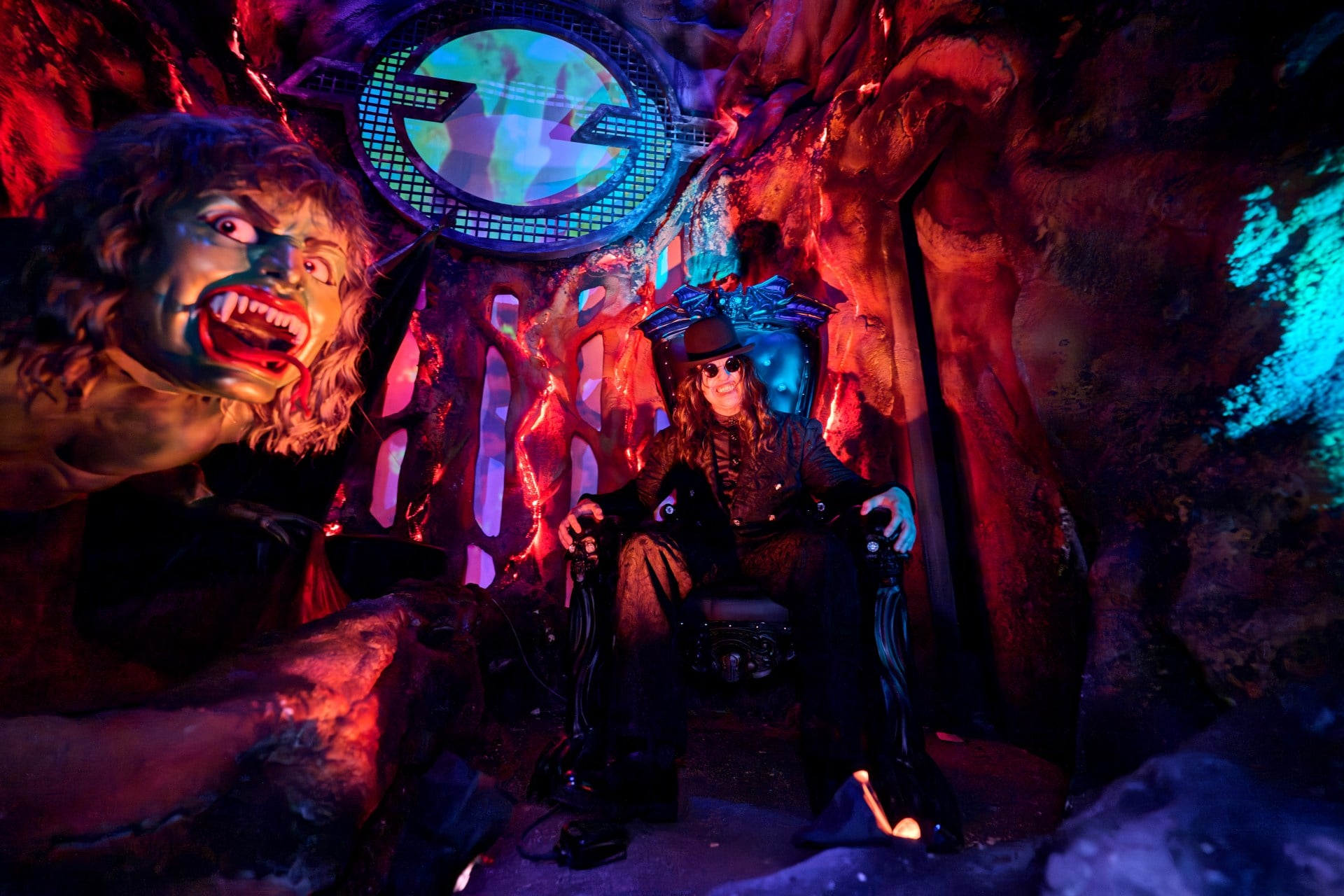
1. Ozzy Osbourne: Prince of Darkness
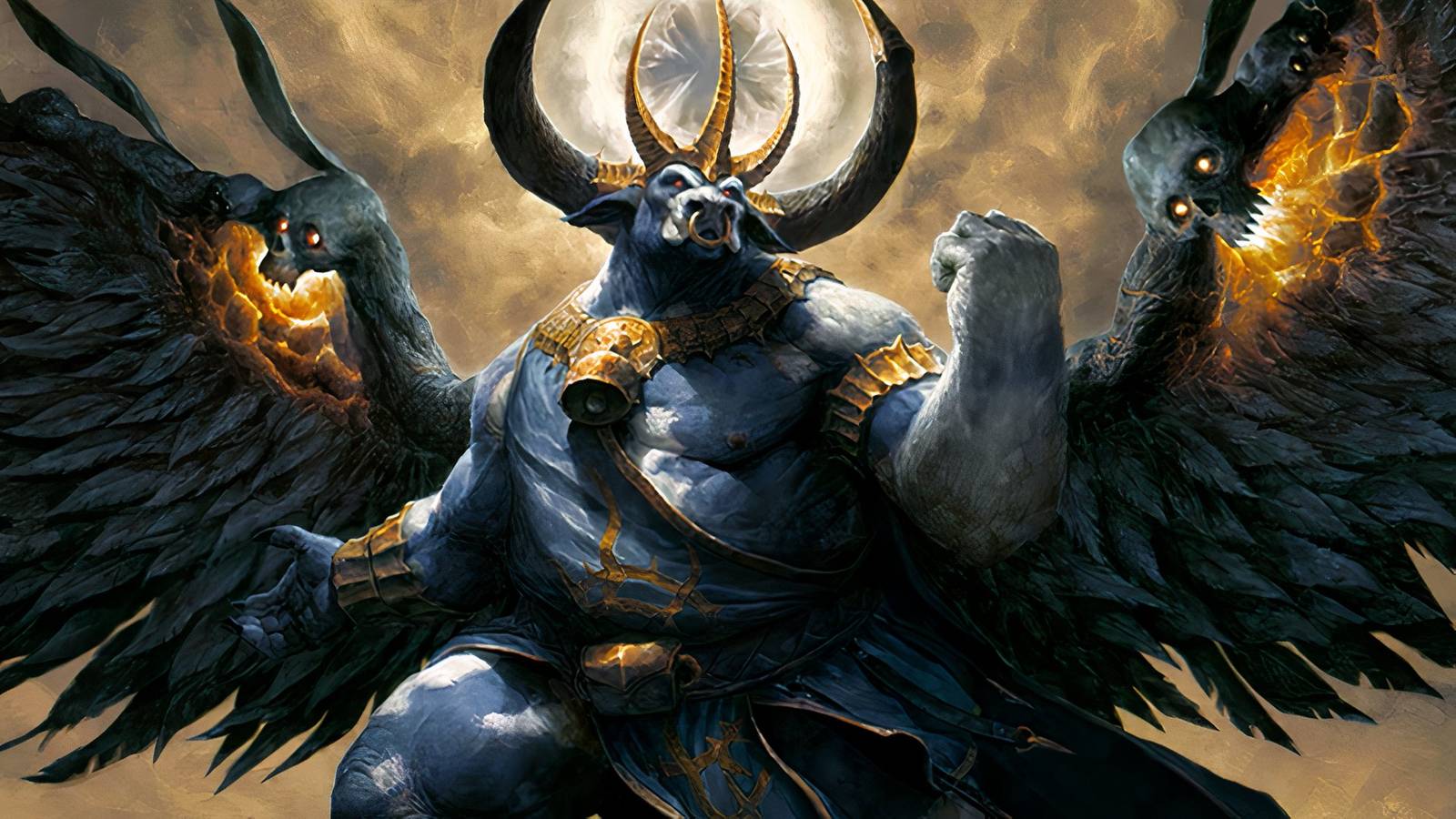
H.R. Bloodengutz might be the funniest, but the best overall house this year riffs on the solo career of heavy metal’s greatest legend. It turns a handful of Ozzy Osbourne’s biggest solo songs—”Bark at the Moon,” “Trap Door,” “Bloodbath in Paradise”—into immersive environments inspired by their lyrics and by artwork from Ozzy’s music videos and album covers, to often startling results. The final half of this house—from when “Crazy Train” starts to the exit—is a juggernaut of themed design, a sequence of stunning images, transportative sets, and unexpected characters that ranks among the best in Halloween Horror Nights history. The “Crazy Train” section in particular is a masterclass, using screens, practical effects, live actors in elaborate costumes, and one of the best hard rock songs ever recorded to tell a micro story about the passage of life. The whole house is rad, and Universal goes hard in a testament to the esteem in which Ozzy is still held in the metal, horror, and creative communities.