






We are in the era of remakes, with heavy-hitters like Capcom promising major remakes of some of their beloved titles, like Resident Evil — Code: Veronica. The 2000s Dreamcast hit, now titled Resident Evil Veronica, is slated for a ground-up remake with a 2027 release on the horizon. While little is known about the upcoming game, it seems that Capcom is committed to reworking a few key things, doing some major housekeeping to get the game ready for release. Tackling modernized controls, graphics, and a re-imagined story, hopes are high that Capcom can polish this entry to a shine.
For an almost 17-year-old game, Resident Evil — Code: Veronica still boasts a mighty fanbase drawn to the game’s campiness and whimsy, serving as a mainline title with the most personality, at least in my opinion. While I am a fan of the title, especially the storyline, there are major issues presented when playing Resident Evil – Code: Veronica today, issues so big that at times I felt like throwing my controller across the room. Especially when compared to Capcom’s latest release, Resident Evil Requiem, it is easy to see how the company and their games have grown. With promised changes in mind, there are still a few imperative modifications that need to be made in order for the remake to fly. In short, Resident Evil — Code: Veronica can learn a thing or two from Resident Evil Requiem‘s success while getting ready for the remake treatment.
-
-

-


While Capcom works on cosmetic issues and modernizing controls, the best way to make Resident Evil — Code: Veronica better is to create a more pleasant and less punishing experience. If this new remake can learn anything from Resident Evil Requiem, it is that proper progression and measured difficulty are key to a story feeling and playing naturally, and that switching between characters doesn’t have to be so jarring. Without even trying, Resident Evil — Code: Veronica is one of the harder games in the mainline series due to extremely frustrating roadblocks. Soft blocking is a common and insanely annoying issue that I faced countless times during my first playthrough simply because I didn’t know any better.


Find all 10 pairs
Find all 10 pairs
Regular Cover ArtClean Cover Art
Whether it be the agonizing T-078 Tyrant fight held at the back of a plane, Steve Burnside’s jarring mutation and eventual chase sequence, or leaving behind a stupid fire extinguisher, there are plenty of times in the game where first-time players can accidentally screw themselves over if precautions aren’t taken to stock up on ammo, key items, and health ahead of time. Soft blocking is the most common gripe with the game because it halts all progression. Players are forced to return to an older save file, or in cases of points of no return, start the game over in its entirety.
If this new remake can learn anything from Resident Evil Requiem, it is that proper progression and measured difficulty are key to a story feeling and playing naturally, and that switching between characters doesn’t have to be so jarring.
Thinking about it now is making my blood boil as I write. Expecting players to be ready for anything, hoarding resources is a part of survival horror, but Resident Evil — Code: Veronica takes the concept a step too far by punishing players with brutal boss fights or annoying off-screen enemies if they don’t carefully store away health or enough ammo to take them down. In the case of the infamous fire extinguisher, the game essentially blocks off any backtracking to the island, a portion of the game’s expansive map that can no longer be accessed due to an explosion. And it was all made worse by the fact that the fire extinguisher was on the island, thereby preventing players from getting it.
-

-

-


This is a key end-game item needed to put out two specific fires, including one that is required to progress the story, while another optional one unlocks a powerful weapon that is mighty helpful for future boss battles. On my first playthrough, I forgot to grab the extinguisher from the island, leaving Chris without it. Faced with no other option, I was forced to restart after hours of gameplay, heading back to an earlier save file so I could ensure I had that extinguisher, a seemingly arbitrary item. Creating fail-safes or triggers by adding in clear warning signs or writing in-game logic that checks if key items or areas are accessible before locking off an area can mean the difference between a fun but challenging playthrough and an annoying slog.
In Resident Evil Requiem, these guardrails are implemented so that if players manage to reach a progression milestone without the specific gear required to clear it, the game’s checkpoint and auto-save systems act as safety nets. Progression is clear but not so obvious that it is spelled out for players. If a new player is stuck, they can simply return to a checkpoint to reassess the situation instead of being forced to travel back to an old save file, wasting hours of gameplay. Difficulty is managed this way by making progression semi-fluid, putting in roadblocks that, with a little elbow grease, can be dismantled.
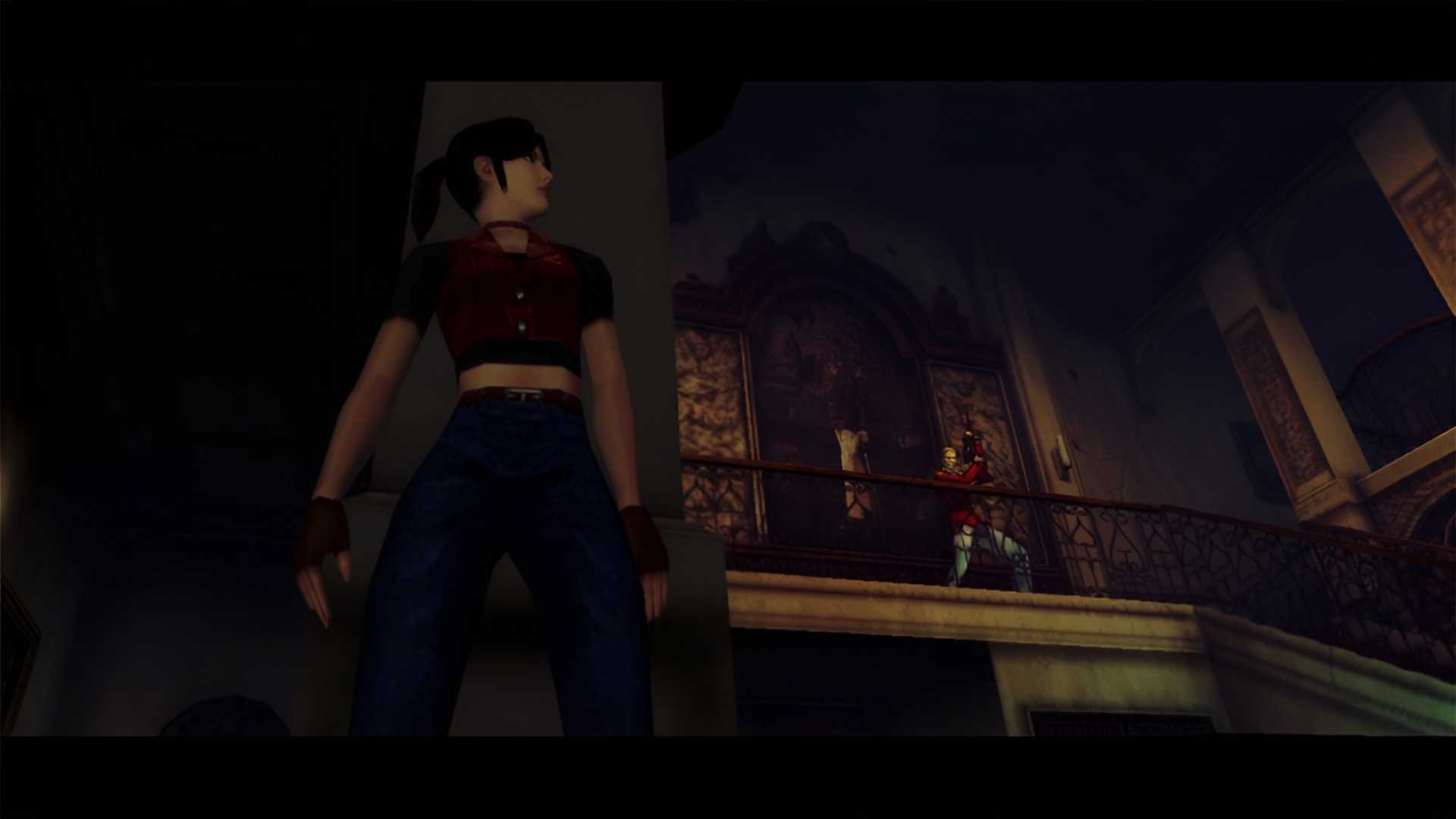
Another thing that Resident Evil Requiem masterfully executes is its character switching. Complete arcs are played through before characters are switched between, making switches seem more fluid and less jarring. Players leave a specific character wanting to know more but still satisfied with the time they had with them. Switches were perfectly paced, giving me enough to work with where I felt satisfied to move on. The same cannot be said for Resident Evil — Code: Veronica. Switching from Claire, to brief sections with Steve, to Chris towards the end of the game was jarring.
In Resident Evil Requiem, these guardrails are implemented so that if players manage to reach a progression milestone without the specific gear required to clear it, the game’s checkpoint and auto-save systems act as safety nets. Progression is clear but not so obvious that it is spelled out for players.
Sometimes, players would be Steve for around point-five seconds before switching back to Claire. Players never really get ample time with Steve, which could explain why many fans of the game dislike him. Playing as Chris, players are forced to backtrack to sections already explored, backtracking for key items in places we’ve already spent hours in. More frustrating, Chris and Claire share an item box; however, they don’t share personal inventories.
This means that if Claire is holding a key item while a player is playing as Chris, they won’t have access to it until another switch is made. This can leave players without health, ammo, or key items needed to beat extremely hard bosses like a mutated Alexia Ashford, yet another soft block. Grace Ashcroft and Leon S. Kennedy do not share inventories. In fact, their inventory setup is completely different. It keeps the gameplay unique and offers players a new way of tackling the same environments or enemies if backtracking is required.
Better pacing that evens the playing field, making key items more obvious or hard to miss, and eliminating accidental soft blocks could make Resident Evil — Code: Veronica as enjoyable as Resident Evil Requiem. It’s about tailoring a game to the player’s experience, giving fans something to challenge them, but not so frustrating that they rip their hair out. While the original can be difficult, Resident Evil — Code: Veronica is still a great jumping-off point for a remake and a must-play for fans, even with these obstacles in mind. It is a mainline title with direct plot points that greatly impact the series’ overarching narrative. It is a classic entry to the franchise, and one that should be treated with care as it is reimagined for today’s audiences.
To Keep Fans Happy, Capcom Needs to Keep the Camp


Something that is essential to Resident Evil — Code: Veronica, and a slew of other titles in the series, is camp. Resident Evil games are great because, while there are some serious and scary moments, levity is brought through fun character interactions or cheesy one-liners. It is a much-needed balance that Resident Evil — Code: Veronica masters. Without campy moments like every encounter with Alfred Ashford or Steve’s surfer boy persona, Resident Evil — Code: Veronica would be losing a major piece of itself. Keeping those moments is imperative to doing the remake justice.
It is what made Resident Evil 4‘s remake so successful. Many of Leon’s quips were kept in, bingo and all, brilliantly linking the original to the remake. These moments can be reworked and rewritten to fit the sensibilities of today’s gamers without losing their magic. Resident Evil is chock-full of meme-worthy moments that make the franchise so popular. From turning main characters like Jill into a sandwich to Leon constantly flipping and showing off, camp is in the DNA of all of these titles. Resident Evil — Code: Veronica is worth a playthrough because it is so much fun, despite all of its flaws. Campy moments make up for clunky controls or difficult boss battles.
Funny one-liners or awkward dialogue make these older games have the longevity that they do. These memorable moments are what stick out to me, not the faults. That’s why I keep coming back to titles like Resident Evil — Code: Veronica or even Resident Evil Survivor, titles that would have been forgotten if it weren’t for the humor they provide unintentionally. Having a sense of humor about these older games is the best way to enjoy them.
It is what makes them worthy of a replay. Just as Capcom did with the Resident Evil 4 remake, Resident Evil — Code: Veronica deserves to be reborn with all-new graphics and controls, while maintaining the key facets that made it so great in the first place. That means keeping awkward dialogue, but rewriting it slightly or updating characters to give them more personality and depth. Camp is in Resident Evil — Code: Veronica‘s DNA. If humor isn’t included in the remake to some extent, then the 2027 game is simply not a successful remake. For all its faults, Resident Evil — Code: Veronica is a romp fans need to experience, if only to have themselves a good laugh.


- Released
-
2027
- Number of Players
-
Single-player