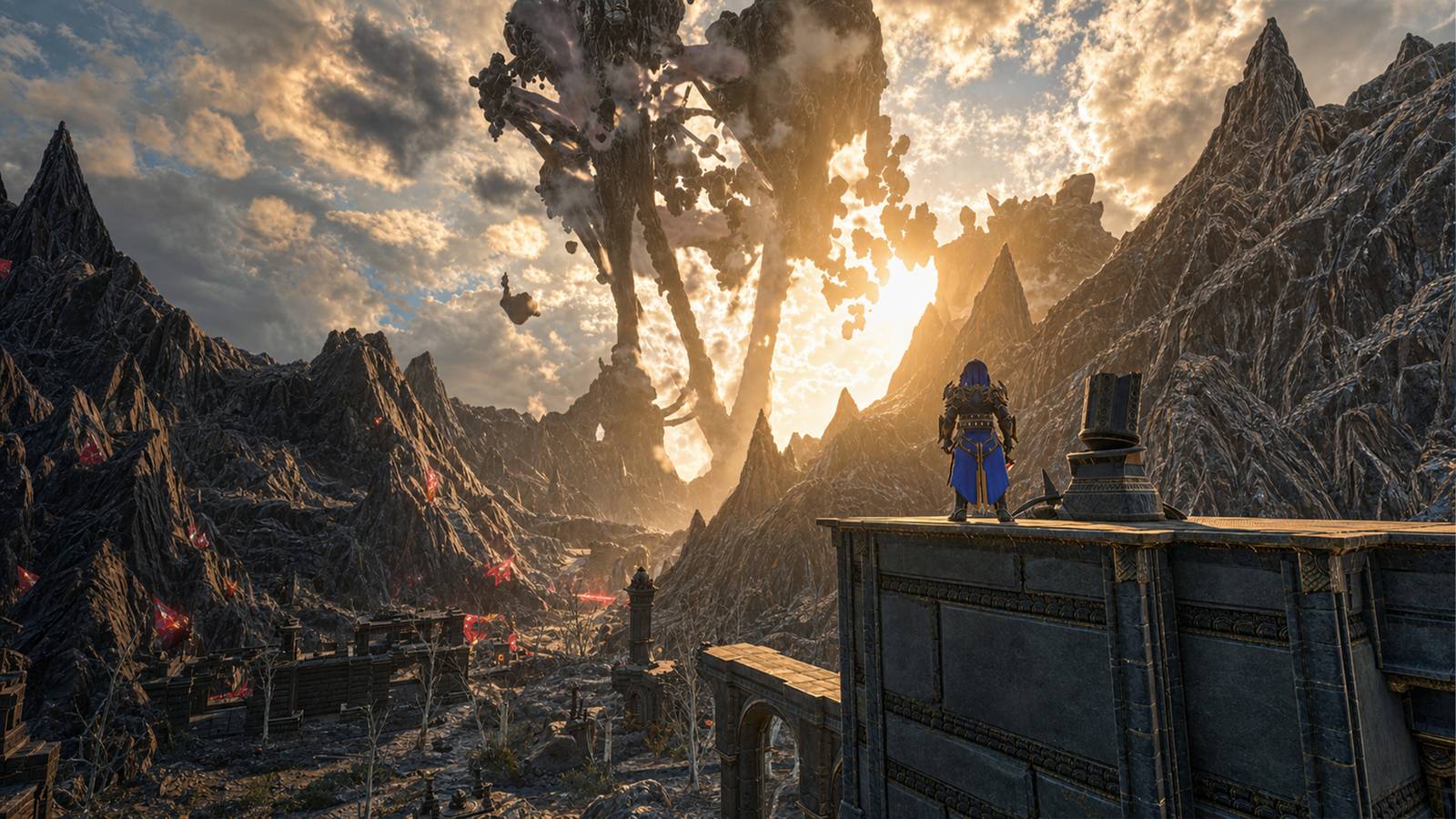




Back in the early RPG days with games like The Elder Scrolls 3: Morrowind, the idea of extensive map markers and constant guidance was still a far-off concept. You would spend most of your time tracking down rumors and chasing clues across the world, without the need for icons or objectives, and that is exactly what The Lantern of the Laughless Saint is attempting to emulate over 20 years on. Too often do these large-scale RPGs fall into the trap of holding your hand as you explore and delve deeper into the landscape, but the roots of the genre used a much more traditional way of thinking that encouraged players to think more about their surroundings and truly lean into the spirit of adventure.
Funny enough, as time has gone on and genres have evolved in new directions, it feels like we are actually seeing a lot more backtracking and course corrections toward a simpler time when games felt more natural and less artificial in their presentation. The Lantern of the Laughless Saint is a great example of this reversion to the past done right, where the devs have clearly seen how well a game like Morrowind emulated a fantastical world with you at the helm. It’s a nice breath of fresh air that doesn’t necessarily make too many bold moves into uncharted territory, and instead chooses to take an existing and successful blueprint and apply it to a modernly refined experience.
The Lantern of The Laughless Saint Returns to Traditional Exploration
Check out The Lantern of the Laughless Saint on Steam

Open-world RPGs have grown to be one of the most popular and crowded video game genres around, and over the last decade or so, we have seen a major shift towards a very specific and troublesome ideology, that being the insistence on map markers and direction. Launch almost any modern open-world RPG, and you will be greeted with upwards of 100 different icons across the gigantic maps, ranging from outposts to collectibles, and as a result, your journey through these otherwise beautiful landscapes can feel more like you are checking off a list of objectives than actually engaging with the world.
Now, there is a place for this kind of game design, and I would argue that having it be included as an optional toggle is the best-case scenario for everyone, as it gives more casual players an accessible way to play through the story and the wider universe, whilst letting more seasoned ones become more immersed over time. Some of the most enjoyable segments of a great RPG are where you get to really explore the world and see the inner workings of the people and creatures beneath the surface, but if you can see everything all at once without having to take a single step, then a lot of that magic gets lost before you can really experience it.
The Lantern of the Laughless Saint is a great example of this reversion to the past done right, where the devs have clearly seen how well a game like Morrowind emulated a fantastical world with you at the helm.
With so many games choosing to go down this map marker-centric route, it is really nice to see devs like those working on The Lantern of the Laughless Saint go the other way and instead present you with a world devoid of concrete direction. At its core, the game is all about moving through the mysterious and inviting world at your own accord, discovering side stories and encountering strange characters in a much more organic manner than if they were just pinpointed from the get-go. This does mean that a lot of the game’s runtime is filled with quiet wanders through the wilderness, and it can take some time to actually find your way in some cases, but when you finally figure out a lead or solve a puzzle, the satisfaction is almost overwhelming.

Also, there is far more choice in terms of how you engage with the game’s content. In the past, a simple quest to retrieve an object from an NPC would normally follow a strict routine or pattern that we have seen a thousand times before. But, much in the same way as Morrowind, here, you can actually take many alternative paths to the same goal, like being kind or mean to specific characters, and you are more than welcome to move between locations at a pace that suits you, never being forced to skip over segments or return in a timely manner if you choose not to.
Map Markers Can Do More Harm Than Good
Big-name games are often the ones that set the tone in a genre, and as it turns out, that is not always for the better. As nice as it is to be able to digest a gigantic RPG at a moderate rate, it is no secret that the abundance of map markers has made a lot of these games into something far less engaging. On the surface, having a few additional dots on the map may not seem like that big of a deal, yet if we look at the most successful and well-reviewed open-world RPGs over the past few years, the common thread they all share is this lack of adherence to convention and a greater focus on quality over quantity.
Games like Breath of the Wild, Elden Ring, Dread Delusion, and now The Lantern Of The Laughless Saint are the perfect examples of developers using maps in creative ways. They fundamentally change our relationship with them, not by completely removing them from existence, but by turning them into guides for curiosity, not scaffolds to keep us from going too far from the beaten path. The Lantern Of The Laughless Saint wants you to explore every inch of the world from top to bottom, and it wants you to experience first-hand all the quirks and oddities that exist in the corners of the land, but at no point is it going to tell you in what order to do things or exactly where to go.

I think the most telling part of this kind of philosophy is how we are seeing far more games look to past successes rather than trying to play things overly safe. Decades ago, The Elder Scrolls was already laying the groundwork for how future RPGs would look, and it feels like we got to a pretty solid point at around the third entry, and then suddenly strayed towards markers and widespread appeal. In turn, the overall quality of the actual RPG elements faltered, and now, it makes perfect sense to turn back the clock and use the concepts that established the entire genre to bring us back to the glory days that have otherwise been forgotten.
At the end of the day, the whole industry is starting to wake up to the idea that these tired conventions are no longer the correct path to take, and that players are far hungrier for something more true to the experience they were promised from the beginning. When I boot up an open-world RPG, I want to explore, conquer, and learn about the universe, not be gifted it on a silver platter in the first few quests. The Lantern Of The Laughless Saint has been an absolute delight to play, and the praise it has received is more than worth it. I just hope that other RPG developers can see where this game went right, and not follow in the footsteps of countless others who fell at the last hurdle.
Lantern Of The Laughless Saint is being developed by NerveLabs and is available on PC via Steam Early Access for $19.99.