
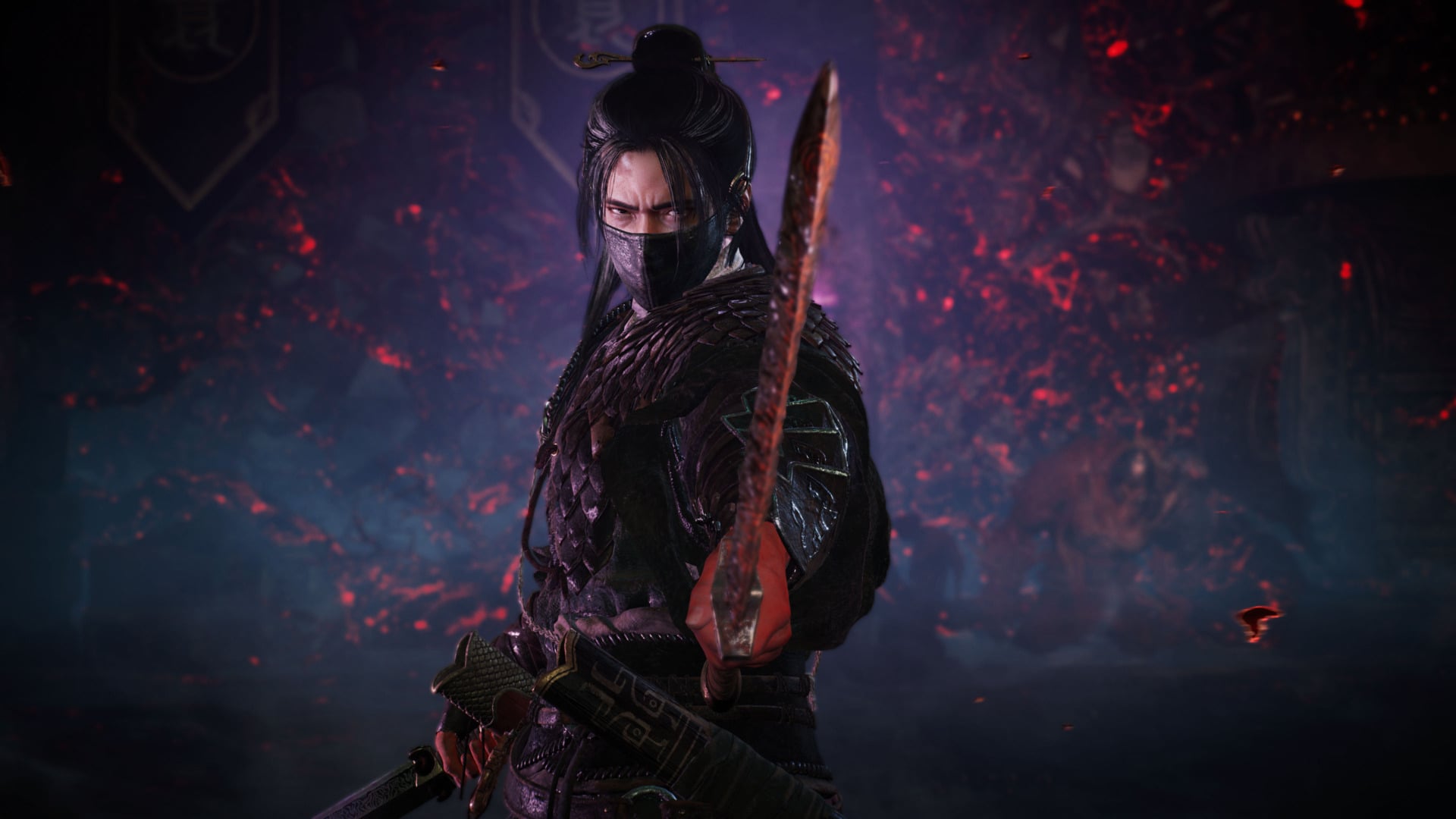






Team Ninja is known, in part, for developing difficult games, but producers Kohei Shibata and Masakazu Hirayama emphasized during an interview with INVEN Global at GCON 2026 in South Korea that there’s a key difference between difficult and unfair. The pair also spoke about how the Koei Tecmo subsidiary approaches the use of AI in games development, and an awkward compromise between implementing the technology for repetitive QA tasks, while arguing that “what matters fundamentally is that a game becomes fun when crafted by human hands.”
Shibata and Hirayama are best known for their work as producers on the Nioh and Wo Long series respectively, two games that take the combat-driven difficulty of the iconic Ninja Gaiden franchise and transpose it onto the world of samurai and Chinese mythology. Before the topic of AI arose, the two discussed the crucial role of player interaction and movement in their games, beginning with the similarities between all three franchises and most notably their swordplay and the focus on timing your attacks and reading an opponent’s next move. According to both, this process of requiring a player to learn an enemy’s next move and counter is key to straddling the line between challenging and frustrating play.
“I consider Nioh to be samurai action,” explained Shibata. “Samurai combat involves stillness and movement. You stand firmly grounded, observing the opponent’s moves, and deliver a sharp strike the instant an opening appears.” Meanwhile, for Hirayama on Wo Long, that game was defined by “aggressive Chinese martial arts action,” where “attack and defense flow together seamlessly” and where “aggressively attacking is important, but defense must also lead directly into the next attack.”
The two go on to argue that it’s important to make a game that is polished in a way that reduces friction between a player’s action and consequence. If a person fails, it must be their fault, not the game’s. “I believe [the core essence of action games is] control responsiveness,” Shibata explained. “When a player presses a button, the character must move exactly as they intended. If you press a button and the character doesn’t react properly, it causes frustration. Conversely, if a slight input causes an exaggerated movement, it feels awkward. Therefore, responsiveness to input must be simple and intuitive, and the movement must be communicated rapidly.”
QAI
We have seen numerous studios speak out in recent times about where they will and won’t use AI. While some Japanese developers are embracing the technology, others are more cautious, either avoiding it entirely or insisting they only use the technology for optimizing their development framework while leaving creative choices to humans. The latter is the direction being taken by Capcom with its next generation of RE Engine, and appears to also be the choice being made by Team Ninja, who are already using AI for QA purposes.
As Shibata explained, “Currently, we utilize AI in QA and various verification tasks to streamline certain workflows. If we can use AI to shorten task times, we can dedicate that saved time toward elevating the game’s overall quality. In that sense, using AI is beneficial. However, since it is still a new technology, we are continuously evaluating the most appropriate ways to implement it. I imagine other game companies are facing similar questions.” He continued,
What matters fundamentally is that a game becomes fun when crafted by human hands. Repetitive, simple tasks that anyone must perform can be streamlined using technology. But ultimately, deciding how to craft the game and what makes it enjoyable must be done by humans. Using AI itself should never become the goal. I believe the principle that humans must think for themselves and finish the game will remain unchanged in the future.
Where, if anywhere, is an acceptable use of AI is a topic that remains up for debate, but it appears many developers are settling into a space where it is used to handle repetitive tasks. The use of AI in QA actually predates the modern conversations of generative AI, and doesn’t necessarily rely on the tech: Sony, for instance, has been experimenting with AI for many years to test games. Whether this is something audiences are willing to tolerate, or indeed is something that will further threaten jobs in the games industry, remains to be seen.