





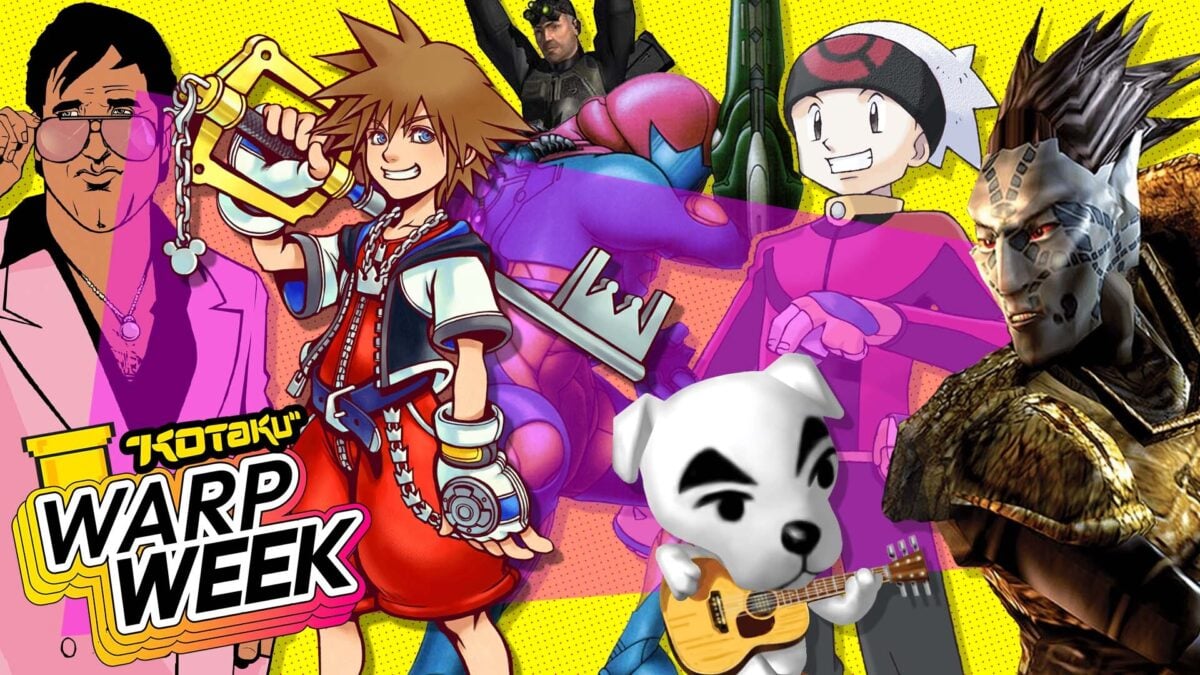
It is the end of Kotaku‘s first Warp Week, in which we’ve take you back in time to a specific year in video game history to look at the good, the bad, and the strange. This time we set our sights on 2002, reflecting on the PlayStation 2, GameCube, and Xbox era; the games that were pushing the limits of the medium and that were shaping conversations about its future. Naturally, we had to end the week by looking back at the best games from the year. We didn’t rank them, so don’t get mad at the order; just tell us the things you think should have been on this list in the comments!
Grand Theft Auto: Vice City

Rockstar’s open-world sequel to GTA 3 could have ended up on this list based solely on its soundtrack and vibes. But Vice City is so much more than that. It offers up what was, at the time in 2002, a vast urban playground drenched in neon and sunshine. Today, GTA: Vice City might seem small, but at the time I remember playing it for hours and feeling like I had only scratched the surface of its 1980s simulation. — Zack Zwiezen
The Elder Scrolls 3: Morrowind
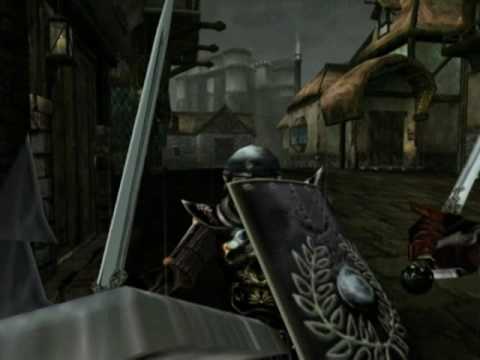
Ten years prior to the release of The Elder Scrolls III: Morrowind, a game arrived on PC called Ultima Underworld: The Stygian Abyss, and it changed my life. The landmark release from what would later become Looking Glass Studios made me feel immersed in its world like no game before it had. Not only could I swing weapons at my enemies—standard stuff even then, of course—but I could pick objects up, drop them, throw them, steal them, eat them. And I was no longer limited to the grid-based movement of so many other dungeon crawlers and RPGs, but I could move step by step, forward or back, and at any angle I wished. I could even look up and down, something the following year’s first-person sensation, Doom, wouldn’t match!
Of course this kind of immersive experience continued to advance rapidly throughout the decade that followed, with games like 1994’s System Shock, 1999’s Thief, and Bethesda’s own Arena and Daggerfall, among many, many other games. But it wasn’t until 2002’s Morrowind that I felt another Ultima Underworld-style leap had taken place. Here was a massive world, not quite as massive as Daggerfall’s but so much more cohesive and memorable, more hand-crafted and alive. Here was a game in which I could pursue the main quest and become a savior to all, or spend dozens and dozens of hours wandering around, pursuing side activities, and casting spells or finding items that made me invisible, or that let me fly, or that made me zoom around at incredible speed. You never knew what remarkable new item you might discover, what new ability you might attain through magic or other means.
Part of what made Morrowind feel so immersive and alive was its willing to risk giving you game-breaking abilities, and while later Elder Scrolls games have of course been more refined and elaborate, they’ve also been a bit more limiting, a bit more rigidly structured, not quite as filled with the sense that just about anything is possible. And as a result, no big fantasy RPG since has quite pulled me into its world the way Morrowind did, all those years ago. — Carolyn Petit
Warcraft 3
For a large chunk of 2002 (and 2003), Blizzard’s incredible RTS completely consumed my weekends as a young lad. I played through the campaign, burning voice lines and sound effects into the deepest parts of my brain. “Work, work” is still seared into my gray matter decades later. Then I discovered online multiplayer and the ability to make my own maps, and Warcraft 3 stole away many more hours of my youth. What a game. And what a damn shame we’ll never get a Warcraft 4. — Zack Zwiezen
Animal Crossing

As much as I love New Horizons, sometimes I long for the days when Animal Crossing was on some real weirdo stuff. The original Animal Crossing was truly like nothing else, not even the other cartoonish sims like Sim City and Harvest Moon that it tends to be grouped with now. The characters were strange, even rude animal neighbors; its world was based on a real-time clock that slowed progress to a year-long crawl; and gameplay mostly consisted of finding cool things to decorate your house with. And yet Animal Crossing was so compelling in that strangeness: we fell in love with our neighbors’ quirky personalities and the steady changes we saw take over our towns from day to day and month to month. Animal Crossing has since gotten bigger, kinder, and more full. But I still get a lot of joy out of revisiting that strange, cylindrical world on the GameCube where a mole yelled at me for shutting off without saving, and where I was in constant, horrific debt to a raccoon. — Rebekah Valentine
Splinter Cell

There are certain games that stick with me forever. Splinter Cell is one of them. Not just because it was a tense stealth-action game that offered many options and felt great to play, but also because it looked incredible. I remember being truly floored by the lighting and shadows in the original Splinter Cell. It seemed photorealistic. Sure, looking at it now, it shows its age, but I still contend that it holds up pretty damn well considering Ubisoft put it out over 20 years ago. This is also the game that gave the world Sam Fisher, voiced by Michael Ironside, and what a gift. Ubisoft, please make more Splinter Cell games. — Zack Zwiezen
Kingdom Hearts

I bet you can finish this phrase, “When you walk away, you don’t hear me say -” and I bet that as you do, you can see the exact commercial playing in your head that taught the phrase to you. Kingdom Hearts was a cultural moment. It’s Final Fantasy for kids born in 1997. Tetsuya Nomura worked incredible eldritch magic to get Disney to go, “yeah sure, why not?” granting Square Enix access to the most protected and coveted IP on the planet, which the mad-scientist developers then spliced together with their own franchise of moody twinks with big swords and somehow, it fucking worked. Kingdom Hearts worked because it both did and did not take itself seriously. Sora could bounce around with Donald Duck and Goofy, swinging a fuck-off cool keyblade through the lands of the most beloved animated movies ever made while also fighting back an army of shadow goblins literally born from the evil in human hearts. Square Enix struck the right balance of absurdity and sincerity, then worked yet another miracle to get Hikaru Utada write an original song so damned powerful that you still remember it today. — Ash Parrish
Star Wars: Jedi Outcast 2

Yes, yes, there are blasters in Jedi Outcast. And yes, shooting them feels good, and I’ll always enjoy blasting some Stormtroopers with an E-11. But the real reason so many people love Jedi Outcast is because of its lightsaber combat. Dark Forces 2, this game’s predecessor, also had a lightsaber, but it felt clunky. In comparison, Jedi Outcast’s saber combat is incredible. It flows so well and makes you feel like you really are cutting down enemies with a big laser sword. It even leaves marks on the floor and walls and cuts off limbs. To this day, lightsabers in video games are chasing what Raven Software pulled off back in 2002. — Zack Zwiezen
Metroid Prime

Nintendo pairing up with Retro Studios in Austin, Texas would prove to be a legendary collaboration, touching off a generational run of 3D Metroid games starting with Metroid Prime. Much like Super Mario 64 changed how we experience Mario platformers, Metroid Prime did for Samus shooters. Metroid Prime changed the dimension and perspective, making for a darker, more mature game. And Prime accomplished that edgier level-up without losing the original spirit of previous games. Metroid Prime is just as much a moody, isolated experience as previous Metroid entries, with the first-person perspective and scanning mechanic adding a space-explorer vibe that makes Prime feel like Indiana Jones in Space. — Ash Parrish
Metroid Fusion

There’s no denying that Metroid Prime on the GameCube is the landmark Metroid release of 2002, the one that will be forever remembered as a remarkably immersive experience that expertly translated the series’ signature elements into a 3D, first-person adventure. But it was also a terrific year for fans of Samus Aran’s 2D exploits. Eight long years after the release of Super Metroid, we finally got another sidescrolling thriller starring the galactic bounty hunter, and to its credit, rather than trying to imitate its legendary SNES predecessor, Fusion charted its own path, delivering a more claustrophobic experience. Gone are the hostile planetary settings of earlier Metroid games; Fusion takes place entirely on a space station, and Samus is not alone. Parasitic organisms known as X have taken on a Samus-like form, and throughout the game you are stalked by this relentless SA-X, as it’s known. The result is a game that fuses the DNA of sci-fi suspense classics like The Terminator and Alien to make you feel like the prey in a deadly game of hide-and-seek, and a worthy new entry in Samus’ sidescrolling escapades. — Carolyn Petit
Battlefield 1942

Here’s a funny story: The first time I ever upgraded a PC for a video game was for…Alien vs. Predator 2. But after doing so, I replayed Battlefield 1942 and discovered that I could now have more bots running around than before without it slowing everything down. This blew my mind. And what might blow your mind is that I fell deeply in love with BF1942, played hundreds of hours of it, and did so entirely offline. It wasn’t until sometime in 2004 that I finally got to play it online, and it blew my mind all over again. I’ve been a BF fan ever since, despite the franchise’s rocky track record. It delivers chaotic, large-scale FPS milsim action that’s still a blast to play in 2026, and BF1942 holds up better than you might think decades later. — Zack Zwiezen
Super Mario Sunshine

Super Mario Sunshine may not hold up as well mechanically as its successors, but its intense commitment to a summery aesthetic and its embrace of experimental mechanics were delightful in 2002, and remain highly memorable (lovingly or no) in 2026. Super Mario Sunshine is a masterclass in vacation vibes: The whole game feels hot, and wet, and resort-like, with the near-constant ability to spray water anywhere and everywhere serving as both a thematic hook and a fun new plaything to add new levels to Mario’s jumping repertoire. In turn, this makes the jetpack-less levels feel all the more challenging, though the catchy a capella World 1-2 rendition will help keep you going through death after death. Isle Delfino is believable and fun to explore, with its silly Pianta inhabitants and its worlds that manage to distinguish themselves from one another despite being unified under that same tropical resort theme. I love Super Mario Sunshine to this day, all of it, even its precarious Sand Bird level, its clonky pachinko machine, and whatever was going on with that lilypad ride. Its rough edges make me laugh, and Nintendo’s willingness to commit to such a massive departure from what Mario had been in the past was a necessary rocket-nozzle jump for Mario to reach the heights he’s soared to since. — Rebekah Valentine
Pokémon Ruby and Sapphire

Pokémon Ruby and Sapphire were more significant than most people probably realized at the time. They represent a time of great change for the Pokémon series, bringing the monster-taming phenomenon to the Game Boy Advance, cutting ties with previous games in a way that the series hadn’t before, but also ushering in a new era for how people would play these games for decades to come. The introduction of Double Battles remains one of the most significant updates to the series, one that fundamentally changed the course of how the greatest players would engage with Pokémon‘s deceptively simple battle system, creating new strategies and making competitive play a challenging mind game. The Hoenn region showed that this world had more identity and culture to explore, which became the basis for how future generations would present the Pokémon world. For years, detractors called Pokémon a fad that would die out quickly, but Ruby and Sapphire were proof that the series’ world was expanding, and it was here to stay. — Kenneth Shepard
