



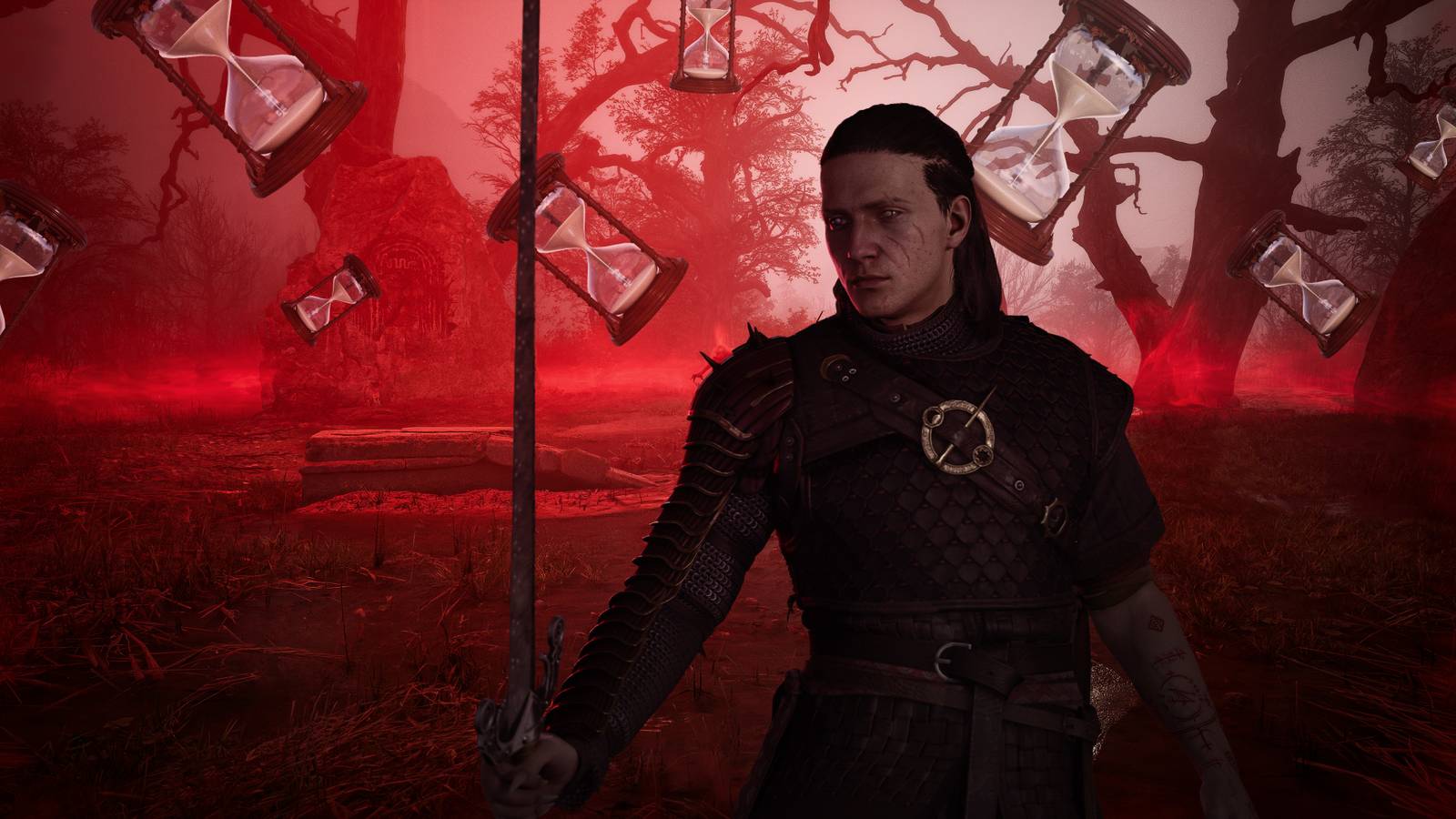
Open-world RPGs are known for having dozens, if not hundreds, of hours’ worth of content for you to explore, and in almost every situation, there is very little stopping you from seeing most of it in a single playthrough. Time-gated content has existed for quite some time, but for the most part, it normally comes in much smaller chunks where you might miss a single quest or fail to save someone if you aren’t quick enough. The Blood of Dawnwalker takes things even further with its controversial time mechanic that affects your entire playthrough, meaning that no matter how quick you are, there are always going to be moments you miss.
The biggest complaint that many players have is that this isn’t an optional difficulty where you can extend the timer or reduce how quickly things progress, and instead, it’s a core component of the game that you are simply going to have to live with. As a result, many Blood of Dawnwalker players have turned to modding the game, which allows them to remove the time pressure entirely and let them enjoy all of the game’s content in one go. Many players say that the mechanic makes the experience far more unique and interesting than other open-world RPGs, but there is also an argument for it creating unnecessary urgency and stripping away a lot of the freedom that the genre usually offers.
The Blood of Dawnwalker’s Time Mechanic Puts Freedom at Odds With Urgency
Making a new open-world RPG is never going to be an easy feat, especially when your competition is The Witcher 3, Elden Ring, Skyrim, and dozens of other world-class games that feel borderline unbeatable. When The Blood of Dawnwalker was first announced, many people were quick to get on the hype train, and now after launch, it feels like a solid entry into the genre that has its fair share of issues, but still stands on its own two feet. On the surface, it doesn’t seem to have a lot of new ideas or concepts in play, yet when you actually start playing, you realize there is a unique mechanic that dictates your entire playthrough right from the get-go.
The game is governed by both a day-night cycle and a time system that slowly moves forward as you take actions and interact with the world. It isn’t actually tied to a timer like in other games, but is closer to an energy mechanic, where you only have a certain number of actions you can take before the next day comes around. This less fast-paced approach is a welcome change to a concept that so many players take issue with, and yet, judging by how quickly the game’s timer was modded and how over 13,000 people have downloaded it (via PC Gamer), it is obvious that the sense of urgency is still very much present.
Many players say that the mechanic makes the experience far more unique and interesting than other open-world RPGs, but there is also an argument for it creating unnecessary urgency and stripping away a lot of the freedom that the genre usually offers.
I think the biggest issue with the mechanic is how at odds it is with the conventions of the open-world RPG genre. Many of the best games in the genre have a whole host of side activities and quests for you to find and explore along the way, and as unrealistic as it may be, you are pretty free to scour every last inch of the land before progressing the main story by even a single step. By having this giant world full of content, you are effectively giving players a playground to enjoy at a pace that suits them, so if they want to be a completionist and grab every last collectible or skip straight to the end, then they should be able to.
That’s where the friction of The Blood of Dawnwalker comes in, as no matter how efficient and how well you play, it is simply not possible to experience every quest and interaction without a second playthrough. The time mechanic marches forward constantly, and it does actually have some interesting moments that are otherwise nonexistent in other similar games. Failure states are common, simply due to how much content you have to effectively skip, and as a result, the world is much more believable and reactive and evolves with you over the course of the 30 days. With that said, it still feels like an artificial way to achieve a sense of immersion and realism that many other games have achieved without gated content.
Timed Content Can Be Effective In Smaller Doses
If you take a look at the wider RPG space, it is actually quite hard to find a game that is completely devoid of time-gated content. However, in the games that do include it, they often choose to keep it to a minimum whilst still achieving a believable experience. Kingdom Come: Deliverance is perhaps the best example of how to handle timed content right, as while there are moments where you need to be hasty with delivering medicine or showing up at a specific time, they are never directly at odds with the main story. The world reacts to how you engage with it, but it never forces you down a specific path at a specific time, playing into the more open-ended nature that so many people love in RPGs.
Conversely, other open-world games use time in a much stricter manner and remain satisfying to play as opposed to stripping you of your freedom. Pathologic is a stress-filled nightmare that starts its clock the moment you load in, and it is common for you to fail over and over before even understanding how to progress, but the main reason why it functions that way is due to the kind of themes it is exploring and the emotions it is attempting to elicit from the player. In The Blood of Dawnwalker, it is often unclear what the goal with the time mechanic is. Are you supposed to rush to save your family, or is the point to maximize your time in the world before the final days, or should you ignore it entirely? It seems no one has landed on a single answer to these questions.

Also, by adding this unavoidable layer of urgency to the gameplay, many players feel as though they are being pressured to play the game in a different way than they would usually, and the lack of options in the manner makes a lot of situations feel a lot more difficult than they would normally. I do believe that the static approach to time is a much better implementation, and we are seeing a similar approach to a limit in Phantom Blade Zero’s highest difficulty, where Soul’s 66 days become your lives. The difference is that when you run out of lives, your game ends, but in The Blood of Dawnwalker, the limit changes the ending but doesn’t stop you from playing the game. You have been running around with this imposed limit on your head, and when it finally ticks to zero, you can still just end the game in a slightly different way.
Where I see the biggest point of issue is how the time system is intertwined with the story. If you can run around and ignore the plot and complete all these amazing sidequests whenever you want, then you are going to feel much more in control of your playthrough and not pressured into deciding exactly when and how to do things. But if the main quest is locked into the same constraint of the passing days and nights, then the desire to see everything the world has to offer drops because your exploration turns into a form of currency. There is, of course, no reason why you can’t wander around and figure out which stories are worth your time, but I still think it is unfair to force players into a situation where large sweeps of the content that they paid for are going to be lost forever until they restart the save.

The Blood of Dawnwalker

6/10
- Released
-
September 3, 2026
- ESRB
-
Mature 17+ / Blood and Gore, Intense Violence, Nudity, Strong Language, Strong Sexual Content
- Developer(s)
-
Rebel Wolves