






The so-called “sad dad” genre exploded in popularity following The Last of Us, which found great success through its story about parental love. Games like 2018’s God of War followed suit, further proving that the exploration of parent-child relationships within a fantastical context can be uniquely compelling. That said, sad dad games are often guilty of retreading old narrative ground, recycling tired concepts like a gruff older man softening from the influence of an exuberant youngster.
You can’t say this about the Fallout games, which, for all their flaws, have done a consistently good job of presenting and analyzing bizarre or unusual situations inside their rendition of the post-apocalypse. Even in a game like Fallout 4, which many fans (myself included) found disappointing, there are interesting ideas to interrogate, whether that be the tragic fate of a child ghoul or the inexplicable moxie of a burgeoning journalist at the end of the world. Of course, Fallout 4 also famously centers on the plight of a parent, either a father or mother depending on the player’s preference, and it’s not the only Fallout game to explore the subject.
Spoilers ahead for all Fallout games except Fallout: New Vegas.
Fallout, Tides of Tomorrow Are Two Sides of the Same Post-Apocalyptic Coin
Fallout and Tides of Tomorrow both bring unique post-apocalyptic visions to life, but they do this in completely opposite ways.
How the Fallout Games Use Parenthood to Underscore the Reality of Nuclear War
Fallout 3 was the series’s first swing at 3D, but it was also the first to be developed by Bethesda Game Studios, which took over from Black Isle Studios. Opinions on this changing of the guard are varied, but for better or worse, it’s clear that Bethesda wanted to make a more cinematic, linear, detailed, and predetermined main campaign, one revolving almost entirely around the relationship between a father and his child, with the player filling the role of the latter.
Who’s That Character?
Identify the silhouettes before time runs out.
Identify the silhouettes before time runs out.
Easy (7.5s)Medium (5.0s)Hard (2.5s)Permadeath (2.5s)
After a fairly beefy prologue depicting the protagonist’s childhood in Vault 101, Fallout 3’s plot sets off. The hero’s father, who is their only parent after their mother died during childbirth, leaves the vault without explanation. The protagonist spends the majority of the campaign looking for their father in the Wasteland, only to discover that he fled in order to work on a project to restore clean drinking water to the region, effectively saving its inhabitants. To do this, he had to choose between being there for his child and doing right by humankind.
Through this narrative, Fallout 3 highlights a series’ thematic throughline: children are the future, but a future for humanity is far from guaranteed. With civilization in such stark and definitive decline, having a child means accepting an entirely new sense of responsibility, as a child cannot make the choice to emerge into such an uncertain and harsh world. Not only is the child themselves necessarily subject to an unforgiving, inhumane environment, but everyone else in that environment now has to fight harder; competition for scarce resources increases when a new person is born, but the resources themselves do not.
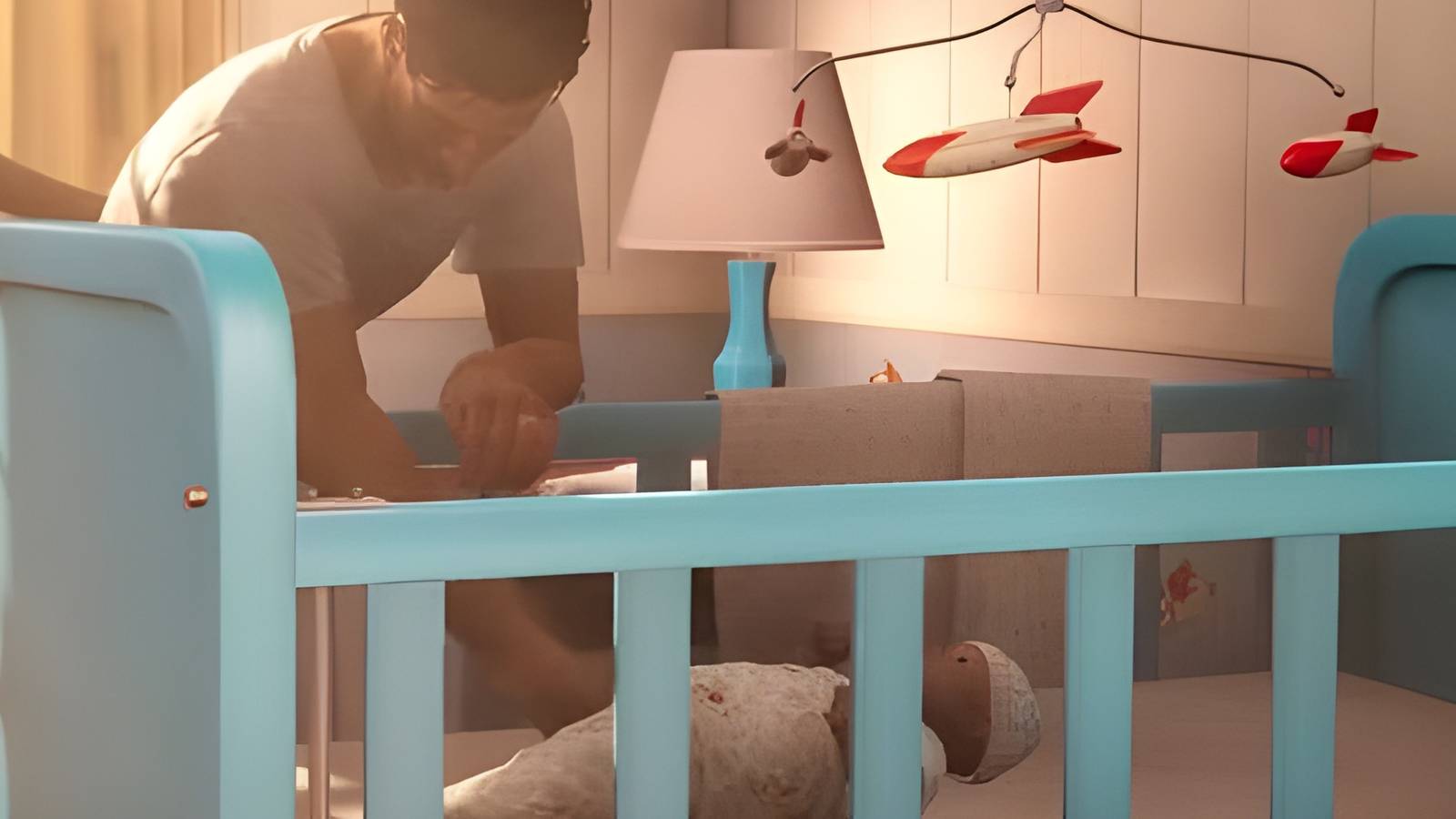
Fallout 4 inverts the dynamic of its predecessor, putting the player in the role of a parent looking for their child. But rather than exploring the burden that reproduction places on all parties involved, Fallout 4 shines a light on something that terrifies many real-world parents: the idea of their child leaving them and going down their own path, potentially one that is disagreeable or difficult to understand. This is what happens to the protagonist of Fallout 4, who eventually discovers that their son has become the leader of the ethically questionable Institute, which kidnaps humans and replaces them with lifelike androids. Morality is radically recontextualized in this post-apocalyptic world, and it’s much harder to look the other way or fence-sit when your own child is principally involved.
Being a Parent Isn’t All Doom and Gloom in the Fallout World
Becoming a parent is one of the hardest, most life-altering choices a person can make, and it’s immeasurably harder in a destroyed world like Fallout’s. How could one raise a child in such bleak conditions?
This is a more extreme version of a question that many parents face in real life. It’s difficult to justify having a child if you fear, for instance, the devastation that climate change is projected to bring in the coming years. I would argue that such things are actually smart to consider, but that doesn’t mean that antinatalism is necessarily the solution. By having children, our species has a better chance of actually having a future. Things might be hard for future generations in the Fallout universe, as in our own, but there’s no telling what those future generations might do to improve life or elevate humanity in the decades to come.

Drag weapons to fill the grid
Drag weapons to fill the grid
EasyMediumHard
The first Fallout is a good example of this idea. The player-character doesn’t have meaningful familial relationships, but they wind up serving as a sort of parental figure for their community: they have the choice of either facilitating a super mutant eugenics program or destroying a super mutant base, ultimately starting their own small society in the Wasteland. This settlement is the metaphorical child of the protagonist—a parallel that’s only strengthened in Fallout 2, wherein the player-character is their great-grandchild.
By having children, our species has a better chance of actually having a future.
In Fallout 2, it initially looks like the choice to keep humanity alive in the Wasteland has led to a predictably unfortunate outcome. The community started by the first game’s hero is beginning to die out due to a devastating drought, its only hope being their great-grandchild, who is sent to retrieve a G.E.C.K. kit to make the community fertile and thriving again. Reproduction and proliferation exacerbated the strain on the community’s resources, but because of the bravery and vision of the younger generation, the community is able to enjoy a new era of prosperity and hope.
The same can be said about the endings of various other Fallout games. The player’s father dies in Fallout 3, leaving them to complete his water purification mission. Had the father not had a child, then perhaps his life’s dream of providing fresh water to the Capital Wasteland would have died alongside him. The widely accepted canon ending of Fallout 4 actually sees Shaun being killed by his parent, but since the parent-son relationship is inverted in this game, this can still be seen as a younger generation making a sacrifice for the future. In these cases, having children can mean heartbreak and hardship, but it can also pave the way for a brighter tomorrow.

- Released
-
November 10, 2015
- ESRB
-
M FOR MATURE: BLOOD AND GORE, INTENSE VIOLENCE, STRONG LANGUAGE, USE OF DRUGS


