





As the gaming world has evolved, new technologies and products have constantly been added to the landscape, but one of the more controversial ones in recent times is Unreal Engine 5. Many people hear that a game is using it and might assume the worst, citing poor optimization, performance issues, long dev times, and a multitude of additional issues.
Guerilla Games’ Co-founder Developing ‘European Alternative’ to Unreal Engine
After stints at Guerrilla Games, Electronic Arts, and Epic, an industry veteran sets his sights on making a European alternative to Unreal Engine.
A lot of the criticism is pretty fair, and whether it falls on the developer or the engine itself is always up for debate, but the fact is, a lot of these problems have been around since UE5’s origins and seem likely to remain a fixture for the time being. For the most part, players are going to need to strap in and be ready for the long haul, as no matter how much they try, the reality they live in is going to stay that way for the foreseeable future.
Just to be clear, UE5 has plenty of positives, both for players and developers. Its Nanite and Lumen technologies are true breakthroughs, and the engine streamlines development workflows and is generally more accessible. UE5 is fantastic for open-world games, and it offers some of the best AI and physics. The visuals are also gorgeous.
We are going to focus on the frustrating parts of the engine, but its great aspects deserve to be mentioned as well.
Fit the 9 games into the grid.
Shader Compilation
A PC Gamer’s Worst Nightmare
Details:
- Stutter issues remain widespread among UE5 releases
- Compilation loads still heavily impact first-time play and beyond
Anyone who has played a UE5 game in the past few years will know the pain of downloading a large file and then having to wait an extra few minutes to even start playing. Shader compilation is an added step that exists in virtually every Unreal Engine 5 title, and even after sitting and watching the bar tick up for what seems like forever, there is no guarantee that everything will run smoothly
I and many others have noticed consistent stutters well past the compilation phase, regardless of the hardware, and as a result, everything from the gameplay to the cutscenes suffers as a result. The issue is partly structural, asUE5’s rendering systems are extremely complex, and compiling shaders for modern hardware configurations remains resource-intensive, so while developers can reduce the problem through pre-compilation and caching strategies, inconsistent implementation across studios means stutter-heavy launches continue to appear regularly.
UE5 Games Can Look Too Similar
We’ve Seen This All Before
Details:
- Shared lighting and assets create visual overlap
- Photorealism approach can flatten artistic identity
Video game eras are often defined by certain stylistic choices. The mid-2000s were dominated by yellow filters; before that, we had polygonal characters, and now, everything is about realism. When it comes to UE5 games, although there are ways to incorporate specific stylistic choices, a lot of devs opt for a more standard approach, which means many newer releases often appear similar, despite being from completely different worlds.
7 PC Games That Have Surprisingly Low System Requirements
PC games typically have a range of necessary hardware to run them properly. Here are some titles with surprisingly low system requirements.
I am someone who prefers art direction over fidelity, and while these hyperrealistic releases certainly have plenty of artistic merit, I can’t help but feel that they can start to blend after playing enough of them. Also, as the graphics become more demanding, lower-end PCs suffer, despite the visuals not taking a significant jump.
Brutal Performance Costs
Cool Tech For A Price
Details:
- Flagship technologies demand enormous hardware resources
- Upscaling has become mandatory
Different engines come with an array of features that developers can use to enhance the player’s experience. In the case of UE5, additions like Lumen, Nanite, and Temporal Super Resolution enable a level of visual detail previously impossible at scale, but as a result, your system is going to take a major hit.
Because of this, a lot of games rely heavily on upscaling technologies just to maintain acceptable frame rates, and even then, the visual clarity can be far worse overall. I am someone who certainly values performance above visuals, but if I have to play through a game with upscaling, still barely break 60fps, and have the graphics on low, then the entire sense of immersion is fundamentally broken.
PC Optimization Culture
Release First, Fix Later
Details:
- Major performance fixes often arrive weeks or months later
- Launch-day instability is increasingly treated as an expectation
As more and more big-budget games are released into the wild, it feels as though the launch of the title seems to have more value than a finished product. A lot of devs are rushing out releases to meet goals or deadlines, shifting priorities away from optimization and performance, so those first few weeks after launch are often seen as some of the worst.
This issue doesn’t ride entirely on the backs of the dev team, as they have quotas to meet and other factors influencing their decisions, yet it does feel pretty frustrating to pay upwards of $60 for an unfinished product that may or may not be fixed later on. I, for one, have been very hesitant about buying certain games because I don’t want to feel as though my money was wasted on something I can’t properly play right now. That sentiment certainly exists for many others, who would rather keep their wallets closed than risk sinking that cash.
This isn’t a UE5 issue; the engine’s games just aren’t exceptions.
Development Scope Inflation
Waiting Times Are Out Of Control
Details:
- Larger worlds with denser assets than before
- Increased capability often leads to unsustainable ambition
UE5 has introduced many new studios to a world of immense size, letting them create massive environments filled with highly detailed assets that are really pushing the industry forward. In practice, this encourages studios to pursue increasingly ambitious projects with larger maps, more cinematic presentation, and higher visual complexity, things that sound great for everyone, at least in theory.
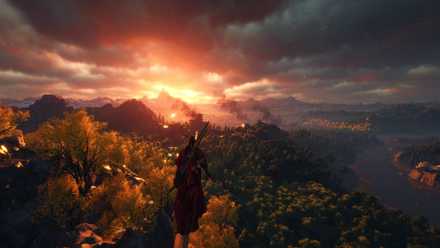
6 New Open-World Games With Insane Graphics
Here are the newest additions to the open-world genre from the past few months, each boasting truly spectacular visuals.
The reality is very different, as the dev side of things has not scaled equally alongside the evolving technical landscape. Teams face longer development cycles, greater optimization challenges, and escalating budgets as expectations continue rising, all while the engine’s capabilities push the projects toward expansion rather than restraint. I would much prefer smaller scope releases at a higher quality, rather than constant massive games; i.e., I would advocate for quality over quantity every single time.
Universal Bloat
All The Numbers Are Going Up
Details:
- Install sizes are hitting triple digits consistently
- New developers face an intimidating learning curve
It’s no secret that modern UE5 games frequently demand enormous storage space due to the number of high-resolution assets. Massive patch downloads further contribute to the sense of technical bloat surrounding many releases, and for people who might not have the Wi-Fi speed or storage, it can be an inescapable hurdle from which they may never cross.
The engine itself has also become increasingly complex. While UE5 offers exceptional tools, onboarding new developers can be overwhelming due to the sheer scale of its systems and workflows, and as someone who has dabbled in game dev in the past, though it can be nice for artists and non-programmers, the other side of the fence is anything but a cakewalk.
Industry Perception
Haters Gonna Hate
Details:
- Asymmetry between consumer and developer ideals
- Already painted as a performance mess
As it stands, UE5 is plagued by somewhat negative perceptions across the board. Unfortunately, for a lot of players, the choice to use the engine can be a real deal-breaker, especially if the issues are as prevalent as they can be at times, and when big franchises start switching over to it, fans can feel let down by a franchise that they otherwise universally loved.
For me personally, I have seen more success from in-house engines, like the RE engine, and from smaller-scale projects like those made in Godot or Unity, all of which alleviate many of the complaints raised by UE5. In time, the industry will improve its use of the tech, and we can get to a place where the problems no longer exist; however, as nice as that would be, it seems to be still far off in the distance.
14 Best Multiplayer Games for Low-End PCs
You don’t need the latest, most expensive gaming setup to enjoy these titles with friends.


