


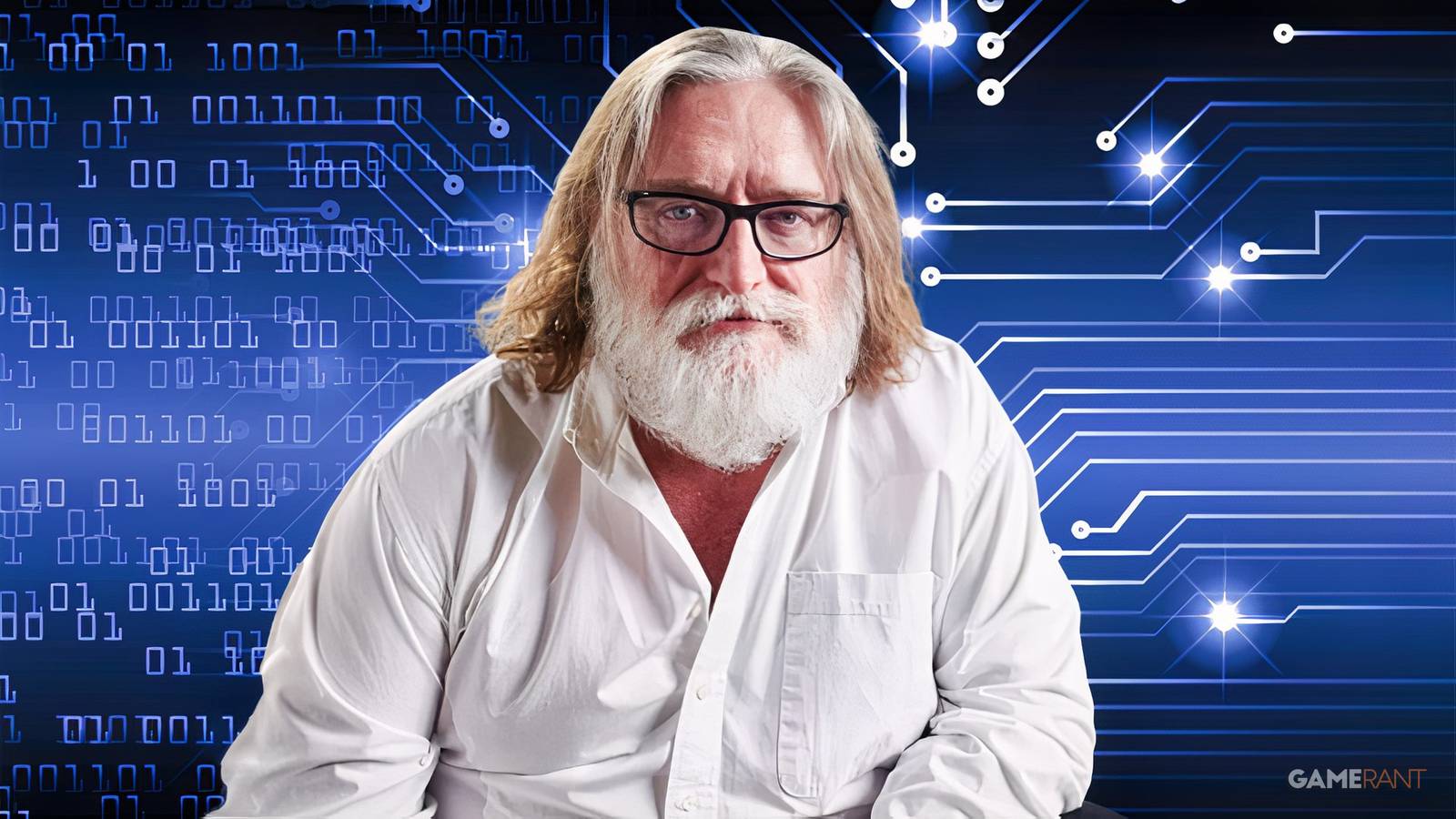
The chief of Valve, Gabe Newell, is making headlines after his massive financial support for one of the world’s most famous artificial intelligence companies was revealed. It isn’t often that the leader of Valve steps into the spotlight on matters outside of gaming, but recent legal proceedings have pulled back the curtain on his private investments. Specifically, the data shows that Newell provided a staggering eight-figure sum to support the early development of OpenAI during its formative years, though the full extent of his role was kept quiet for nearly a decade.
This revelation stems from the ongoing legal battle between Elon Musk and OpenAI CEO Sam Altman, which has forced many internal records into the public eye. These documents mostly cover the window between 2016 and 2020, a time when the AI organization was still finding its footing. The emails provide a rare look at how the tech elite communicated and collaborated before the current AI boom took over the world. Many of these exchanges discuss the early philosophy of the group, which was originally intended to operate as a non-profit to prevent any single person from gaining too much power over artificial intelligence. There was a lot of concern about whether the company should remain independent or join a larger corporation to secure more funding for its massive research goals.
Valve Issues Statement on Steam Deck 2
A senior Valve official offers an update on the Steam Deck 2, which the company confirmed was part of its long-term plans years ago.
Uncovering Gabe Newell’s Financial Ties and Strategic Advice

The records, cited as “undisputed facts” in the court proceedings, show that Newell handed over exactly $20,008,279 in 2018. This contribution made him the second-largest donor outside of Musk himself during that specific four-year period. Beyond just being a financial backer, the reports reveal that Newell occupied a spot on an informal advisory board. This allowed him to offer guidance to leaders like Altman and Greg Brockman without the legal complications of a formal board seat. At the time, OpenAI was testing its systems on games like Dota 2, where the machine learning agents were reportedly performing so well that the staff started to worry about how quickly they were reaching advanced milestones. Internal teams were even concerned that the timeline for reaching human-level intelligence was moving faster than they had initially predicted.
Newell’s interest in this tech isn’t just about software; it also ties into his passion for brain-computer interfaces. Newell has been in frequent contact with Musk regarding neuroscience, eventually launching his own venture called Starfish Neuroscience. A specific piece of evidence identified as Exhibit No. 844 highlights an email from Newell to Musk sent in 2018. Newell admitted that he previously thought brain modulation was a strange concept but eventually saw it as a huge consumer market. He even asked Musk for advice on who to speak with at Neuralink to explore these concepts further. Musk reportedly responded by sharing technical progress about implanting electrodes in animal brains, describing the compact hardware as being “very trippy, just like Neuromancer.” Interestingly, Newell’s recent business moves continue this trend, as he recently backed a company called Merge Labs, which lists OpenAI as a key research partner. It seems his early donation was just the start of a long-term interest in how the human mind can interact directly with machines.

One of the more interesting details to emerge from the lawsuit involves a legendary game designer and a trip to a rocket factory. The 2018 message also followed Hideo Kojima’s visit to the Valve headquarters, during which Newell reached out to Musk to arrange a tour of SpaceX and a formal introduction to the OpenAI crew for Kojima. It turns out that the mastermind behind Death Stranding has a massive passion for the stars, and Newell was happy to act as a middleman to help make that happen. While these exchanges might seem like casual networking among billionaires, they illustrate the tight-knit circle of influence that connects the world’s most famous game creators with the leaders of the space and AI industries. These documents show that Newell was acting as a bridge between the world of high-end game design and the most ambitious tech projects on the planet.
GameRant Quiz
Easy (15s)Medium (10s)Hard (5s)
Despite the drama surrounding the lawsuits, Newell remains incredibly bullish on the future of machine learning. In a 2025 YouTube interview, he compared the current AI boom to the arrival of the internet or the desktop computer. He views these tools as a “cheat code” for anyone willing to learn them, regardless of their career path. Whether someone is an accountant or a programmer, Newell believes that getting ahead of this technology is the only way to remain competitive in the modern workforce. This forward-looking perspective on technology as a tool for generating profits stands in contrast to other industry titans who focus on the traditional entertainment experience. However, Newell seems more interested in how the underlying tech can fundamentally change how people work and think.