







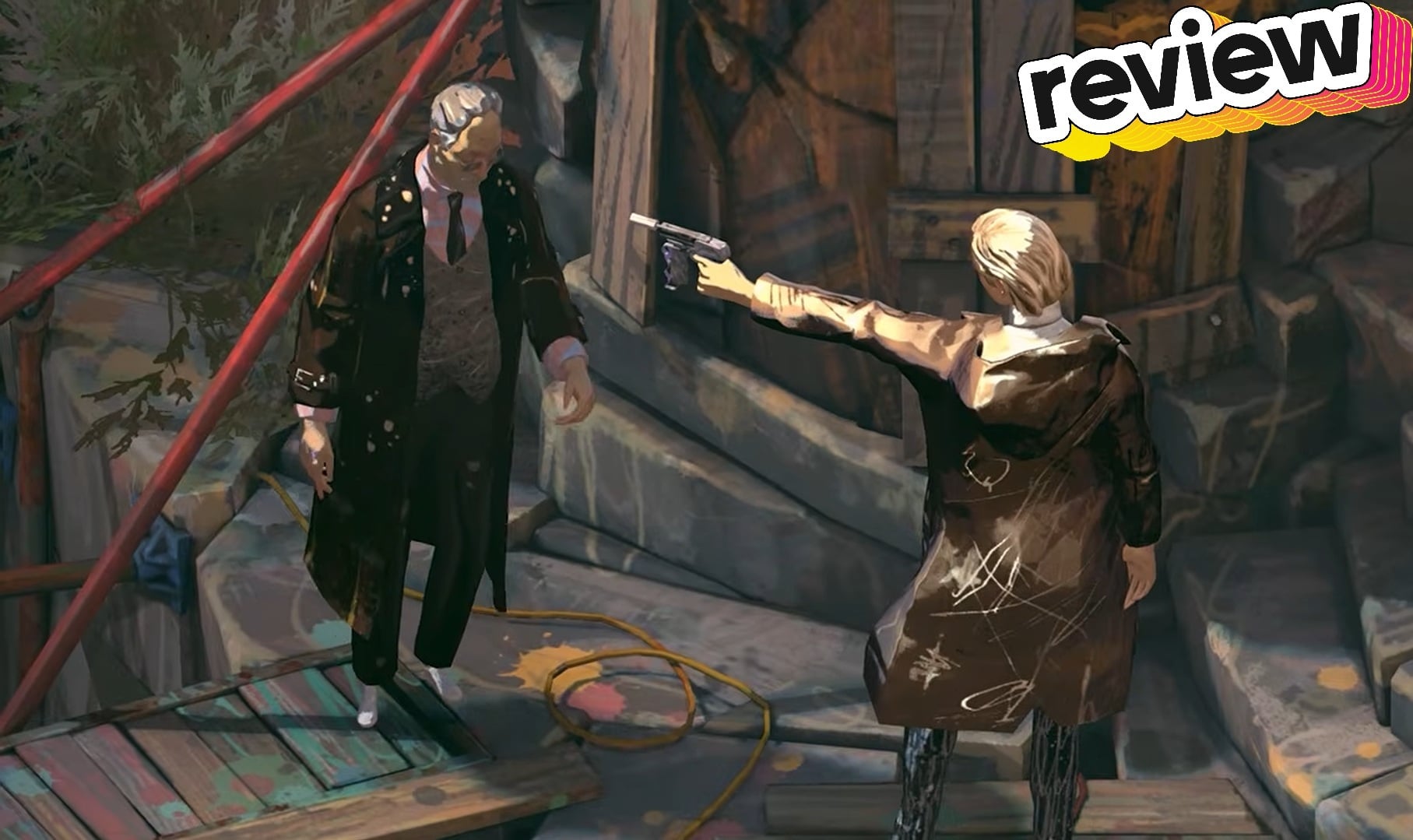
I’ve recently taken up having a drunken cigarette every now and then. And before you say anything, I know it’s bad for me! Despite what it sounds like, the move is hardly recreational. It’s more a twisted form of therapy, one that works best (or worst) when compounded with the poison already coursing through my veins by the time I’ve lit up. To me, the cigarette is a crude implement, but it’s my chosen weapon these days for beating back the dread. I embrace the nicotine wave, allowing it to crash over and soothe me, prolonging the vibe of my buzz after a hearty night out and keeping me warm. It’s not a healthy tactic, but it’s about all I’ve got.
As its name implies, Zero Parades: For Dead Spies, the new RPG from the makers of Disco Elysium, is a spy story. And like many spy stories, its concerns go well beyond its setting, the sizable port town of Portofiro. You feel the influence of La Luz, a neighboring country that is home to “techno fascists” decked out in clothes with holographic patches and neon lights that’d feel at home in Cyberpunk 2077’s Night City. There are plentiful homegrown factions too, like EMTERR, which is often just called the Bank, as well as the communist Superbloc that sponsors the Opera, the fanciful name that protagonist Hershel Wilk’s spy agency dons. You may never step foot outside of Portofiro, but the fiction Zero Parades weaves is vast, complex, and most importantly, deeply intertwined.
Like me, Hershel partakes in the occasional drunken cigarette, too. By the time we meet her, the once-disgraced spy has been roped back into service for one last mission, one that calls for her to rummage through the trash of Portofiro and navigate its criminal underbelly in order to accomplish the Opera’s vague and unclear goals. Often, at the end of a harsh and trying day sifting through Portofiro’s detritus, I would steer her out of the Fogged Mirror—a usual haunt from her past life—and watch her delight in the lighting of an Ouroboros Black, a perfect follow-up to her recently guzzled schnapps of choice. Together, these little acts of solace make up her own little flirtation with death. A sick little ritual to deal with the pangs of grief that must rack her throughout her return to these ugly, haunted streets.
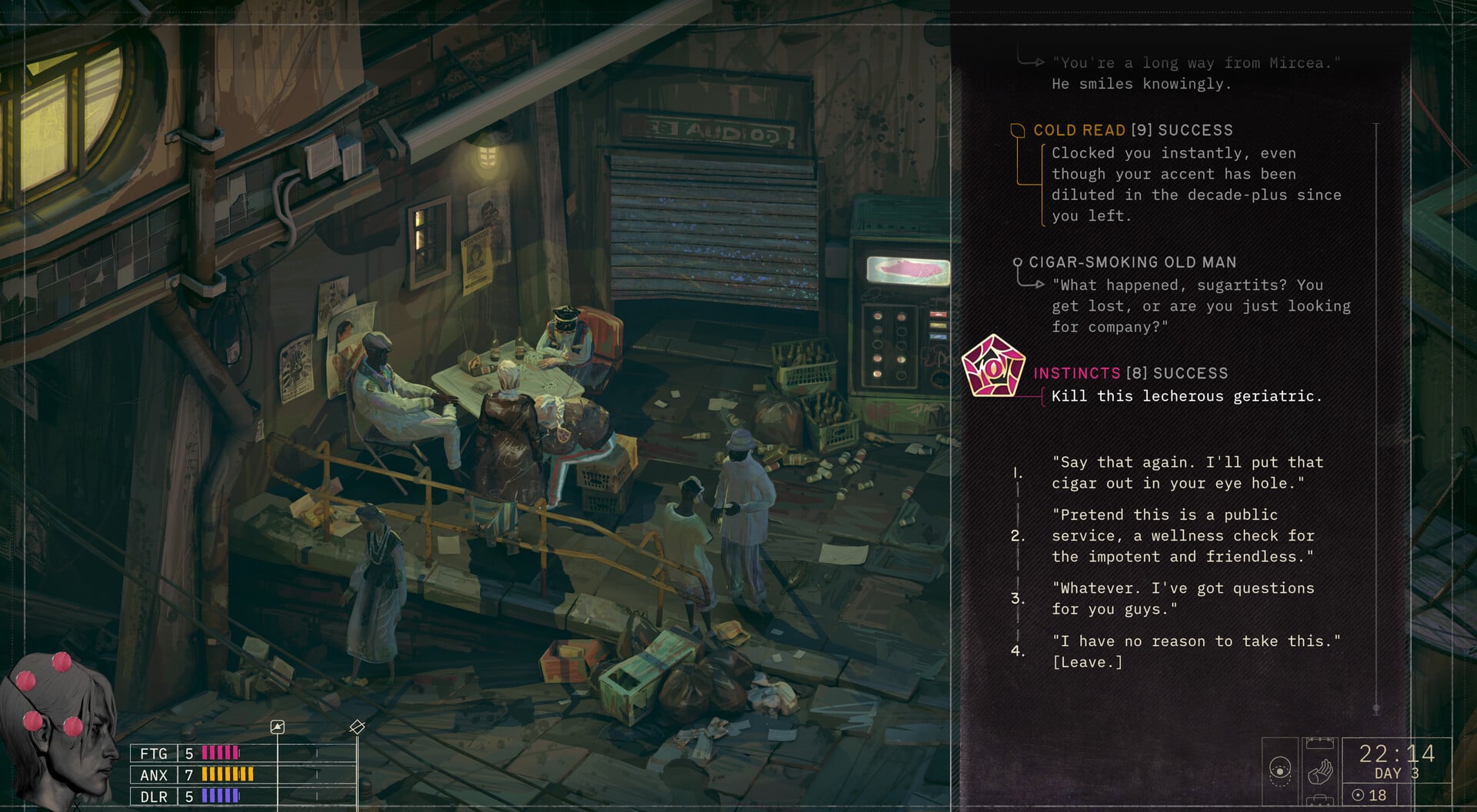
I keep coming back to these acts of self-medication and destruction. They’re not just for flavor; they’re a way for Hershel (and you) to balance Zero Parades’ three competing gauges that can stress and even break the main character: fatigue, anxiety, and delirium. Should any of them exceed a certain threshold, they begin to actively debuff her, and if they max out, one of Hershel’s various skills is knocked down a whole point. Players are encouraged to exert themselves—tack on points to one of these meters to roll a third die during difficult skill checks—and after doing so, I’d often let Hershel imbibe and come down. It’s a vicious cycle, and one that’s integral to the fabric of Zero Parades, a game that at times feels possessed by an otherworldly and all-consuming ugliness, and is packed with figures desperate to do anything to deal with it.
Portofiro’s people are at the whims of much of this ugliness, feeling the impact of everything from La Luz’s “cultural war” and threat of annexation to EMTERR’s ironically named “stabilization” loans that have brought about anything but. I mean, the Palace of Cultures sits in ruins. Half of the buildings sitting along the docks are boarded up, and its greatest market is a bazaar filled with odd personalities peddling bootlegs. The people you meet, the assets you reconnect with and recruit to your cause, are all rehabilitating and coping in their own appalling manners. Does any of that sound stable? No one is coming to help the people of Portofiro, and in the middle of it all is poor Hershel, who has been brought out of retirement for one impossibly fucked job that might alter its course.
How little control do you think Hershel must feel after being brought back from proverbial death and forced to reckon with the dissemination of her old crew? As good as it might feel to be back in the field, how do you imagine she might feel being given back her cursed codename after her last mission was so thoroughly butchered? Here in Portofiro, long past the End of History, what hope does she really have of pulling off this job and making the best of a powder keg that’s going to blow regardless of what she does? If I were thrust into such a combustible situation that I had so little control over, I’d be tearing through those smokes and drinks just trying to get through an afternoon.
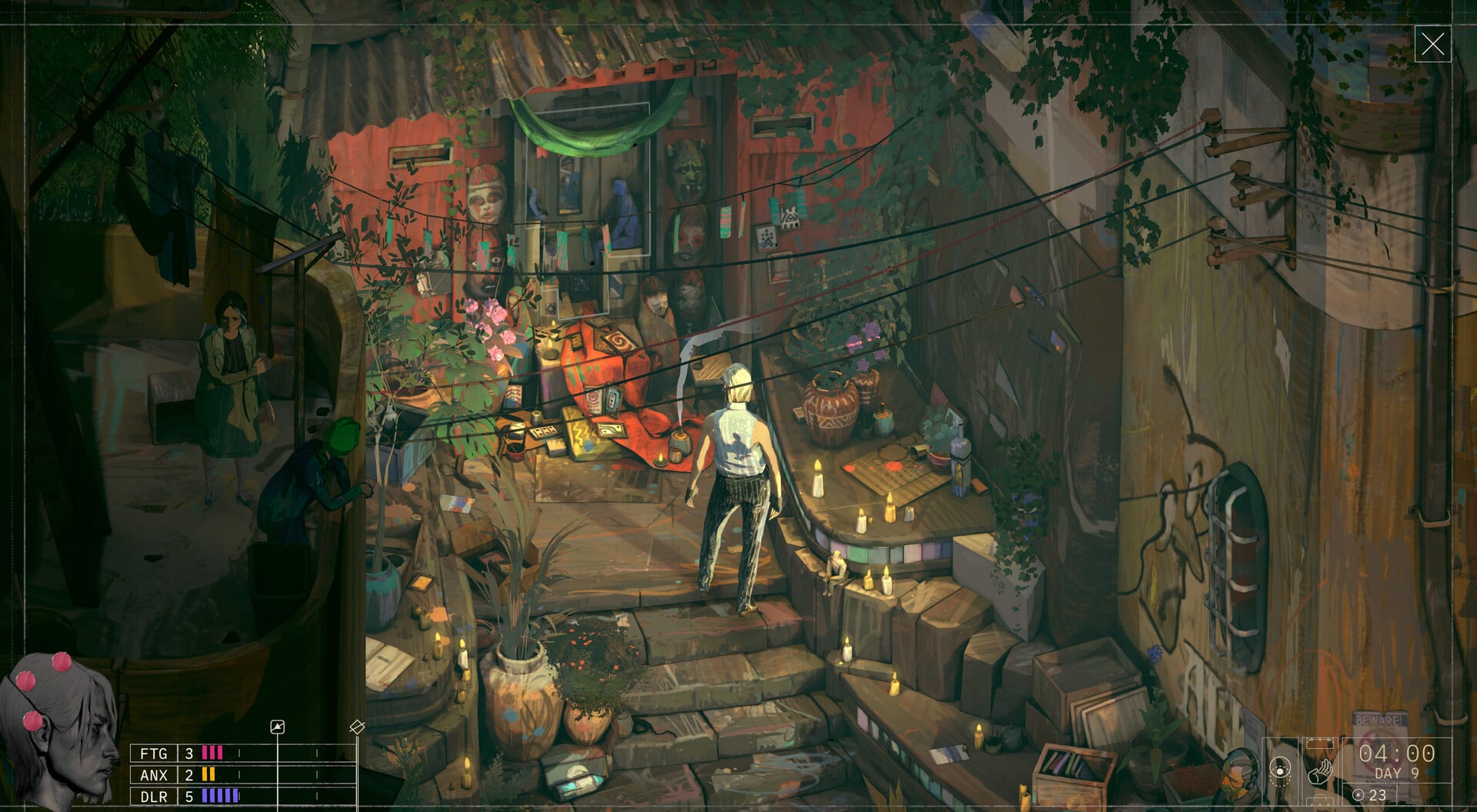
A vendor named Petre operates out of the Bootleg Bazaar selling all kinds of music, most of which he has an apparent disdain for. His gallery, dubbed a “museum of loathing,” feels like an apt metaphor for Zero Parades. If Disco Elysium was known for its overwhelming ennui, Zero Parades is likely to go down for its venom and vitriol.
Zero Parades is the newest game from ZA/UM, the studio which shipped the landmark 2019 CRPG Disco Elysium and later became engulfed in a sordid split with some of its original founders, including lead designer Robert Kurvitz. Dueling lawsuits, canceled sequels, and a cascade of splinter indie developer spin-offs attempting to claim the mantle of working on a spiritual successor to ZA/UM’s debut hit ensued. It’s a legacy that distinguishes the conditions under which Zero Parades was created, and one its new creators have tried to distance themselves from.
Zero Parades appears a lot like its predecessor, a game whose outsized reputation has haunted the RPG space since its momentous debut. It’s presented from an isometric perspective, stars a fuckup and an authority figure, possesses an art style that rends beauty from an ugly world, and is, in a word, verbose. Hershel, like Disco Elysium’s failed cop, has voices in her head tied to her RPG skills, like Shadowplay, Personalism, and Entanglement, and everyone in the game (imagined and literal) speaks like they’re fresh off of a philosophy major.
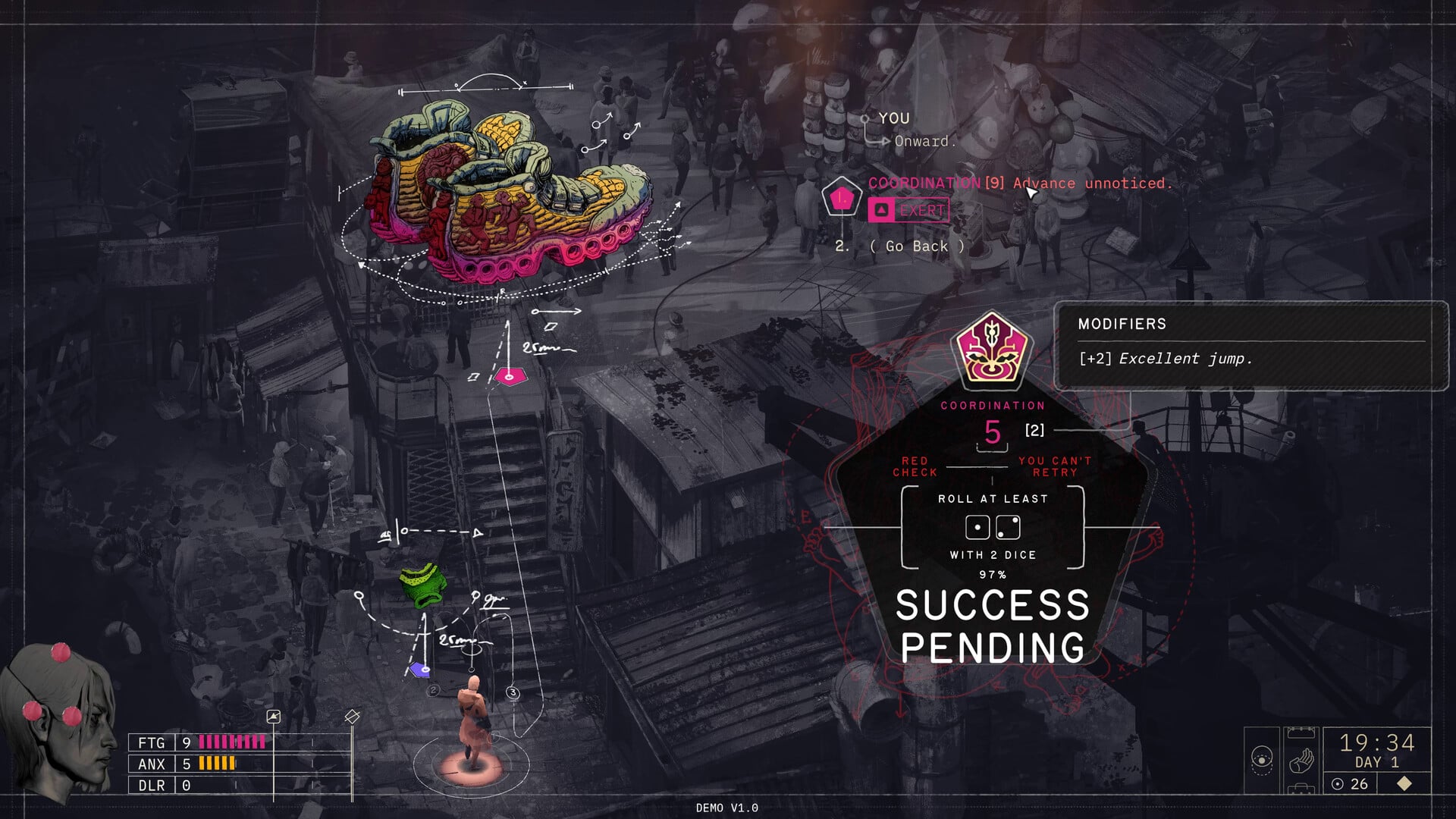
But Zero Parades is different from its storied predecessor in some meaningful ways, too. For example, it’s certainly more action-packed. Disco famously wrung rich role-playing scenarios from conversations and encounters of the mind, but featured very little in the way of combat. Zero Parades doesn’t swing wildly in the other direction but, as a thriller taking cues from the world of espionage literature and film, it does materialize dramatic sequences in which you’re making more split-second, action-filled decisions. These moments aren’t game changers in and of themselves, but being rewarded for leaning into my fantasy of a dream spy (a physical force to be reckoned with) was a nice change of pace from the genre’s aforementioned wordiness.
Still, there’s considerable pleasure to be found in navigating the rich worldbuilding on display as well. Untangling the deep mythos of Portofiro and the forces influencing it from without and within is part of the appeal of Zero Parades. In fact, finding yourself at the center of a complex narrative web woven by political and social forces has become an increasingly common element in narrative-heavy CRPGs more broadly of late. Though I’ve never finished Disco Elysium, I was wholeheartedly absorbed in its central mystery and the way that it connected to the deeply broken people of Revachol, the city itself, and the world that shaped them both. Earlier this year, Esoteric Ebb unspooled a similar story of political intrigue and murder in a fantasy-inspired setting. Wading through these deep CRPGs nowadays almost seems like a tacit admission: you’re missing a certain intrigue in your life and are willing to work through complex systems and dialogues to sate that appetite for what is, at the end of the day, a lengthy mystery novel in the shape of a video game.
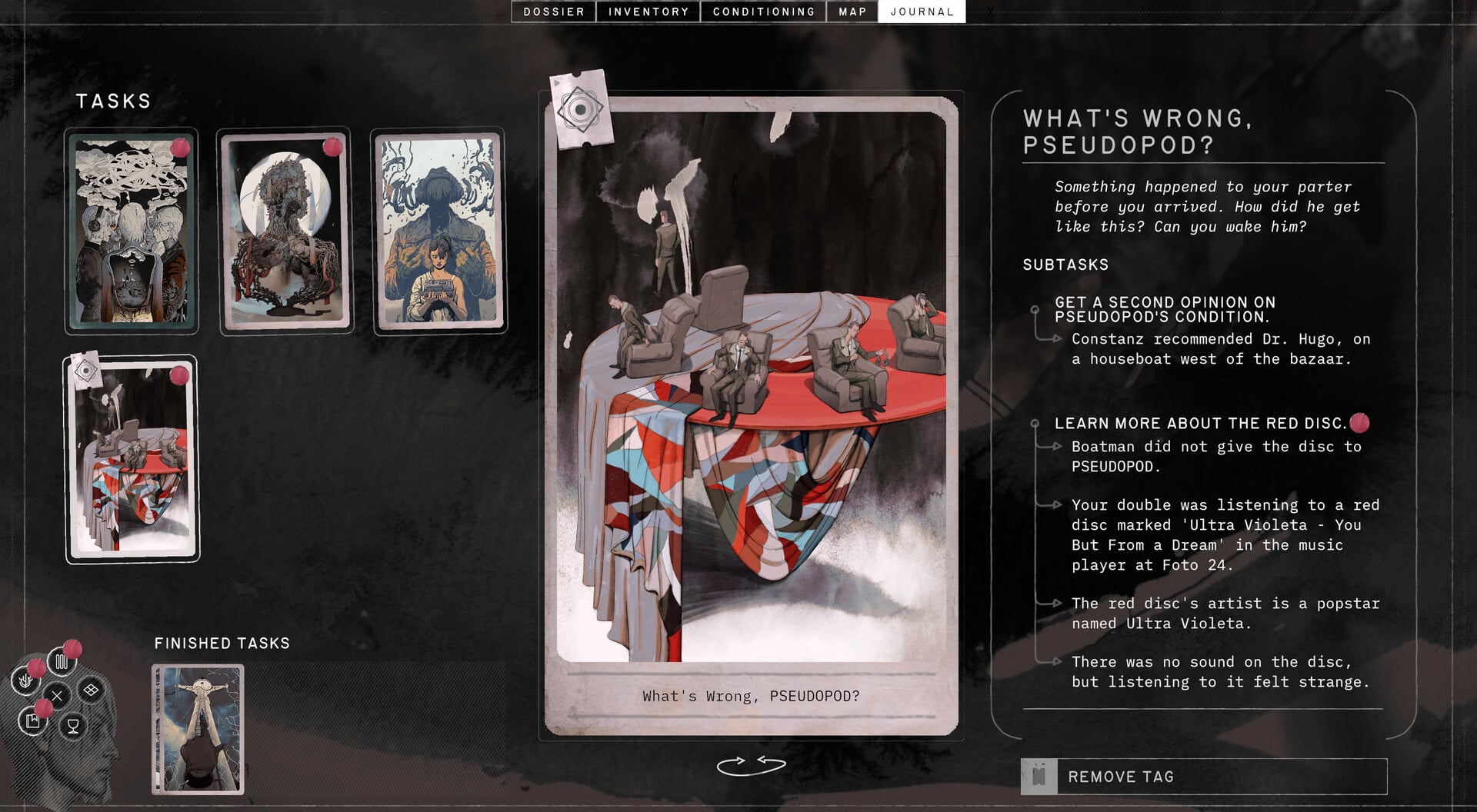
Zero Parades is no different, beginning with the mystery of Hershel’s catatonic colleague and aide, codenamed PSEUDOPOD, before quickly growing into a swirling morass of conspiratorial threads that can be followed to the disparate edges of Portofiro and the massively screwed-up world beyond its flimsy borders. It’s a shame that, as Zero Parades‘ web of lies continues to expand, the larger plot loses focus on much of its supporting cast, including the team that Hershel is meant to recruit. Though the first half of the game builds up to some tense confrontations with the ghosts of Hershel’s past, I can’t help but feel that a dramatic revelation at about the game’s midway point shifts the narrative into overdrive, consequently reducing some focal characters like ESTOC and KINDRED to mere pawns in the game’s grander game of chess and diminishing the opportunity for some deeper characterization.
Despite these hang-ups, I do enjoy many of the places that Zero Parades eventually goes, and man…does it go places. As it turns out, the world is a goddamn mess.
No Parades: For Dead Spies
-
Back-of-the-box-quote:
“A big ugly game for a big ugly world.”
-
Developer:
ZA/UM
-
Type of game:
Spy-novel-turned-metaphysical-RPG.
-
Liked:
Portofiro is a great, well-realized setting with a fun mystery to unravel, presented in an arresting art style that properly conveys the ugliness and bitterness of this story and setting.
-
Disliked:
The game’s various systems get in each other’s way more than they complement one another, the cast of characters here aren’t all that memorable thanks to a plot that becomes muddier the more it grows.
-
Platforms:
PC (Played a significant amount on Steam Deck).
-
Release Date:
May 21, 2026
-
Played:
Rolled credits on the game after about 30 hours, with a handful of sidequests still hanging.
My operant—my CASCADE—embodied that mess. Like Disco, Zero Parades challenges you with all forms of rhetoric, be it about the futility of communism or rolling over rather than fighting an expansionist, capitalistic nightmare. These probes are meant to harden both you and Hershel, whose responses grant her XP to be doled out to acquire skills that you feel best represent her. Zero Parades also features a Thought Cabinet-like system which grants greater buffs atop the game’s existing modifiers, like clothing, and even enforces creative restrictions meant to enable you to more deeply sublimate yourself in the role. For example, the Conditioned thought Jar of Faces might give me a bonus to Personalism, which helps me relate to people more in conversation. As a requisite though, my operant couldn’t hide her literal face behind a mask or disguise of sorts without risking losing the aide for a certain amount of time.
In theory, it’s a system that asks you to do something even Hershel struggles with: drawing clear lines. Between her spy persona and her true being. Between the right and wrong choices for the operation and world. After all, one of the greater tensions of the game is rooted in Hershel’s complicated relationship to the band of assets and spies that she once befriended and lost. It’s a topic that comes up a number of times throughout this sordid tale via late-night confessionals and the like. Who is Hershel Wilk, the person? Who is CASCADE, the agent? Are they one and the same?
In practice, the results are mixed, in part because it feels like this system could’ve been harsher. Like I said, my Hershel was a mess of conflicting ideologies and worldviews, but I never felt penalized for this indecisiveness. Generous XP gains allowed me to spread my stats in such a way that by the end of my 30-hour playthrough, I was only piss-poor in one department (sorry, Poetics). Essentially, I was able to overcome most debuffs through brute force, trivializing the system entirely.
Moreover, the type of spy Hershel seemed to be largely depended upon what the scenario called for, and her stat-modifying wardrobe shifted to meet the demand regularly. Fortunately for me—and less fortunate for the contrivances the game attempted to foist upon me—Zero Parades is rich with options to ameliorate the tension which conditioning thoughts are meant to introduce. Systems in conflict? Love that shit. But Zero Parades’ interlocking mechanics most often worked in my favor, rather than against me, making for a smooth ride over what I’d hoped might be choppier waters.
It is rare to want a rougher go in a game, but as someone quite conditioned to difficulty, and who relishes an RPG that is willing and eager to force tough choices upon its players, Zero Parades felt devoid of these frictional elements, opting instead to keep plying Hershel with an abundance of (figurative and literal) drunk cigarettes to soothe any ills or pain points. I told you they’re bad for you!
“An act of love, performed hatefully.” That is how one character describes the service that the prickly music vendor Petre provides, and he is once again a perfect analog for the larger vehicle that is Zero Parades. This is a game bristling with anger—an anger that seems as informed by the world outside of the developer’s walls as it is by the drama contained within them. And ZA/UM has successfully channeled much of that rage into many of Zero Parades’ more glowing aspects, but anger is a messy emotion to try to convey eloquently. It’s impossible to fully keep the lid on it, and as a result, it does occasionally feel like Zero Parades, a work that is justifiably mad at the destabilizing forces of capital and the emptiness of mass culture among countless other things, succumbs to its rage and embraces chaos.
Chaos is the best possible descriptor of some of the narrative’s later and more extravagant detours, detours which I always understood but also believed could’ve been handled more elegantly. “Chaotic” is, to me, the most apt way to describe both the quickly destabilizing state of Zero Parades‘ Developed World and the spy at the heart of it all trying to change things. Chaotic and ugly.
Zero Parades is a big ugly game for a big ugly world. Good luck at the Opera, and maybe bring a light.