





Okami is celebrating its 20-year anniversary today, April 20, 2026. Below, we remember how the visually striking game differentiated itself from the renowned Zelda series.
A dead field stretches out under a washed-out sky, its trees brittle and colorless, until a single brushstroke cuts through the air. Color returns in a wave. Ink spills across the landscape, flowers bloom beneath your feet, and a sacred sapling takes on new life. It is a transformation that is earned throughout the adventure in Okami.
Two decades on, Okami still feels like an anomaly. It is instantly recognizable, rooted in a familiar action-adventure structure but elevated by a cultural and artistic identity that few games have attempted to match. Its structure is Zelda-like, complete with dungeons, tools, and a steady march across a fractured world. Move from region to region, clear a dungeon, gain a new ability, and push forward. The inspiration is clear, but the way it builds beyond that has helped make Okami a classic.
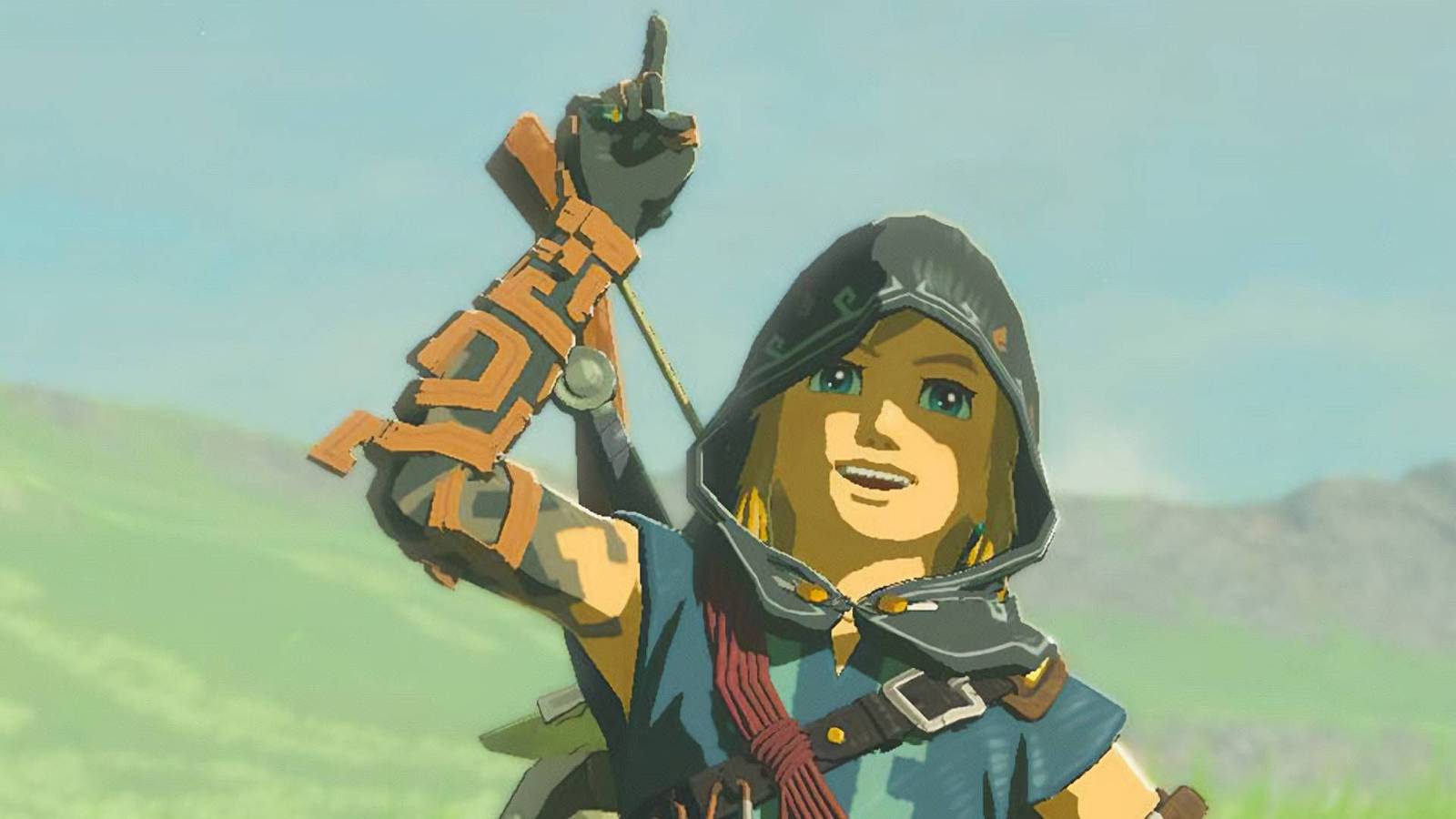
Okami is one of the most distinctive interpretations of that formula ever created: one that feels unlike anything Nintendo itself has made. It commits fully to Japanese folklore and artistic tradition. You embody a deity. Amaterasu, the sun goddess in wolf form, is not simply saving the world. She is restoring balance to it, piece by piece, brushstroke by brushstroke. That fight for balance mirrors many of Link’s journeys through Hyrule, as he works to restore peace to lands ravaged by Ganon.
“After I started working and living in a city, I came to understand the experience of ‘hometown nostalgia’ that people talk about,” said game director Hideki Kamiya in a translated interview in 2004. “To soothe this new yearning in me, I wanted to create a game with the natural beauty of the Japanese countryside.”
Structurally, Okami closely mirrors the blueprint established by earlier 3D entries in The Legend of Zelda series. It follows a hub-and-spoke world design, where players move between distinct regions connected by a central overworld, each anchored by a dungeon that gates progression. Advancement is tied to ability acquisition, with new Celestial Brush techniques functioning much like Zelda’s signature tools, unlocking puzzles, opening paths, and reshaping how players interact with the world. The loop is familiar: Explore, solve, fight, unlock, and progress. It is a structure that, while not completely original, grounds Capcom’s experiment in a framework familiar to anyone who played Ocarina of Time or any number of other Zelda games.
Kamiya had become well-known for his work on Devil May Cry and Viewtiful Joe, so he wanted to create an action game that felt vastly different from those titles. The key moment came when the team developed a prototype in which players could freely move the sumi-e brush in 3D space.
“Once we saw that, a conviction arose in us: ‘This is going to be good,'” said Okami producer Atsushi Inaba in a translated interview. “The real challenge, of course, was taking that mechanic and turning it into a game.”
The game built around that concept would still feel familiar to Nintendo fans. Each dungeon introduces a new mechanic that recontextualizes the world around it, much like the item-based progression seen throughout The Legend of Zelda. Celestial Brush techniques serve as Okami’s equivalent to tools like the hookshot or boomerang. These abilities are actions rather than items.
Drawing a line can slash through enemies, repair broken objects, or alter the environment itself. The result is a world that consistently evolves alongside the player.
Okami HD
The brush system also pushed Clover Studio toward an ink-wash art style that was uncommon at the time of the game’s release in 2006. That artistic direction is one of the main reasons Okami stood out then and continues to do so now.
“We couldn’t think of another game that had tried to convey that Japanese aesthetic in a serious way,” Inaba said. “It also looked like it would be a fun challenge to render that visual style in 3D polygons.”
Kamiya and his team were originally inspired by the realism and horror visuals Capcom had achieved with Resident Evil. They were impressed by how far game technology had come, and wanted to use it to create something with a near-opposite tone. Instead of horror, they aimed to capture the beauty of nature.
Okami, an acclaimed standalone experience in its own right, shares several narrative and design threads with The Legend of Zelda. Dungeon-structured exploration, themes of balance and restoration, and a silent protagonist who serves as a steady anchor in a reactive world all echo Nintendo’s long-running series. Following inspiration is rarely a bad starting point in game design, and Okami shows how that foundation can lead developers toward something that pushes beyond it into a more expressive form of storytelling and play.