



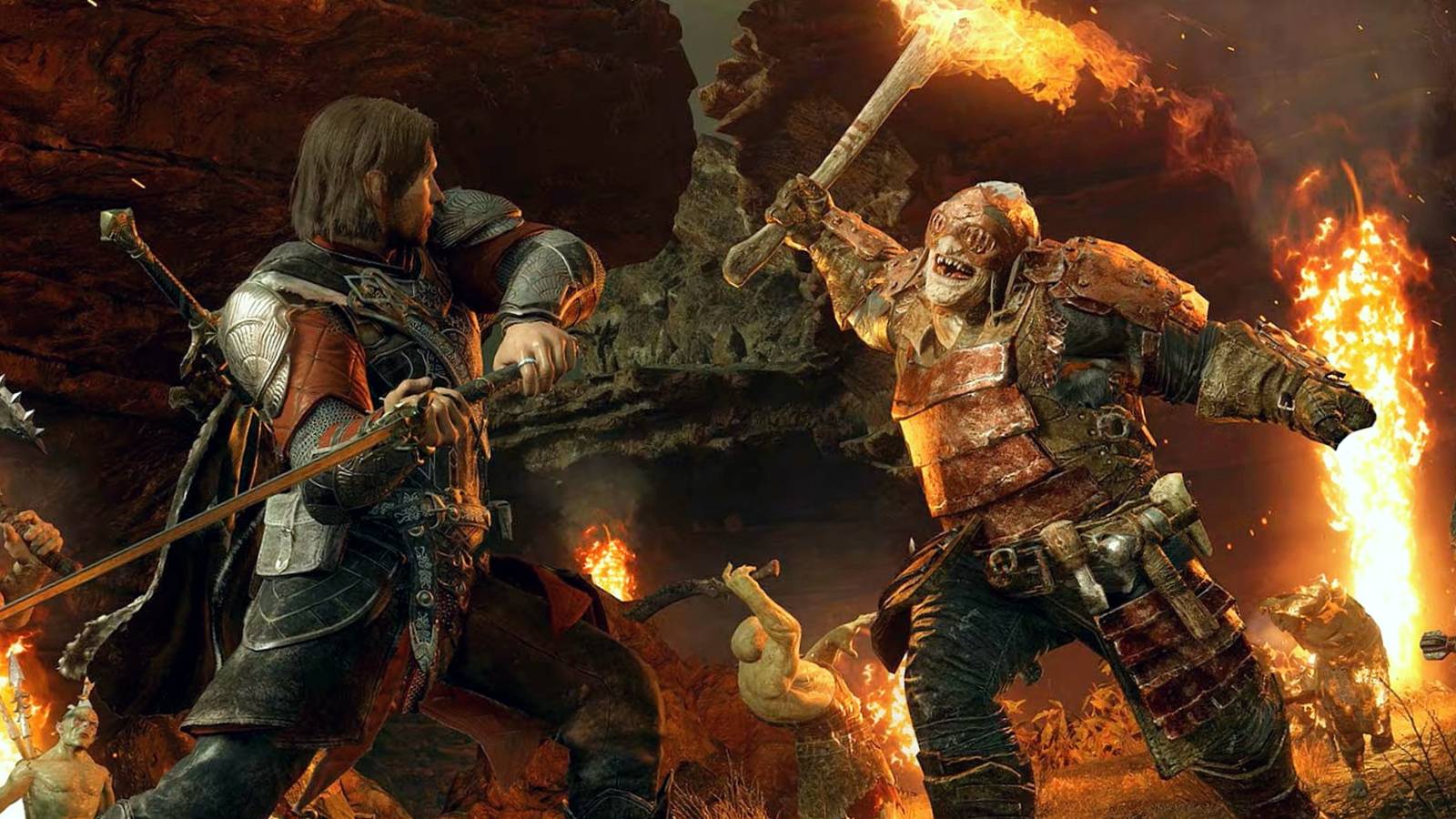
A hero’s journey toward becoming a villain is a popular trope across all forms of media, so it’s hardly surprising that video games have been exploring the concept for decades. Such stories are particularly well suited to RPGs, where player agency, choices, and consequences can make them far more impactful than in books or movies. It’s your story, after all. Whether you can switch sides as the protagonist or discover that a trusted companion who stood beside you throughout the entire journey was someone else all along, such moments tend to stay with you.
Video games offer countless ways to frame this intriguing concept, further enhanced by their interactive and often cyclical nature. A protagonist can be corrupted by power or broken by trauma. An apparent hero may deliberately conceal their true intentions until the end. Two characters can simply fail to find common ground during the finale. Some games even connect separate entries or New Game Plus cycles by turning yesterday’s playable hero into tomorrow’s greatest threat.
Each of the RPGs below puts its own spin on that transformation.
For this list, we are focusing on different executions of the basic idea. It isn’t limited to games where the main playable protagonist becomes the final villain, although those examples are naturally included as well.
Warning: Heavy story spoilers below!
Dragon Age: Inquisition & Dragon Age: The Veilguard
One of the Most Complex Character Arcs in the Genre
My issue with BioWare’s later games having weak main villains, from Dragon Age: Inquisition’s Corypheus to Mass Effect: Andromeda’s Archon and Anthem’s Monitor, was finally addressed through the Inquisition and The Veilguard combo, where Solas, or the Dread Wolf, takes the spotlight. It might be too simple to call Solas either a hero or a villain, since he is far more complex than that, but his arc across both games fits nicely here. Initially introduced as a trustworthy, if suspiciously wise, elven companion, Solas is eventually revealed as Fen’Harel, an ancient elven god seeking to restore his once-great civilization, even if doing so means destroying Thedas as it currently exists.
No matter one’s stance on the quite divisive The Veilguard, the game stays true to its promise of making Solas a key figure and wraps up his arc beautifully. From the intense prologue framing the Dread Wolf as the main villain who must be stopped at all costs, to his later role as an untrustworthy ally and prisoner with hidden motives, Solas remains one of the best Dragon Age characters. Players can also influence his fate in several ways, including fighting him directly, tricking him, or convincing him to make the necessary sacrifice willingly.
Torchlight & Torchlight 2
Taking Its Status as Diablo 2’s Successor a Bit Too Literally
For quite some time, the Torchlight series stood as a true successor to Diablo 2, so it’s especially interesting that the sequel borrows a similar hero-villain trope from its legendary influence and gives it its own spin. Just as a reminder, Diablo 2 sees players face Diablo within the body of the Warrior from the original game, who previously defeated the demon and tried to contain it within himself. In Torchlight 2, the twist is largely similar: the Alchemist, one of the three playable heroes from the original game, becomes the sequel’s central villain, driving the entire story even if he isn’t technically its final boss.
After helping defeat Ordrak, the Alchemist is corrupted by the Ember Blight, eventually driving him insane and turning his desire to cure the corruption into something destructive. By the events of Torchlight 2, he has destroyed the town of Torchlight and is draining power from the Elemental Guardians, convinced that their strength will allow him to cure the Blight while leaving nothing but devastation in his path. The Alchemist’s fate loops neatly back on itself: he isn’t seeking power simply to destroy the world, but to eliminate the same corruption he once helped defeat, only now in his own twisted way.
Dragon’s Dogma: Dark Arisen
Playing to the Strengths of the Medium
Easily one of the cleverest takes on the hero-villain concept in mechanical terms, Dragon’s Dogma: Dark Arisen builds an even greater loop into its world and endings. The entire story revolves around heroes unknowingly replacing the threats they overcome as the same cycle continues. New Game Plus makes the concept even more personal, as the final boss can take the appearance of your previous playable character who saved the world during an earlier run.
In Dragon’s Dogma, the knight Savan defeats his Dragon during the opening prologue and eventually becomes the Seneschal, the godlike keeper of the world. When your custom Arisen reaches the true ending, Savan is revealed as the final opponent. Defeating the Seneschal means inheriting that position and awaiting the arrival of another hero, while failing the ultimate test transforms the Arisen into the next Dragon. Either way, yesterday’s hero becomes tomorrow’s divine obstacle or terrifying monster. Dragon’s Dogma: Dark Arisen doesn’t merely rely on the familiar fallen-hero archetype; it makes the transformation a role imposed by the world’s unique rules and seemingly inescapable cycle.
Scratch & Peek


Identify the cover art while scratching off as little foil as
possible.
Clair Obscur: Expedition 33
A Memorable Standoff Before Even More Impactful Endings
-

-
-


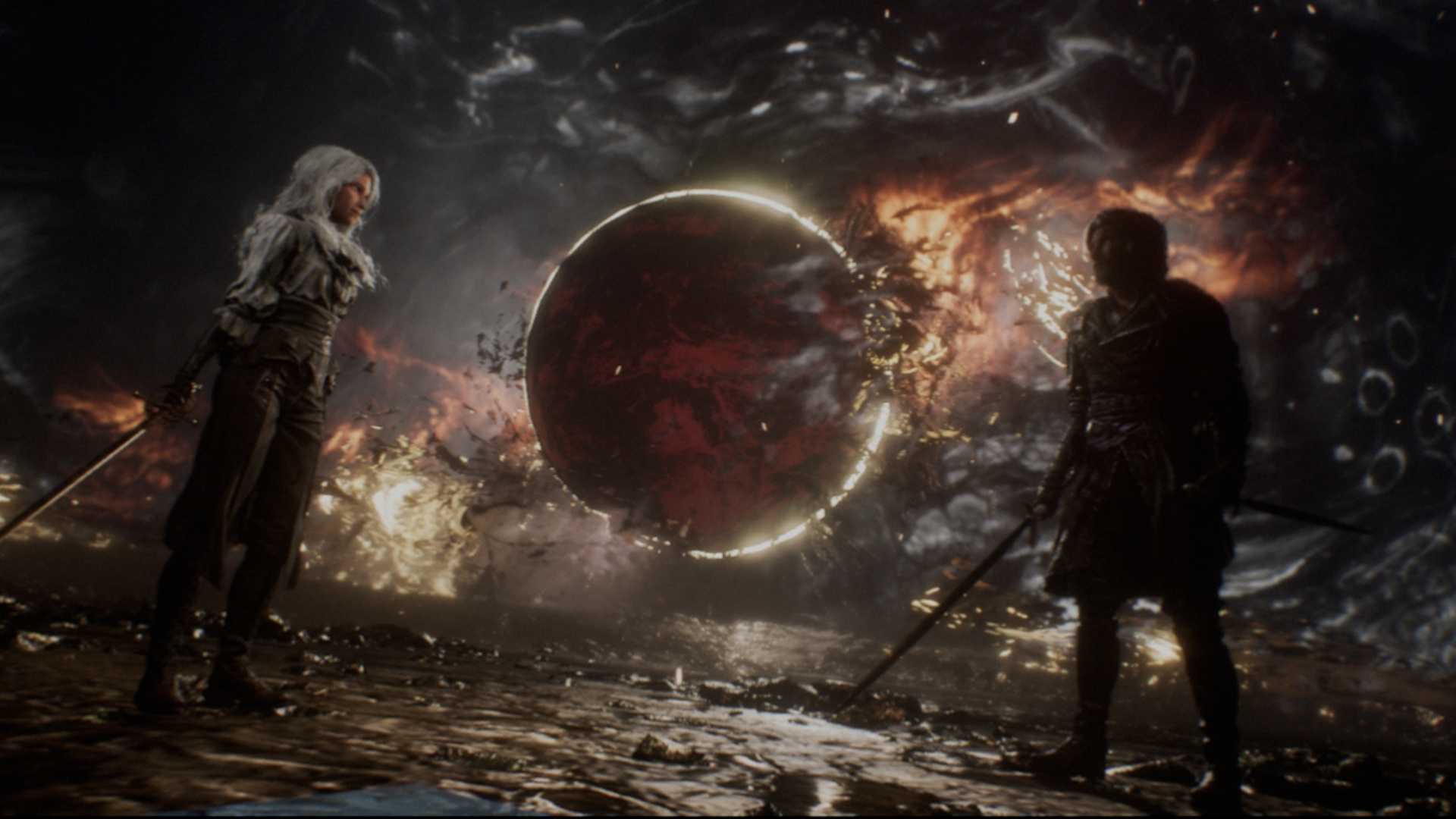
One of the undeniable RPG triumphs of recent years alongside Baldur’s Gate 3, Clair Obscur: Expedition 33 delivers a standout story filled with discoveries, intrigue, mystery, believable characters, and dramatic personal arcs. For a large portion of the game, it isn’t even clear who its true protagonist is, as the story’s center shifts from Gustave to Verso and then Maelle while players untangle its elaborate puzzle and uncover the deeply buried truth about the Dessendre family. These shifts work brilliantly for the finale, forcing players to choose between Verso and Maelle during the final confrontation, with two equally ambiguous paths ahead.
Neither Maelle nor Verso truly falls or becomes corrupted enough to earn the traditional “villain” label, and their confrontation is very brief compared to Solas’ two-game arc. Yet each becomes the full-fledged final antagonist from the opposing hero’s perspective, depending on what you consider the proper resolution to Expedition 33’s story. Needless to say, both endings can wreck you emotionally. It isn’t really a choice between a good and bad ending, but between two outcomes and deciding which one you can live with.
Middle-earth: Shadow of War
One Ring to Break the Protagonist’s Will
Not sure about you, but from the beginning of Middle-earth: Shadow of Mordor, it seemed apparent to me that the Talion and Celebrimbor duo simply couldn’t end well. Perhaps it was even clearer to die-hard Tolkien fans, but Talion’s eventual transformation into a Nazgul during Middle-earth: Shadow of War, later witnessed from another playable hero’s perspective, was still a pretty cool way to end the saga. Best of all is how unusually gradual his transformation proves to be.
After spending two games fighting Sauron, Talion discovers that Celebrimbor never intended merely to defeat the Dark Lord, but to dominate him and take his place. When Talion refuses to follow that path, Celebrimbor abandons him, leaving the dying hero with no way to continue the fight alone. Talion is therefore forced to claim Isildur’s Ring and become a Nazgul, even though he initially retains his free will and continues resisting Sauron for decades.
Eventually, however, he succumbs to the Ring’s power as the inevitable price of extending his life. The Blade of Galadriel expansion completes the reversal from the player’s perspective, making Nazgul Talion the final boss of Eltariel’s story after the Ring has overwhelmed what remains of the previous protagonist’s will.
Star Wars: Knights of the Old Republic 2 – The Sith Lords
You Know How It Is for the Sith: You Have to Face Your Master Someday
Solas’ twist in Dragon Age: Inquisition is definitely effective, but it might not be the most unique or memorable example within its own niche. Almost a decade earlier, Star Wars: Knights of the Old Republic 2 – The Sith Lords pulled a comparable trick with Kreia, one of the Exile’s first companions and one of the genre’s greatest characters. Like Solas, Kreia is hardly a hero in the traditional sense. She teaches the protagonist in her own, often twisted ways and constantly balances somewhere between light and darkness.
Still, Kreia’s late-game turn works despite all the anticipation, or perhaps because of it. When she is unveiled as Darth Traya, the former master of the Sith Lords who has manipulated the Exile throughout the search for the surviving Jedi, and ultimately becomes the protagonist’s final test, the confrontation feels intensely personal. Throughout the journey across the galaxy, Kreia’s teachings remain genuinely memorable, constantly responding to your character’s actions and Force alignment. After all those hours spent at her side, finally facing your master feels like a proper payoff.