








Strategy games can be a little slow at times. Those who like to dive deep into a title’s mechanics and consult menu after menu of graphs and statistics can take a very long time to progress. That’s part of the famous depth of the genre, though, and besides, there’s an awful lot of action to be had in some strategy games. Warfare is often a key element.
Best Strategy Games That Get Better As You Play
These great strategy games might feel overwhelming at first, but they just get better and better the more you play.
Some players prefer to take a more diplomatic approach to their goals, trading with neighbors for profit, forging careful alliances, and becoming prosperous that way. For others, it’s much more fun to raise a powerful force and simply take that territory for themselves. If you like to take the latter stance, here are some great strategy titles that let you take over the world map.
7
Civilization 7
Winning Through Military Might is Just One Path
In the Civilization series, it’s possible to win a match without producing a single military unit. It’s not advised, because the CPU can be super aggressive on higher difficulties, but it’s very doable. The series is well known for its establishment of victory paths, and some of them are very passive. For a Scientific victory in Civilization 7, for instance, you can advance your Civ through key achievements in science (culminating in a trip to space) without necessarily interacting with other civs at all. Alternatively, if you want to take over the world with your military, you can claim every other Civ’s territory with your armies.
A Military victory in the latest entry doesn’t require the whole world to be yours, just a certain number of settlements. A win through Domination, meanwhile, has changed a little this time around. In Civilization 6, the player had to claim every other Civ’s capital city, while Domination now requires conquering every settlement on the map. Now that’s really taking over the world. Though some Civs and leaders in the game are much better suited to this combat-centric approach than others, the game’s tweaks to unit management make it easier to control your forces across a larger map. You’ll have to manage all sorts of mechanics, from the new town system to the finer points of consolidating your holdings, to succeed.
6
Total War: Pharaoh
Waging War In The Ancient World
The Total War games operate a turn-based system on the world map and a real-time strategy one for battles. As the name suggests, the latter has a heavy emphasis, and there’s a lot of depth to combat. A large-scale battle is a delicate chess match of attacking the opposing force’s weak points while minimizing danger to your own. Protecting your ranged units so they can unleash their carnage at a distance, having cavalry at the ready to mount (or indeed prevent) a flank attack, and managing units’ morale are just some of the things you’ll need to worry about on the battlefield.
Some opt to auto-resolve battles and focus mostly on the turn-by-turn action in Total War titles, but lengthy battles are the best part of the series for me. In Total War: Pharaoh, players have more strategic control over their units, with the flexibility to disengage or adjust individual units’ behavior and stances on the fly. Being set during the latter New Kingdom of Ancient Egypt, a campaign can see the player beset by unrest and struggling to keep huge territories together, but that’s nothing new for genre fans. Ultimately, if you’re savvy in battle and use your alliances and resources carefully (more depth was added to this too with the Dynasties content), you can control the whole world map. I particularly enjoy watching individual commanders develop over their military careers.
5
Risk: The Game Of Global Domination
A Classic Global Warfare Simulator
In a lot of strategy games that let you take over the world with your military, doing so can be quite fiddly. You might have to individually move each unit in different places areas of the map, for instance, monitoring every little moving part between turns. I sometimes find myself getting bogged down in damage projections and so on, but that’s not the case with Risk. This console take on the classic board game is tense and strategic yet accessible and fun, and it’s not always easy to combine those traits.

8 Best Games That Play Like Civilization
Civilization has a highly satisfying gameplay loop, and for those looking for something that plays similarly, these games are a great match.
It achieves this by streamlining the process. Regions on the world map are clearly color coded and numbered, showing players at a glance where their forces are concentrated and where opponents may be weakest. Through drafting, attacking, and fortifying, the goal is to take control of the whole world, with the success of attacks on a particular region determined by two factors: the numbers of respective attacking and defending forces available there and the all-important dice rolls. I appreciate the fact that, while chance plays a part, the game is primarily about strategy and careful movement. You can’t try to expand too quickly or you leave yourself very open to a devastating response, and you can’t trust any alliances you may have made with other players. You can take over the world, but you just might lose a friend or two in the process.
4
Evil Genius 2: World Domination
The Bond Villain Approach To Taking Over The World
World domination in games often takes the more conventional army, air force, and navy approach. What the Evil Genius titles do, however, is put us in the role of the spy movie villain, allowing us to live out what might happen if James Bond failed to thwart his foe for once.
In this base-building strategy title, you first select a Genius to play as (from the Dr. Evil-esque Maximilian to the science mastermind Zalika) and an island to inhabit, then set about advancing your evil aims. Your nefarious underground lair will need the likes of a vault (to keep all your ill-gotten money in) and an armory (with which to arm your minions when law-abiding forces attack), and you dig them out in classic Dungeon Keeper fashion.
Before long, you’ll have a high-tech base, henchmen with various skills and specialties, and, naturally, an awful lot of attention from the Forces of Justice. The game seemed a little smaller-scale than I was expecting at first, but once your Criminal Network opens up, it becomes much more fun. You’ll find yourself buying countries and doling out bribes, all while trying to make your ‘business’ seem as legitimate as you practically can. To really take over the world (and complete the story) though, you’ll need to complete your work on your doomsday device. It’s a little like winning a scientific victory in a Civilization game, only much more nefarious. The game also has a brilliantly silly sense of humor, and that’s something I always appreciate.
3
Unicorn Overlord
Reclaim What’s Yours, Piece By Piece
Unicorn Overlord presents another interesting take on the world domination concept. Yes, your aim is to take over every region of the vast continent of Fevrith, but you’re actually just taking back what the nefarious Zenoiran Empire seized in the first place. The game opens with Cornian General Valmore betraying his queen and taking control, his mesmeric influence and his forces spreading across Fevrith. Prince Alain survived the attack as a small child, later returning to the region to formulate his own army to drive the Zenoirans out.

Unicorn Overlord: Should You Free or Execute Mandrin?
Mandrin is another character in Unicorn Overlord that you can choose to free or execute. Which choice will you make?
Against a typically beautiful Vanillaware backdrop, the campaign goes on, with the Liberation Army (as they come to be known) steadily bringing in new recruits with class-specific talents. There’s a huge amount of resource gathering to do, as you reclaim fortresses and settlements and upgrade them, and a lot of secrets to discover around the world map. You’re free to tackle main and side quests as you wish, though venturing too far too soon will see you tangling with enemies far above the recommended level to engage.
My favorite aspect of the game is the unique battle system. The player directs formations of units in battle through simple directions, but when they actually combat another unit, the perspective shifts. The formation performs attacks and abilities automatically, depending on the order you’ve assigned, and some incredible combinations can be pulled off to make your units all but unstoppable. If you’re a player who likes to tinker with equipment and combinations of party member classes to form your own complex strategies, you’ll love taking back the world as Unicorn Overlord‘s Liberation Army.
2
Shadow Empire
Beware of Your Neighbors
In your efforts towards world domination in a strategy title, you’ve got to remember that sometimes neighboring powers will have the same plan themselves. Things can descend into two similarly-sized powers struggling to make much headway against each other, and I’ve certainly been in that situation a lot in Shadow Empire.
This 2020 strategy title from VR Designs has more of a focus on the warfare and expansion side of things than some, but there’s a lot of micromanagement to take care of. The world map itself looks rather simple, almost Risk-like in its representation of troop strength in a given region, but the bulk of the game’s decision-making takes place within an array of tabs. You’ll choose leaders and governors, monitor enemy strengths and the best time to attack, and balance policies and tech trees according to your priorities. This is just the tip of the iceberg in what could be one of the most complicated strategy titles you’ll ever play. Still, if deep mechanics and agonizing over the importance of one upgrade on the tech tree over another (prioritization is everything) is your thing, you’ll probably love it.
The ultimate aim is to take control of a procedurally generated planet, but how players establish this control is for them to decide.
1
Europa Universalis 5
A Journey Through History
Where titles like Shadow Empire take a sci-fi approach to world domination, some players prefer a historical theme set right here on Earth. Europa Universalis 5 is quite a playground in that regard, allowing players to take the role of nations from across centuries of history. On top of that, it’s possible to form nations that may have existed had circumstances been different, as well as fantastical ones that wouldn’t have but are fun to play nonetheless.
I always enjoy a series with that Civilization approach to the past: Historical accuracy is an important consideration, and though it’s much more baked in than it is in the Civilization series, the player is free to forge their own campaigns. Huge care and attention has been paid to the world map, even though it may look very different at the end of a campaign than at its period-accurate beginning. Once you’ve chosen who to play as, you embark on a complex campaign of managing everything from tax rates for different groups of society to the all-important costs of your ruler’s court.
Again, it’s entirely possible to take over the whole world (PCGamesN shares the story of YouTube’s ThePlaymaker, who managed just that), but it’s an extremely difficult feat. Players must have a deep understanding of the mechanics and how to take advantage of them. This is because neighbors often have no hesitation in uniting against an aggressive expander, and the wider your territory becomes, the more difficult it is to keep citizens happy and holdings profitable.
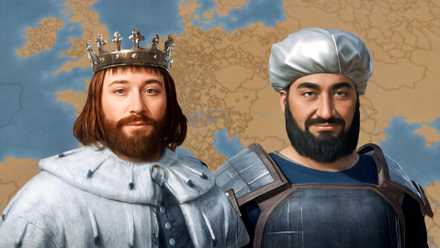
Europa Universalis 5: Best Nations to Play As
Here are the best nations to play as in Europa Universalis 5, with options for beginners and veterans of the franchise alike.


