

As new FPS games become increasingly rarer, it can be easy to forget that there was a time when every single developer and publisher wanted a piece of that pie. During the 2000s and early 2010s, shooters never stopped launching, with some becoming instant classics while others garnered cult followings. Then, we have those FPS games that just kind of vanished, their contributions or failures erased from history.
I love nothing more than rediscovering forgotten shooters from yesteryear, and they don’t have to be good to be worth experiencing for a few hours. The following games will never show up on Steam sales, be mentioned by their creators again, or feature in history lessons about the FPS genre. However, I remember them, and I’m sure a few other people can say the same.
Wolfenstein, The Sequel That Time Forgot
Licensing Issues Made This Game Unsellable
- Delisted from digital stores in 2014. Console copies aren’t too expensive on Amazon, though.
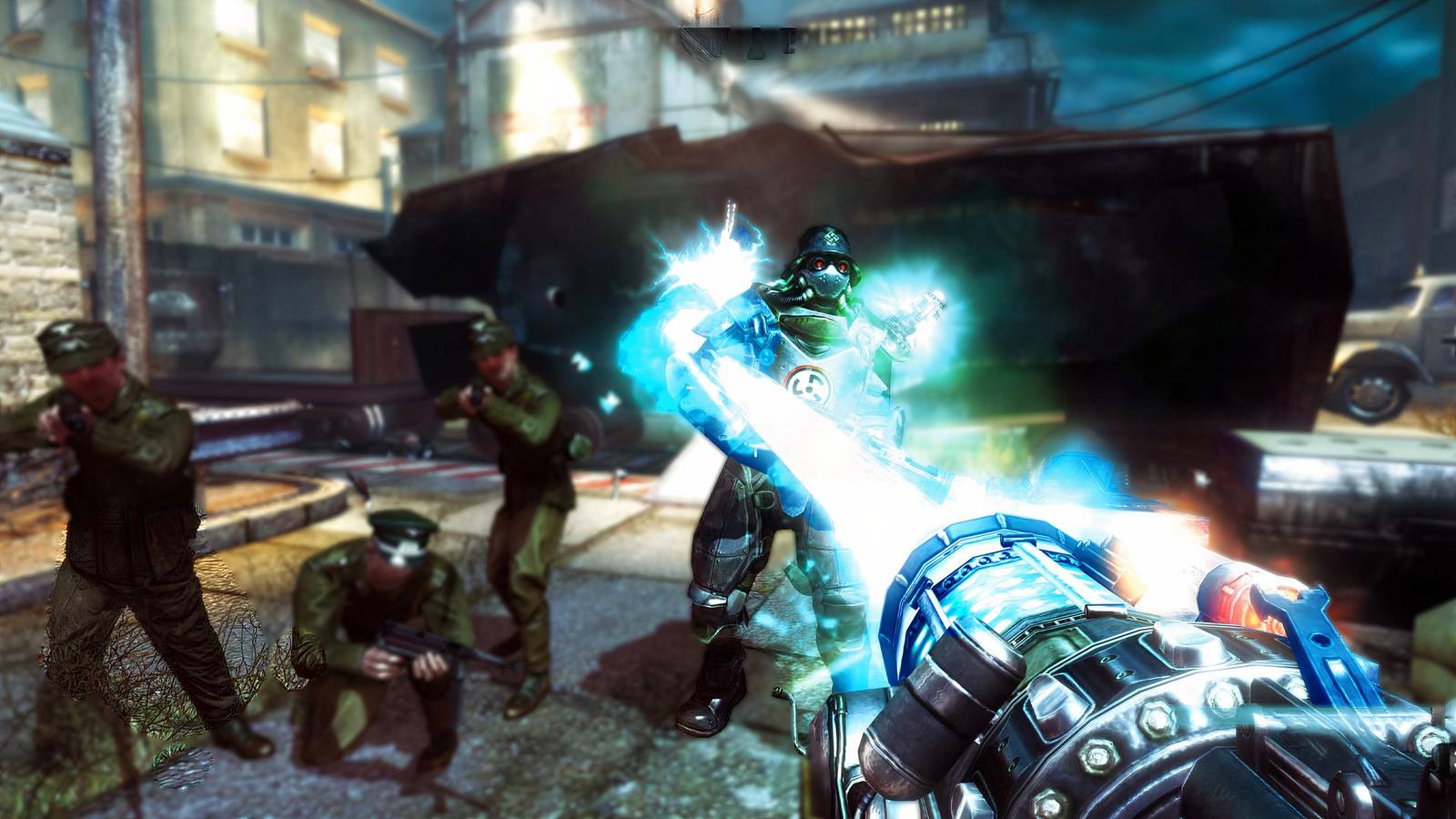
When discussing the modern legacy of this legendary franchise, the history books will likely jump from Return to Castle Wolfenstein to Wolfenstein: The New Order, largely ignoring what came out between the two. Published by Activision, 2009’s Wolfenstein was an attempt to revitalize the series, but its future was instantly in jeopardy. Just two months before the game’s release, ZeniMax Media (aka Bethesda’s parent company) acquired id Software, which owned the Wolfenstein license.
With Activision no longer able to sell it and Bethesda having no desire to sell it, Wolfenstein was removed from digital stores in the same year that The New Order launched, which instantly wiped its predecessor from existence. Although nowhere near as good as the subsequent games, the 2009 FPS game was and still is a fun time that incorporated a few neat ideas like special powers and semi-open hub areas.
Pariah And WarPath Are Digital Extremes’ Biggest Mistakes
Oh, Yeah, Let’s Get To The “Failure” Part Of The Article Now


- Impossible to buy, not that you’d want to.
- After Pariah flopped, Digital Extremes quickly turned its sequel into an asset flip.
Digital Extremes doesn’t need any introduction, considering the massive success of Warframe and its contributions to Unreal Tournament, but the developer struggled quite a bit between those two pillars. Dark Sector was OK, and The Darkness 2 is fantastic, but DE’s first attempt to move away from Unreal Tournament was a near-unmitigated disaster.
Wanting to find its independence away from Epic Games, Digital Extremes dropped Pariah in 2005, an overly hyped sci-fi shooter that came with a few good ideas and many issues. While the weapon upgrade system and healing syringes were nice evolutions, the rest of the game consists of broken AI, escort missions, bullet-sponge enemies, and bland level design. Not completely unplayable, but shockingly mediocre.
You know what happened next? Well, Digital Extremes just kind of did it again. In 2006, WarPath hit shelves: a rushed cash grab that heavily reused assets from Pariah and included a “single-player” campaign that was really just multiple matches with bots.
Yeah, I’m not surprised Digital Extreme doesn’t really talk about these games nowadays. (Pariah is fine, just unspectacular.)

Click on the game with the higher OpenCritic rating.
Cryostasis: Sleep of Reason Is Frozen In Time
An Ambitious (And Good) FPS Horror Hybrid
- Due to its developer’s closure, Cryostasis was removed from storefronts in 2012 and never seen again. It’s a PC exclusive as well, so no physical console copies.
From two games that should have been better to a title that surpassed expectations, 2008’s Cryostasis: Sleep of Reason is a great psychological horror FPS game that entered legal hell just a few years after its release, and it has been stuck in limbo ever since. Nowadays, not only can you not buy Cryostasis, but getting it to run on a modern system is a real test of patience and willpower.
Set aboard the North Wind, a massive nuclear-powered icebreaker stranded and frozen in the Arctic Circle in 1968, Cryostasis replaced standard FPS tropes with surreal, temperature-driven survival mechanics. While monsters roam about, the game presents cold as your primary enemy, tying your body temperature to your health. You must constantly be on the lookout for heat lamps or even burning barrels to keep yourself warm.
The story takes a fascinating route as well, as the protagonist enters a crew member’s final memories to fix their mistakes, changing the timeline in the process. Really cool idea that is executed pretty well. Using ancient Soviet weapons, the gunplay feels purposefully sluggish, sort of like a rougher Metro 2033.
Devastation Pushed The FPS Genre Forward
And It Deserves Credit

- Was never even available on stores like Steam.
- Killed by bankruptcy.
As messy as its source code was, 2003’s Devastation was incredibly ambitious for its era, pioneering environmental physics before Half-Life 2 popularized the concept with the Gravity Gun. The game revolved around environmental manipulation, encouraging players to turn their surroundings into makeshift weapons that could catch enemies off-guard. It was even among the earliest examples of an FPS with on-the-fly weapon modifications, and it included tactical elements through team commands.
Look, I’m not going to sit here and pretend Devastation is a forgotten masterpiece, as it has way too many issues to justify that label. The partner AI is too inconsistent to be reliable, while its performance was never great and hasn’t gotten better with modern tech. However, there’s a lot to admire here, and the game serves as a reminder of a period where mid-budget studios pushed the envelope and took big risks rather than being mostly throwbacks to days long past.
You Are Empty Is An Unpolished, Glorious Mess
An FPS Game With An Endearing B-Movie Vibe
-
 Image via Digital Spray Studio
 -
 Image via 1C Company
 -
 Image via Digital Spray Studio
- Delisted a long time ago, and it was never a big success anyway.
Absolutely savaged by critics in 2007, You Are Empty is one of those gems that might pop up in a Reddit post asking if anybody remembers a weird FPS game set in the Soviet Union. The reviews were harsh, but they didn’t come out of nowhere either: the game was a technical disaster in enough ways to be really distracting. Because of its instant obscurity, You Are Empty barely made a dent in the FPS genre, and it is an absolute pain to getrunning on modern systems (the curse of outdated DRM).
For its many problems, You Are Empty has this strange charm that makes it oddly unforgettable, at least for the handful of people who actually played it. The USSR setting gives it a Wolfenstein vibe, albeit with a more surreal tone. Although guns are part of the equation, combat emphasizes melee tools like lead pipes, similar to Condemned: Criminal Origins. Although restrained by a relatively low budget, the levels and environments were still big and impressive.
James Bond 007: Nightfire Is The Greatest James Bond Game
One Of Many 007 Games Erased From History
- Bond cannot escape the licensing curse.
GoldenEye 007 is not the only great James Bond FPS game… in fact, it isn’t even the best James Bond FPS game. That honor goes to Nightfire, which was a pretty big hit in the early 2000s. However, like every 007 release before and after it, the title eventually succumbed to licensing issues, becoming abandonware in the process. We will never be able to legally buy a digital copy of Nightfire, which is an absolute travesty.
For an entire generation, Nightfire was the undisputed gold standard of licensed spy action shooters. It featured an original storyline that felt like a blockbuster movie, incredible pacing, and top-tier gunplay that rivaled the best FPS games of its era. As much as I respect GoldenEye 007, I poured far more time into Nightfire‘s single-player campaign, which comfortably ranks among the strongest of the early 2000s.