






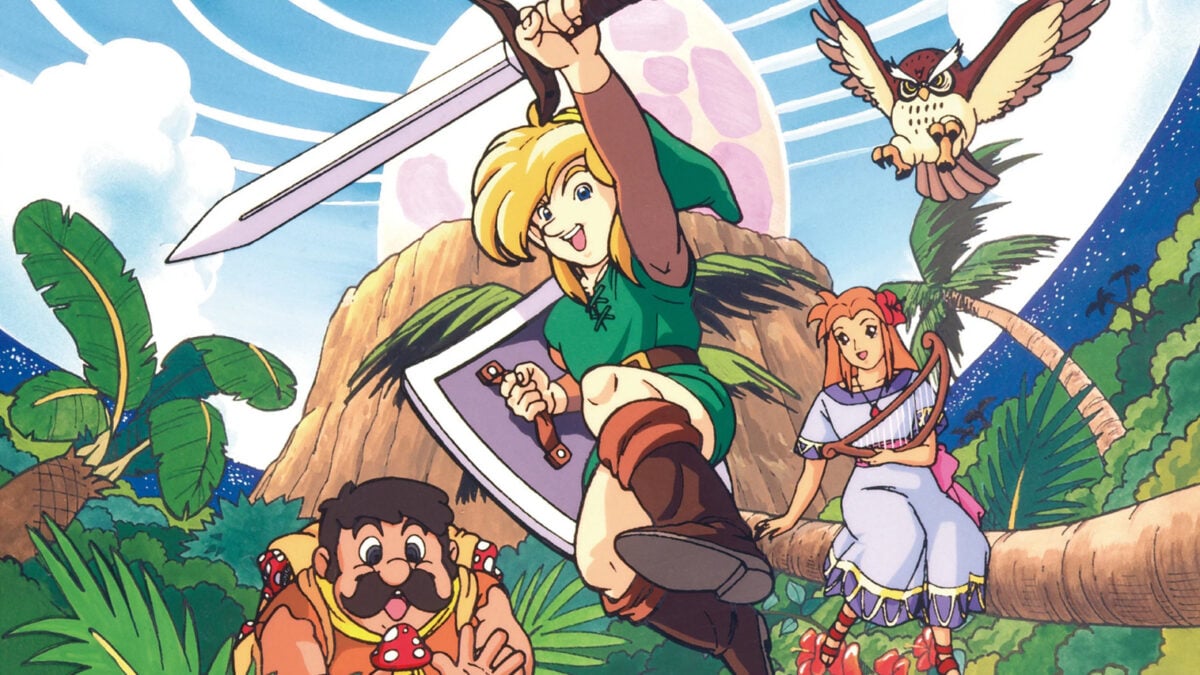
Earlier this week, longtime Nintendo producer and current executive officer Takashi Tezuka announced that he would be retiring from the company. Tezuka had been with Nintendo since the mid-80s, cutting his teeth on Punch-Out‼ before tackling some of the most pivotal games in history. This rap sheet includes Super Mario Bros., The Legend of Zelda and Animal Crossing. However, those at Nintendo speak of Tezuka most reverently on Link’s Awakening, a game they feel pivoted the Zelda series towards its greatest adventures.
Fresh out of art school, Tezuka applied to Nintendo alongside a friend. His pal didn’t make the cut, but Tezuka did, which was only curious due to the fact that Tezuka had little interest or exposure to video games prior to his new job. His influences were more rooted in art and film than arcade hits. He claims he had never even heard of Pac-Man before joining Nintendo.
Over time his outsider proposals became his secret weapon. Boos in Super Mario Bros. 3 and Yoshi in Super Mario World were both his ideas. He became director of The Legend of Zelda: Link to the Past, which added new depth and dynamo to Nintendo’s signature fantasy series. It was with Link’s Awakening, the series’ first handheld outing, where Tezuka began taking risks that would redefine the series.
As good and inventive as Link to the Past was, it ended up playing things rather safe. Sword, sorcery, damsels in distress. Graphics, melodies and engaging world design compensated plenty for an archetypal story of saving the kingdom. What Zelda would be on the nascent Game Boy was a lot more open ended.
Starting the project as a bit-for-bit remake of the SNES game, some of the developers had been secretly tinkering with the handheld’s specs after hours. Merging with these “afterschool club” experiments, Awakening evolved into something much different than what came before. Feeling these headwinds, Tezuka instructed his team to develop a Zelda game without a Triforce, without Hyrule and, perhaps most notably, without Zelda.
In a delightful Iwata Asks session on the history of handheld Zeldas, Satoru Iwata prodded at where Link’s Awakening motif came from, if not previous games. That answer has taken on a life of its own among fans: David Lynch.
“At the time, Twin Peaks was rather popular,” said Tezuka. “The drama was all about a small number of characters in a small town… So when it came to Link’s Awakening, I wanted to make something that, while it would be small enough in scope to easily understand, it would have deep and distinctive characteristics.”
Producer Eiji Aonuma says that Tezuka suggested the residents of Koholint Island all behave off-kilter and suspicious. Distinctive and a little otherworldly to keep the player curious and cautious. The stakes of Awakening went beyond besting evil with a sword, but repairing a fissured reality. When time came to make Ocarina of Time, Aonuma says Link’s Awakening was the point of reference. All of Tezuka’s quirky arthouse elements became signatures of all the major Zelda games to come. It put uncanny characters and world-bending stories ahead of mere high fantasy. What is Tingle if not the man with a camera strapped to a big red balloon.
“Tezuka-san, you broadened what was permissible for Zelda without even realising it,” said Iwata.
“I guess I did,” replied Tezuka. “Well, I’m glad I could contribute.”