




Two members of my court debate whether the giant octopus at the other end of the battlefield is technically a “kraken” or a “leviathan.” This kind of pedanticism isn’t rare. Titanium Court is an ongoing dance between match-three puzzles and semiotics. Sometimes an egg is a football and it requires an escort to the end zone. Certain road signs are powerful runes, capable of plaguing the land. In a short time I’ll be fielding a soccer coach who’s confused as to why defense and offense have differentiating definitions on the pitch and in the art of war. Settling that the nomenclature will stick for once? That the octopus is definitely a leviathan? That’s not the kind of certainty you can usually rest on in this surreal, enchanting strategy game.
I haven’t kept up with esports since my short stint as a Major League Gaming VJ, but I try to check out the annual Candy Crush finals. Where most professional gamers are stickered up with brands like a Dole banana under the arena lights, Crush’s top competitors, streamed remotely, wear no such NASCAR racer garb and instead often look like nurses who ducked into a supply closet during a shift.
-
BACK-OF-THE-BOX QUOTE
“Foucault’s Pendulum meets Candy Crush, there’s something for everyone!”
-
DEVELOPER
AP Thomson
-
TYPE OF GAME
Strategy role playing puzzle game with procedurally generated match-three puzzles and lurid high strangeness
-
LIKED
Lovely low-fi vibes and clever writing, exploring what each job compliments is a ton of fun, deconstructing the genres and reassembling them in real time
-
DISLIKED
Unexpected detours can end up taking up a chunk of time, some jobs feel helpless without hitting the right store early on
-
PLATFORMS
PC
-
PLAYED
Conquered each beast with five jobs over eight hours. Plus the mirror world and the skull… spider… clock thing.
-
RELEASE DATE
April 23, 2026
Match threes are the people’s puzzle. Satisfying two human instincts, pattern recognition and destruction, they’re easy for almost anyone to pick up and play. Developer AP Thompson has made a number of them before, (Beglitched, Fortune-499) but his latest, Titanium Court, asks for a lot more brain power to master the grid.
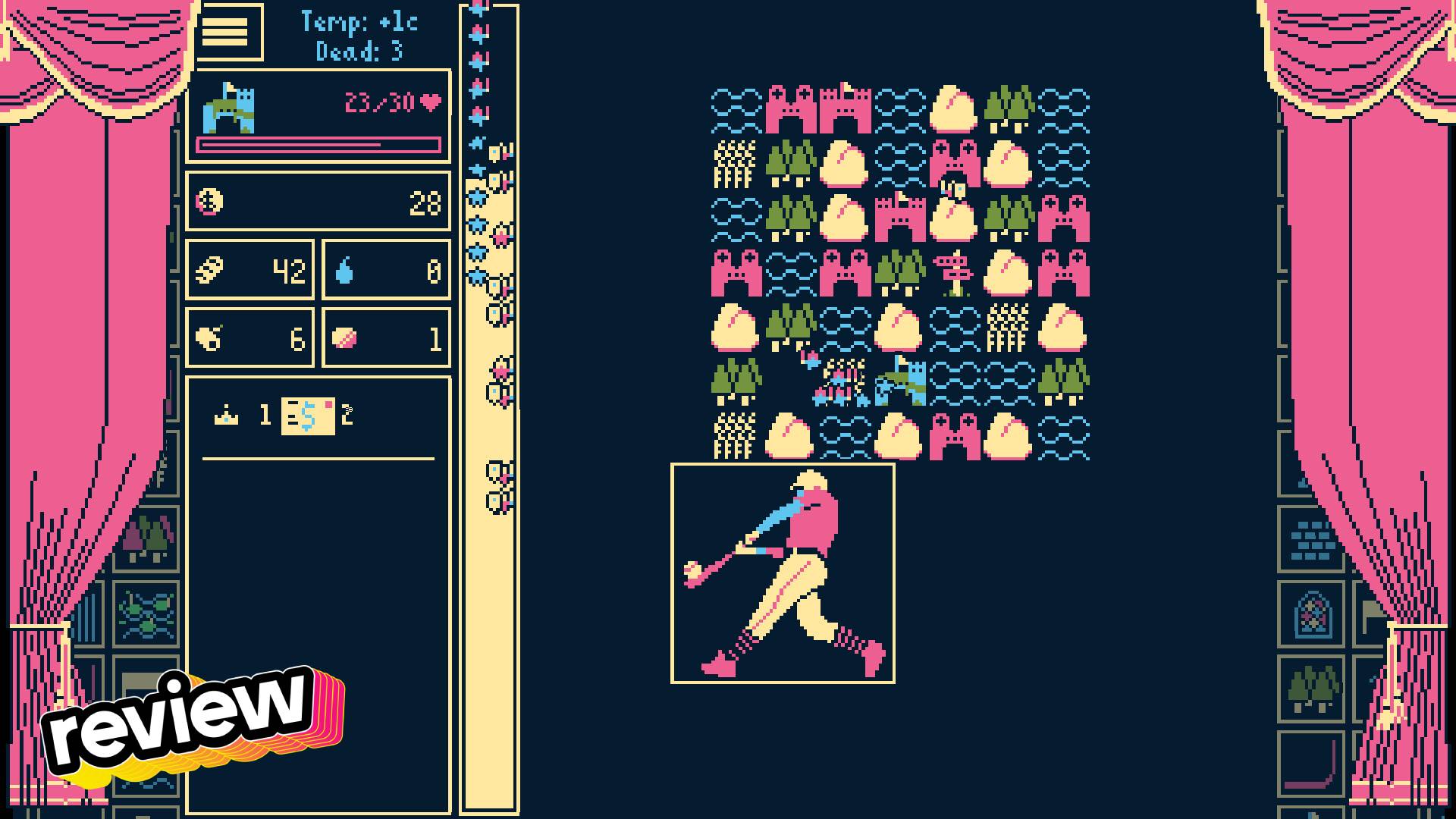
Mountains, forests, fields and rivers. Match three in a row for their resources, which you can then use to deploy faerie units and spells. Destroy enemy structures for coin. Spend coins on new units and spells. Each move eats time on the clock, though combos can wind it back some. Once time’s out, the battle begins. For default play you’d ideally whittle down enemies and surround yourself with water or mountains, but this status quo rarely holds. All of these tiles and symbols reassign themselves depending on which crown you happen to be wearing that day.
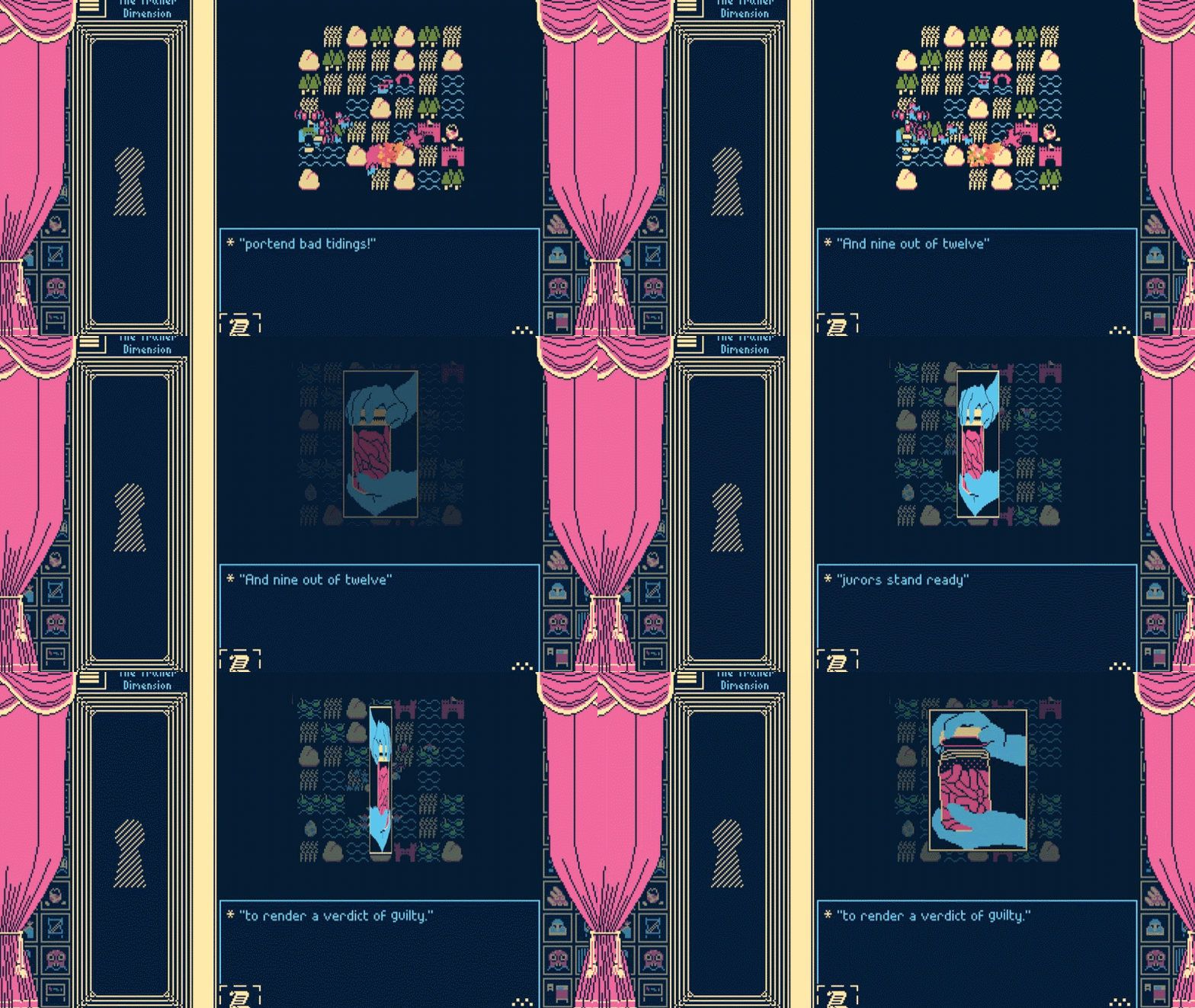
Dragonfire and volcanoes are dangerous, unless you sport the crown of a teenage arsonist; then you just want to see the world burn. Celebrities love a crowd, benefiting from more foes on the map, so long as they don’t get too close. In one campaign I ended up becoming my own mirror image, able to replicate the armies of other castles with a few spritzes of water. Wormholes can combine enemy castles into a megastructure, usually a pain in the tush, but there’s an obvious allure to cloning a giant infantry for minimal resources.
How heavy the crown and why you’re wearing it is another can of worms. Titanium Court opens on you being deemed queen of the castle, which seems to come as a surprise. Not sure how you arrived in this kingdom, or how to escape, you rally your faeries, seek out keys and break curses. Your biggest hurdle is Puck, a mysterious gadfly who seems to be both the zany, all-knowing Dean Stockwell from Quantum Leap and the menacing fae Dean Stockwell from Blue Velvet, who heralds a darker world where standard rules don’t apply. After each successful run you’re allowed to ask him one question. Then he resets the universe.
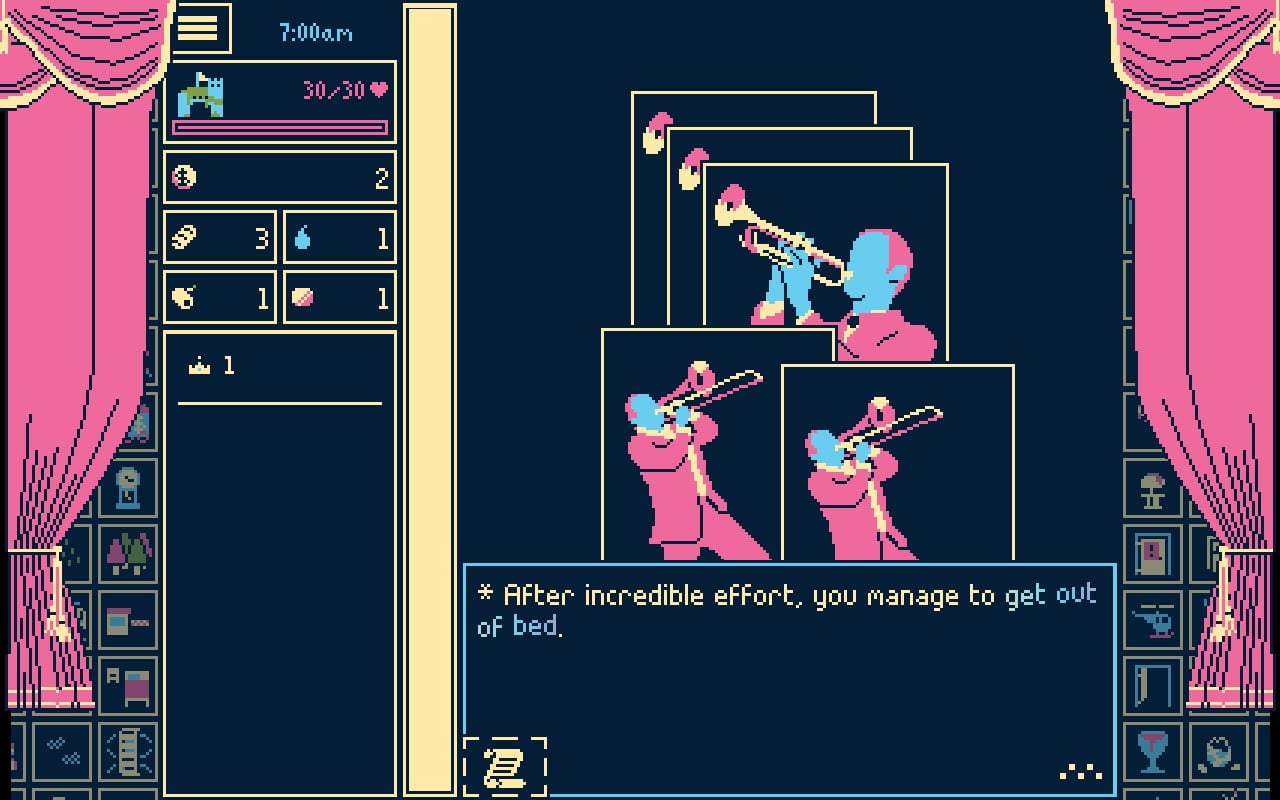
It’s a court rendered in vibrant pastels. Pixels on grandpa’s loudest computer. Fairies are small navy outlines, barely an asterisk. Each action and encounter is expressed through leaping Sears catalogue clip-art. Stylish office laborers laughing, cigarettes sparking up and dynamic basketball dunks. With the theater drapes and darkness of a smoke-filled cabaret, you often feel like all of this battle, all of these weapons and material, are props to be improvised with. The signs and signifiers defined by what Puck found in the costume trunk.
You never know where a session of Titanium Court will drop you off. Casually checking my in-game glossary, I was suddenly transformed into a spider-beast, playing a mode with completely unrecognizable rulesets. While match-threes are best known for being so consistent they’re practically hypnotic, Titanium Court often feels like coming to in the middle of the woods. With hypnagogic pop spinning throughout, it’s a good feeling of lurid. A puzzle box you’re getting your fingernails into.
What isn’t a mystery is how Titanium Court won the latest IGF Awards. Some will call the traffic jam of all these dynamic variables a roguelike, but I like to think it sees the hidden richness hiding beneath the chaotic shifting pieces of a match-three. A box of candy whose surprises can be complex, riddling and dangerous.