


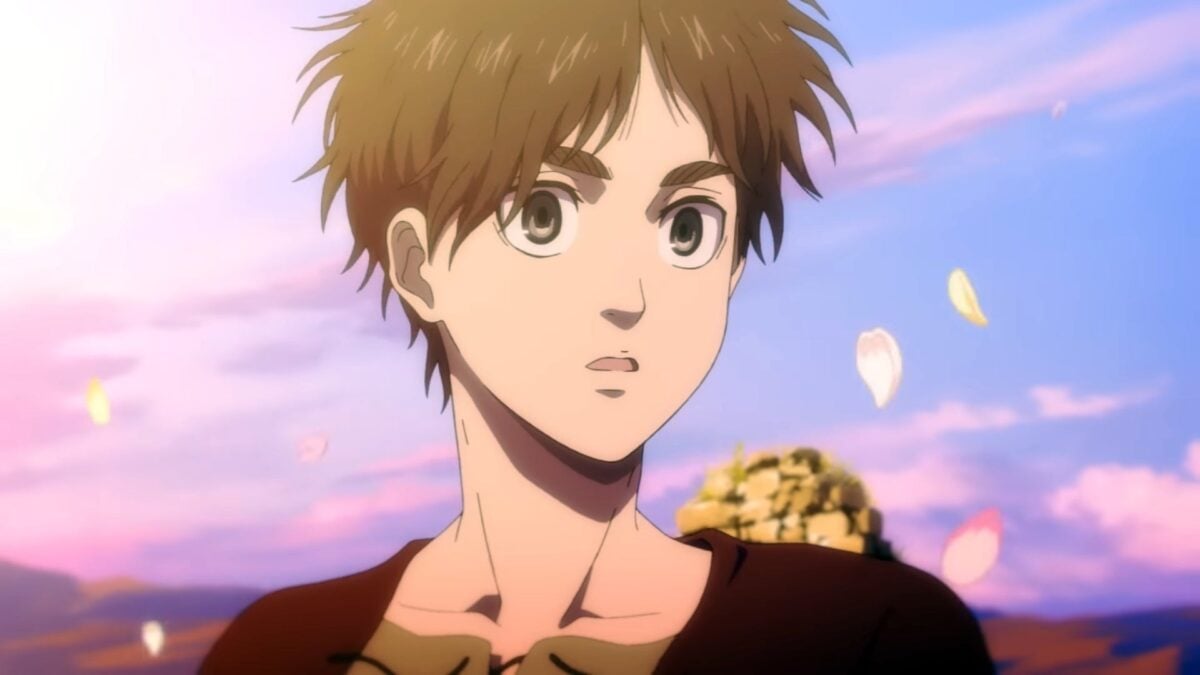
Despite being widely considered one of the best anime and manga series ever, Attack on Titan’s manga came to a fairly controversial close back in 2021 thanks to the unexpected fate of main character Eren Yeager. Now, its creator has said he agrees with criticisms of the conclusion, and his statement on it is quite literally set in stone.
In a new plaque spotted at Japan’s Attack on Titan Museum by Anime Updates on Twitter, AoT creator Hajime Isayama revealed that he’s unhappy with the way the series came to an end, saying he finds “a sense of insincerity” in its debate-spawning conclusion.
— Anime Updates (@animeupdates) April 27, 2026
AoT follows Eren Yeager, a young member of an organization set out to battle some pretty freaky humanoid giants called Titans. Eren’s largely a good guy, but at the end of the series, he ends up destroying nearly all of the world in a misguided attempt to protect his own civilization (and he becomes a huge edgelord in the process). It marks a pretty quick departure from his protagonist status, and it isn’t really reckoned with in a critical way, so it’s easy to see why fans weren’t too happy with the ending.
“Eren became a protagonist who committed mass slaughter on a scale rarely seen in other works of fiction,” Isayama said via the plaque. “As for why I conceived such a story from the beginning, part of it was my desire to create a narrative with a major twist—where the victim becomes the perpetrator.”
“But a large factor was also my own immaturity and foolishness at the time, when I was in my early twenties,” he continued. “That aspect became the core of Eren’s character, leading to the point where he confesses not as someone forced into wrongdoing by circumstances, but as someone who harbored a desire to do harm.”
The plaque doesn’t specify whether Isayama’s talking about the manga, the anime, or both, but I’d assume he’s mainly referring to the manga here. Isayama slightly altered the plot of AoT’s controversial manga for the anime’s finale, in which Eren has a short conversation where he’s at least somewhat held accountable for his actions rather than basically praised for becoming a mass murderer.
“However, Attack on Titan had long since ceased to be mine alone, and Eren became a character loved by many readers,” Isayama said. “In the end, without fully committing to portraying him as a detestable figure, I found myself depicting him with a certain closeness and sympathy. As a result, I feel there remains a sense of insincerity in the story’s conclusion—at least in my own assessment.”
I have to say that I think it’s pretty funny that Isayama chalks all that up to the turmoil of being in his early twenties. Me too, Isayama. On the other hand, admitting that he isn’t happy with the ending of his most famous work is pretty admirable, especially after he literally faced death threats at the beginning of the anime’s massive run. Coming to terms with it through a literal museum plaque makes it even more impressive. Good for him!