
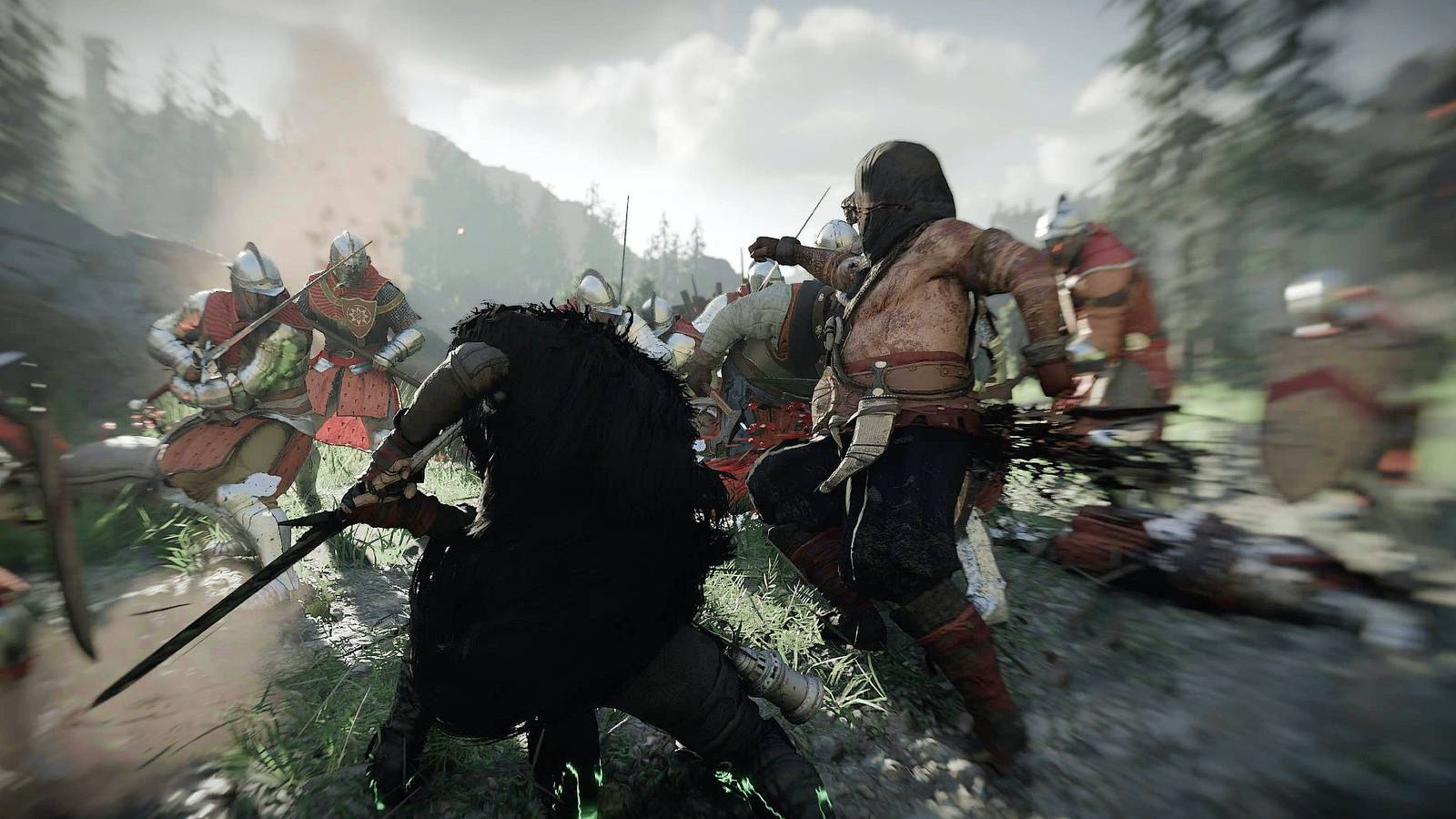
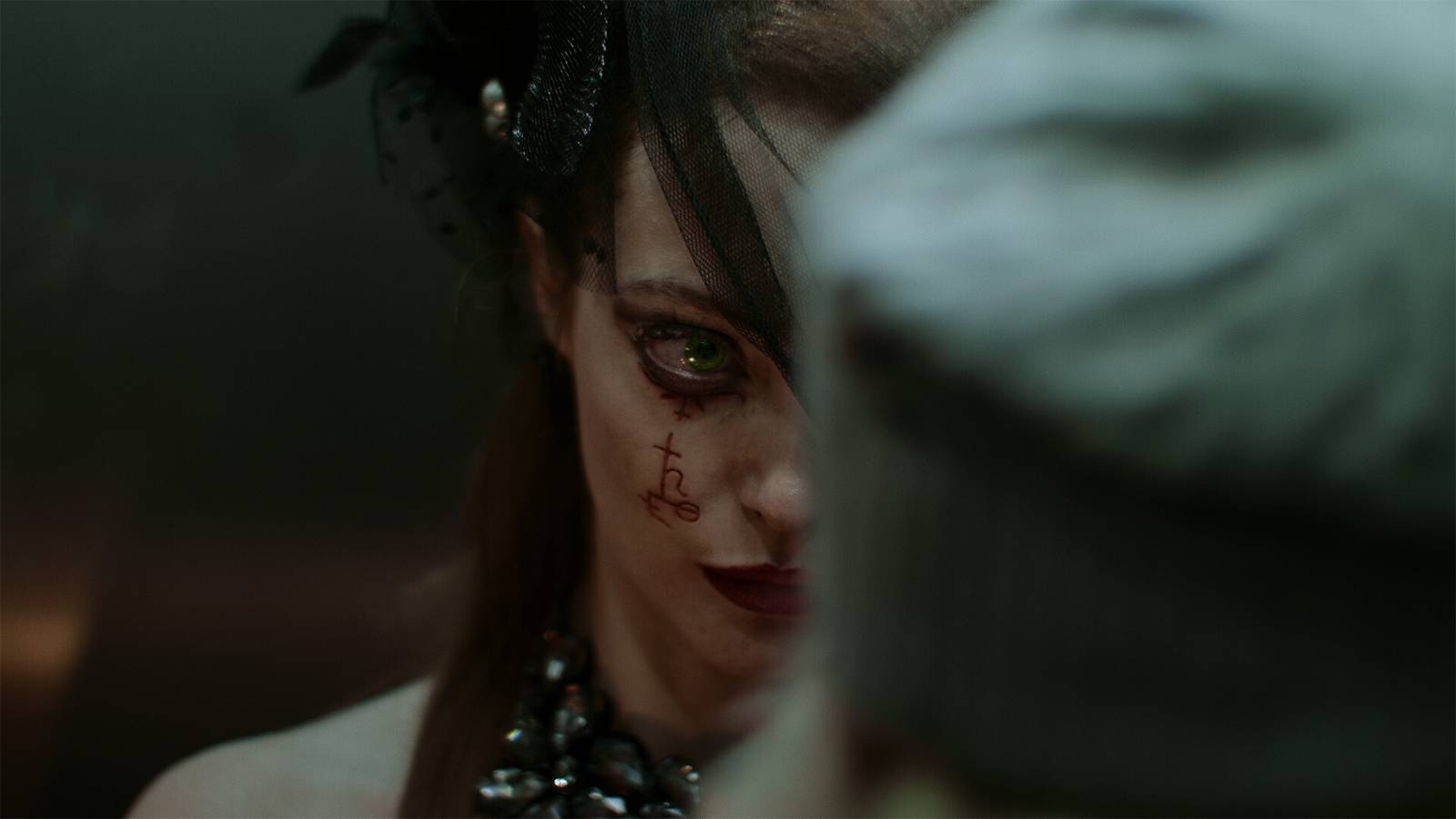



Beast of Reincarnation is set to release this Fall, and after playing some of the game myself, I can hardly wait for launch day. My intrigue was further deepened when, a few hours after my exclusive hands-on preview with Beast of Reincarnation, I sat down with game director Kota Furushima to discuss the project’s various goals, thematic elements, and, surprisingly enough, Blade Runner kinship.
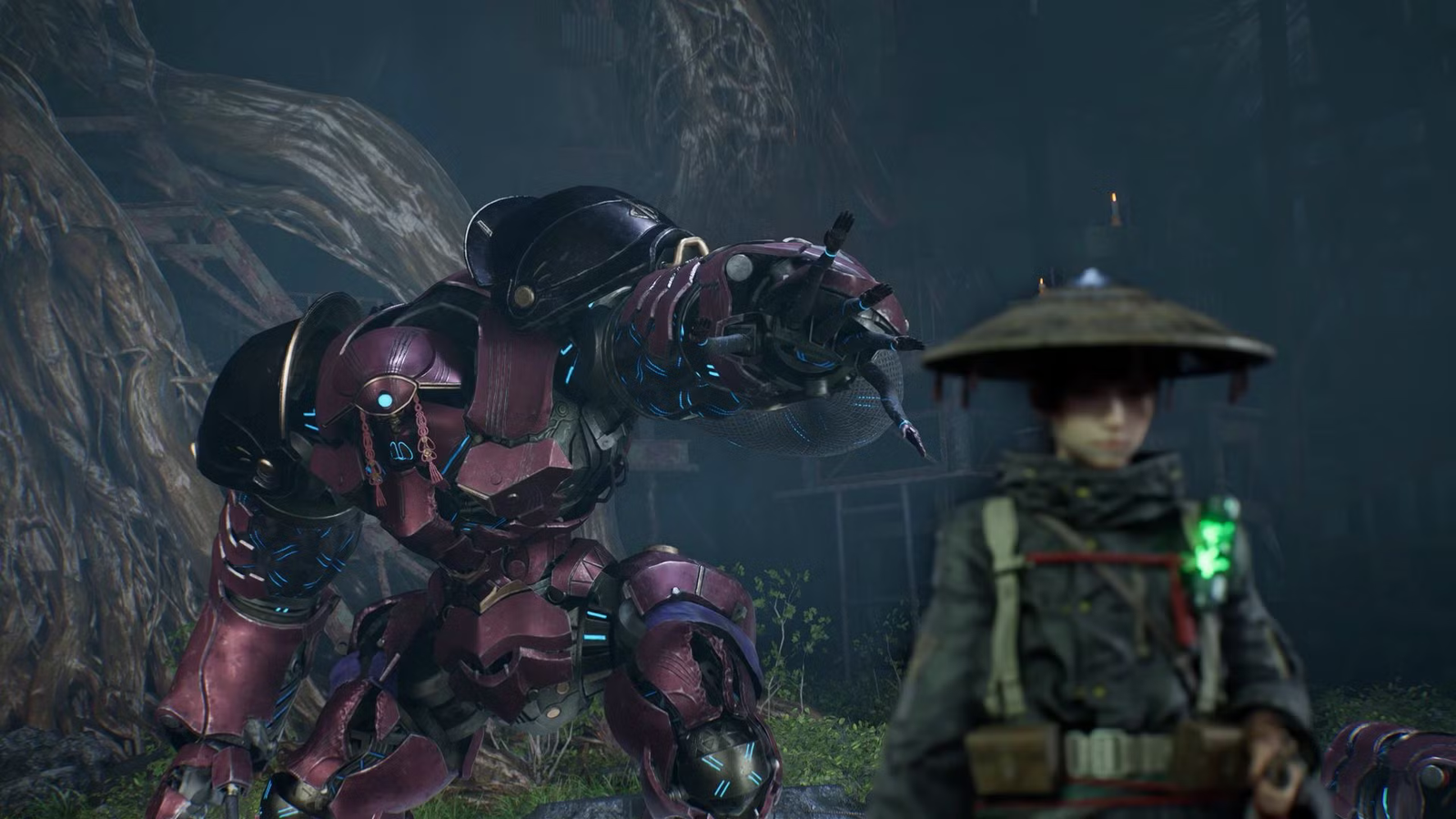
Set millennia in the future, Beast of Reincarnation depicts an Earth ravaged by something called the Blight, an ever-encroaching curse that, while seemingly helping flora thrive, kills humans and mutates animals into aggressive monsters. To survive, humans were forced to take extreme measures, transferring their individual consciousnesses to no-frills robotic shells known as Golems. Through this method, humans have effectively achieved a form of immortality, although many Golems seemingly go mad and function as enemy NPCs. These strange androids immediately captured my imagination, so I couldn’t help but ask Furushima some questions about them.
The word “golem” has substantial and widespread roots in mythology and fiction, with historians generally attributing its origin to early Jewish folklore: texts as old as the Talmud describe golems as being made from dust or clay, generally without the ability to speak or with other spiritual or mental limitations.
Beast of Reincarnation’s Blade Runner Bond Makes Its Golems Hard to Ignore
Beast of Reincarnation has, understandably, been compared to a number of different games, most notably Sekiro: Shadows Die Twice and NieR: Automata. When I asked Furushima what he thought about such comparisons, he had this to say:
“I won’t argue with what the community has said, but I don’t feel that there’s any particular title that comes to mind in this regard. I am a gamer myself, so I do get a lot of inspiration from other titles that I’ve seen. But if there’s one thing that I would say the game does have a strong connection with, it’s the movie Blade Runner. That movie has a sense of world-building that really hits home for me, so I looked toward it when developing Beast of Reincarnation, especially in the context of mixing reality in fiction.”
When I heard this, I was a bit surprised. After all, Beast of Reincarnation lacks the distinct cyberpunk aesthetic that has come to define Blade Runner, opting instead for more of a science-fantasy style and premise. At the same time, my mind instantly went to the Golems: could these robots be Furushima’s take on the Replicants from the iconic film? There certainly seemed to be some possible parallels between Blade Runner’s androids and those of Beast of Reincarnation.
Furushima was quick to stem the flow of speculation, however. When I asked whether the Golems, who had survived in these forms for 2,000 years, were still human, he simply said, “That’s not only difficult for me to answer, but I would also like it to be more of a question posed and answered by the players themselves.” He was also clear that the Blade Runner connection was more vague or conceptual than literal, saying that he views the movie “more as a reference point than inspiration.”
This wouldn’t be the last time that Furushima was a bit coy about Beast of Reincarnation’s world and story, ending our interview with a comical warning to not “look up in the game’s sky.” How this virtual sky is connected to Beast of Reincarnation‘s greater lore, I cannot say.
Hopefully, Beast of Reincarnation Is Great in the Same Way that Blade Runner Is
I respect and appreciate Furushima leaving certain questions unanswered, especially ahead of Beast of Reincarnation’s release. That said, I’d also like to engage in some independent theorizing about the game’s relationship with Blade Runner, specifically as it pertains to world-building, something that Furushima seems to revere in the classic film. Perhaps Beast of Reincarnation, like Blade Runner, will question what it means to be human, to have consciousness, and so forth. This question lingers at the end of both Blade Runner and its sequel Blade Runner 2049, which both interrogate the essence of humanity without firmly defining it.
There’s also the fact that Furushima says that he looked toward Blade Runner during development, “especially in the context of mixing reality in fiction.” This comment is vague, and can be read in a few ways. Maybe Blade Runner’s elements of human drama helped influence Beast of Reincarnation’s character writing—human relationships and emotions could be the “reality” Furushima is referencing here. Alternatively, perhaps he means that Beast of Reincarnation aims to poke holes in our understanding of perception, just like Blade Runner (and especially the book it’s based on) does. It’s even possible that Beast of Reincarnation aims to comment on real-world events in some way, much like how Blade Runner can be seen as, for example, a critique of capitalism.
Since I’m so preoccupied with Beast of Reincarnation’s Golems, I like to think that Furushima’s above reference to “reality” relates to how the game uses its lore to inspect relevant ideas. In the case of the Golems, the ideas being inspected could include the essential contents of a human being, and how far a human being has to go before they are no longer defined as such. If the essence of humanity is in the mind or soul rather than the body, then we could say that Golems are most definitely still human. But then why does every instinct tell us that they aren’t? How much do our bodies, and by extension, our mortality, define our humanity?
It’s these sorts of hard questions that Beast of Reincarnation is perfectly poised to explore, just like Blade Runner was. No, Golems are probably not just a stand-in for Replicants, as I initially wondered, but they could be used in a similar manner. That is, they, in conjunction with other elements of Beast of Reincarnation’s world, can shape, mutate, and ultimately convey, the story’s foundational themes. This ability to explore interesting concepts, often those that society at large still wrestles with, is usually what separates good sci-fi from great sci-fi. I know which end of that spectrum Blade Runner lands on; hopefully, Beast of Reincarnation can at least fall close to it.

- Released
-
August 4, 2026
- Publisher(s)
-
Fictions
- Number of Players
-
Single-player