





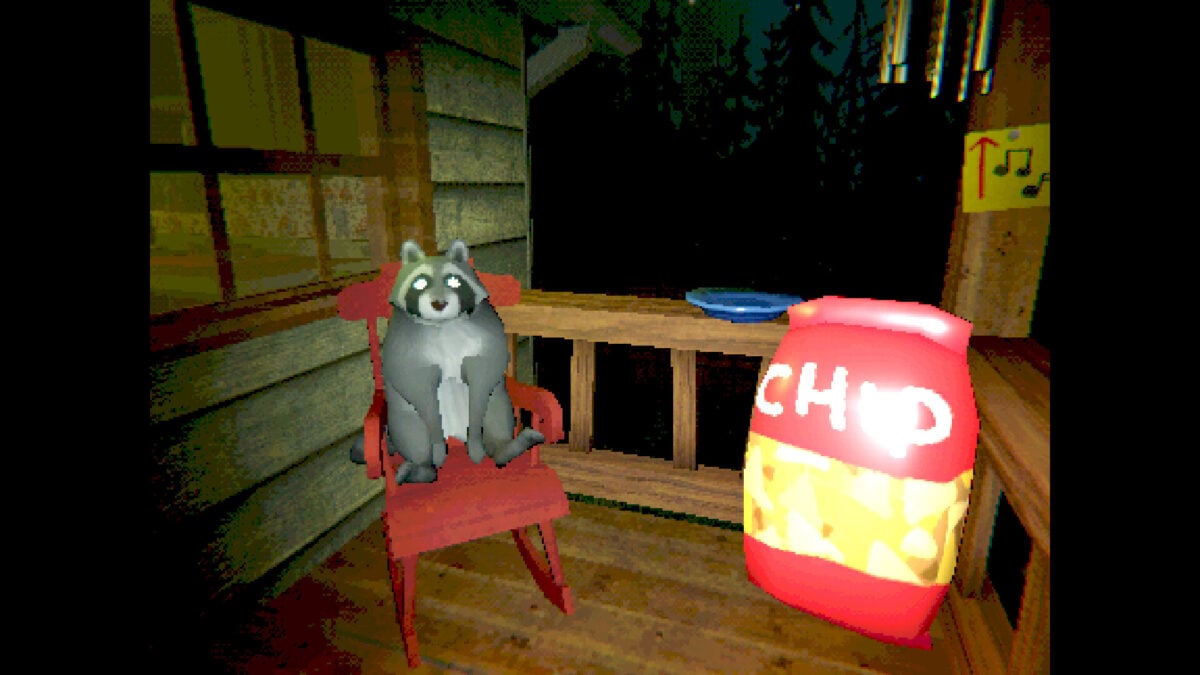
The raccoon rejected my pancakes, but seemed to love the PB&J sandwich I made him. I knew cheese would be a given for the mouse living in the hole overlooking the kitchen, even if gaining access to the fridge took me a minute. As an upside, I can finally bake pizza for the invisible being rummaging in the pantry, giving them a taste of Italy as requested. Ice cream, however, will have to wait—I haven’t figured out how to open the freezer yet.
For a game that proclaims to be cozy, Creature Kitchen has you constantly running back and forth while your mind tries to think two steps ahead. It makes sense, since the game’s whole concept is one of subversion, capitalizing on the long-established trend of games that center traditionally “cozy” actions such as cooking, farming, or fishing but throw a horror edge into the mix. Here, it’s primarily cooking, as you tend to the peculiar dietary needs of a group of critters and cryptids. Fulfill their cravings, and they’ll reward you with a key to open another cabinet or door inside the eerie-looking house in the woods that you’re tending to.
From the moment you step into Creature Kitchen (available now on Steam), the vibes are immediately bad. It’s a feeling that permeates the air of the dark woods surrounding the house. You feel it emanating from the lonely picnic basket next to the riverbank, from an empty dog house, and especially in the welcome note that the homeowner left for you: “Keep them fed and you should have nothing to worry about.”
Your first diners are a crow and a raccoon. The crow must be called by interacting with the chimes on the front porch. Thankfully, they’re not picky about food. Toast and pancakes do the job just fine. The raccoon is the opposite, but snapping a picture with a special camera provides hints about what kind of food they’re looking for. Turns out the trash panda wants sandwiches.
Cooking is simple enough, yet it requires actual manual work every time. If you want two slices of bread, you need to head to the pantry, grab a loaf, interact with the cutting board, and do multiple cuts by placing the knife in the highlighted spots. Need jam? Mix a strawberry and sugar in the mixer by holding the button and moving your mouse in circles until it’s done.
Thankfully the oven takes care of most of the actual meal prepping process for you. But the steps you have to complete beforehand, along with most of the actions you perform in Creature Kitchen, all have a tactile element that doesn’t get old. It reminds me of Paratopic, one of the first examples of a game deliberately imitating the graphics of the early 2000s, and also a game in which interacting with any objects that you’re allowed to is basically half of the experience. Here, there are also some puzzles to solve using visual cues. Except for one involving a clock, they’re fairly intuitive and fun to solve. Most of the time, however, you’re in a similar routine: snap a picture, consult a book, make enough meals to befriend yet another little guy, and gain a key that leads to more ingredients and recipes.
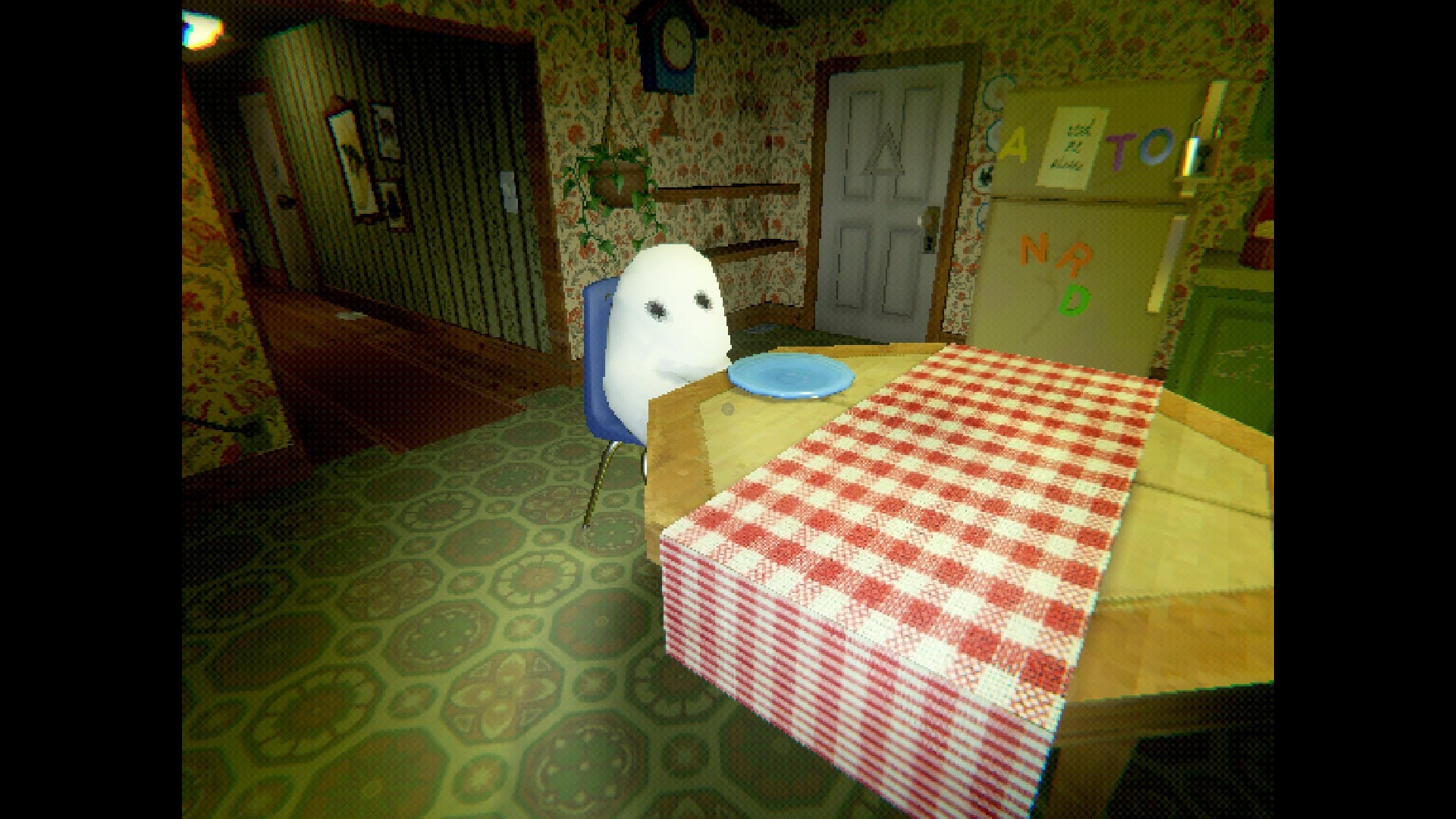
It’s in this routine that the horror element excels thanks to its subtlety. The cooking manual, for example, tells you the pan can be used for “self-defense” during a kitchen emergency, and that you should put the knife down if “rage overtakes you” while slicing an ingredient. The milk carton has a missing person ad on its side. When you finish befriending a critter, you get some additional observations that provide more color to the character. In the case of Grey the Doggo, the last one reads, “not sure this is a dog…”
One of the most terrifying moments I experienced involved an unexpected visitor. I went to the pantry to search for a specific ingredient, and as soon as I returned to the living room, I saw a small figure standing on the other side of the front door. I let them in, and they sat down at the table, put a plate in front of them, and locked their gaze on me. Turning my back on them felt tense, and I was expecting a stronger reaction when they didn’t like the dish I prepared. But they just turned around and walked away.
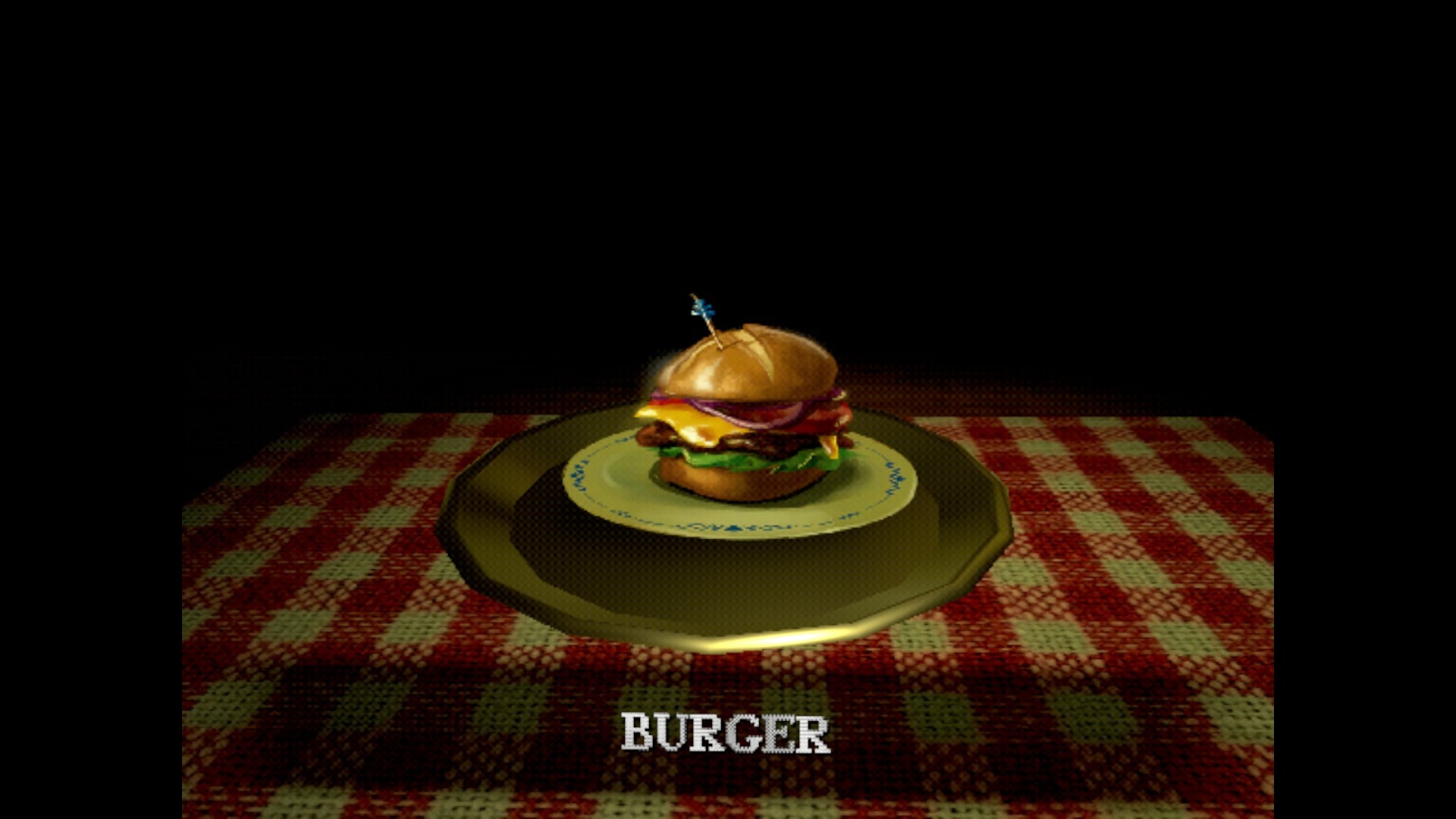
Creature Kitchen is an amalgamation of familiar ingredients. The low-poly art style, the monotonous routine around cooking that has you repeating the same minigames over and over, the dashes of influence from the likes of Incryption and Blue Prince sprinkled on the way you interact with the environment and solve puzzles. It could be just another example of this ongoing wave of cozy-yet-scary games. But its biggest subversion is in rewarding your curiosity and compassion for the animals and creatures you come across. Despite the many warnings, none of them means harm. Over time, they’ll even start populating the inside of the house as well, providing a more tangible company than the radio on the countertop.
Even though there’s an inherent satisfaction in unlocking new layers of the house and progressing through obstacles by finding the necessary ingredient or recipe you were missing, the core of Creature Kitchen lies in the eclectic characters you come across. Having no way to directly communicate with them, you use food as a shared language, making for tender interactions with creatures that may seem terrifying at first glance. After all, everybody deserves the same care and attention—whether they prefer pancakes or pizza.