




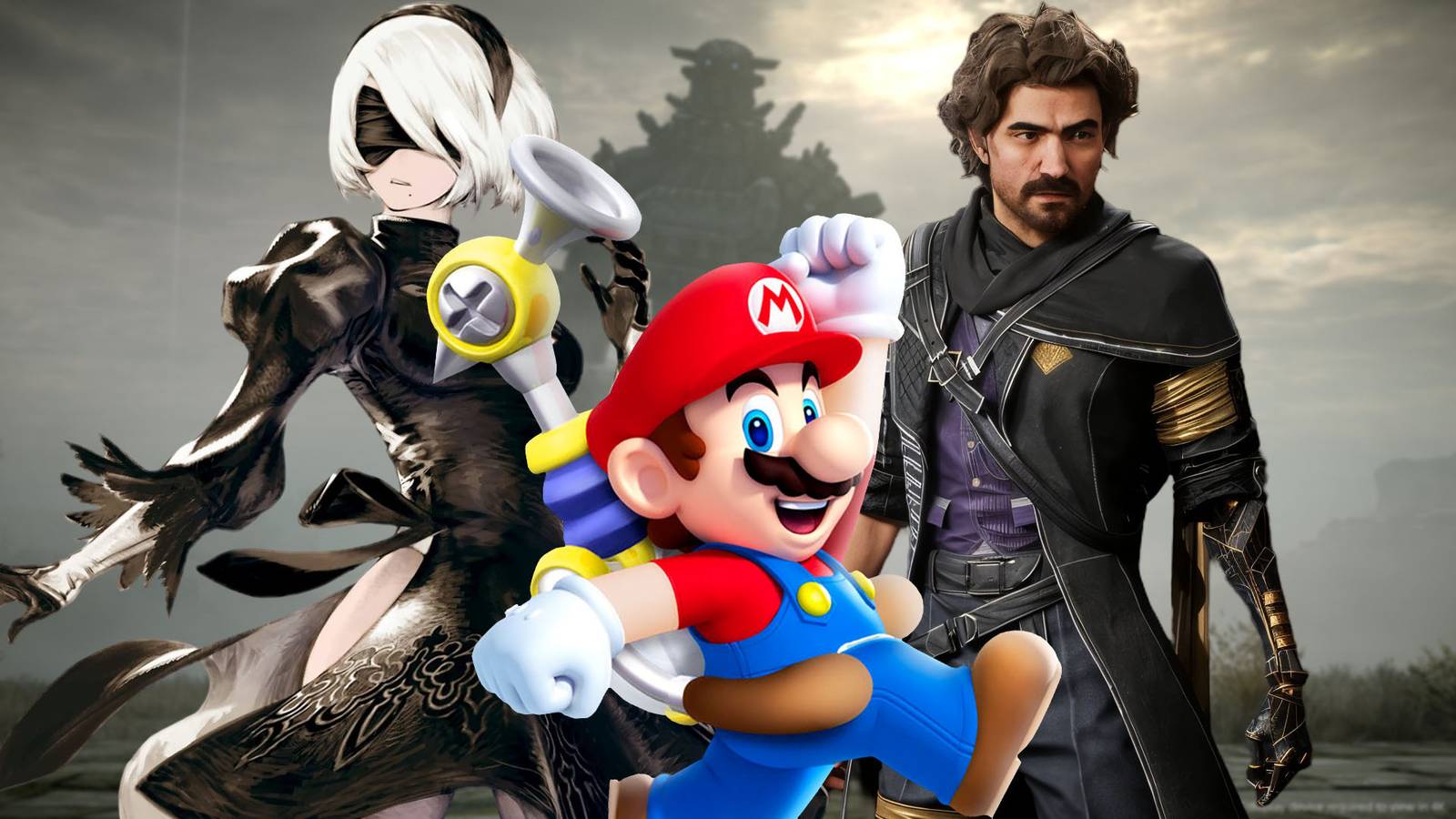
Video games, at their core, nearly always give players some kind of final objective to strive toward, whether it be defeating a final boss, completing all the levels, or exploring all the way to the end of the world. Yet even once you conquer all the must-do challenges, you can still find that there is plenty of stuff to complete, from smaller quests to collectables, which is where the concept of completionism comes in. Pretty much all the longest games ever consist primarily of this type of optional content.
10 Action Games That Officially Last More Than 100 Hours
Dive into the world of long-lasting action games, with these titles boasting over 100 hours of intense gameplay and explosive set pieces.
Many games will have dozens, if not hundreds, of achievements to unlock and find, giving those who really like the grind something to strive for. However, in some cases, the developers opt to punish players for going the extra mile, with jokes or other outcomes that make their efforts either feel mocked or all for nothing in the end. Don’t do the time if you can’t handle the consequences.
Fit the 9 games into the grid.
The Legend Of Zelda: Breath Of The Wild
All That For Nothing
Details:
- Collecting every Korok seed ends with a literal gag item
- Completionism becomes a commentary on obsessive play
The Legend of Zelda: Breath of the Wild famously hides 900 Korok Seeds across Hyrule, encouraging players to explore every corner of its world to fully consider themselves done. Collecting all of them results in Hestu’s Gift, a deliberately useless golden object clearly designed as a joke that couldn’t be further from an actual reward.
This reframes the entire collectible hunt, as Nintendo effectively signals that players were never expected to gather every seed, turning the task into a satire of compulsive completionism. In general, the game does reward curiosity, but this inclusion is a clear mockery of the excess and lengths that many players go to just to have their checklist finished.
NieR: Automata
Money Is The Answer
Details:
- Achievements all the way up to the platinum can be bought
- Undermines the traditional value of completion tracking
NieR:Automata constantly challenges player expectations, from the story to the gameplay sequences, but there is no clearer defiance of order than the achievement system. After completing key story content and Route C, players can access a shop that literally lets them buy trophies directly instead of unlocking them normally, assuming they have enough currency to do so.
7 Of The Most Difficult Open-World RPGs By Japanese Developers
While not impossible to beat, these RPGs are some of the hardest games in their genre. The fact that they’re open-world just amplifies the difficulty
When I first saw this in-game, I was taken aback, as I had already prepared myself for multiple playthroughs, but seeing the platinum just sitting in a store completely changed my perception of the game forever. Achievements are typically treated as proof of mastery or dedication, but NieR reduces them to another transaction within its world that, in a lot of ways, is about as expected as it could be based on the context of the story.
Shadow Of The Colossus
The Fruits Of Your Labour
Details:
- Secret garden only accessible after several playthroughs
- Reward is a fruit that actually decreases the Wanderer’s stats
When it comes to games that play with the player’s emotions in a very direct way, Shadow of the Colossus is one of the most famous, if not the most. As players progress through the story, they will find themselves with more and more stats, but even at the end of the game, when they attempt to climb the Shrine of Worship, they will end up flat on their face, despite having seemingly maxed out all their stats.
I, for one, was fairly confused, and without spoiling the reward, I went Googling and found that you actually need multiple playthroughs to actually have enough stats to make the ascent. So, I went for a second and a third go round, started scaling the wall, and was met with a secret garden and a fruit that actually reduced my stats when eaten, turning all that time into a complete waste in a matter of seconds.
The Stanley Parable
Breaking Every Wall Possible
Details:
- Go Outside achievement requires the player to wait 5 real years to get (without cheating)
- Completion plays into the absurdity of the game
The Stanley Parable is notorious for being very self-aware and constantly disrupts the natural order of the experience, with fourth wall breaks and endless references to the insanity of the game. That madness transcends the game world to the achievements, where one specific milestone tasks players to not open the game for five years, 10 in the case of the deluxe version.
I had already played through the game several times on release and was generally quite frustrated when I saw the achievement, as I would have personally loved to 100% it, without having to cheat. Thankfully, after ignoring the game for a while, I cracked it open and got my medal, so in the end, the completionism strategy involved far more patience than actual skill.
Super Mario Sunshine
Appreciation For Your Efforts
Details:
- The secret ending is just a postcard mocking the player.
- Tedious collection process
Super Mario Sunshine is well known for being one of the more unique titles in the franchise, and part of that stardom comes from both the setting and the actual game completion. For starters, the 100% path is anything but straightforward, forcing players to hunt down dozens of blue coins that are often hidden in very inconsistent ways, requiring a huge amount of repeats and strange moves to even grab a handful of them.
Best PS5 Games That Can Keep You Busy For Months, Ranked
Starting each of these PS5 must-play games, prepare for weeks, if not months, of exciting gameplay and memorable stories.
But, if players can make it over that hurdle, after finally clearing everything the beaches have to offer, they are greeted with a comical postcard that wishes them a nice vacation, effectively saying “time to put the game down” after all their efforts. Funny, yes, yet also deeply frustrating, especially for those who were probably seeking a slightly more gratifying end to the experience.
Ni No Kuni: Wrath Of The White Witch
Boss After Boss
Details:
- Philmobile, which lets players drive around without encounters, despite already clearing the map
- Represents the catalyst for all the game’s events in the first place
Ni no Kuni: Wrath of the White Witch hides one of its strangest rewards behind a long list of exhaustive completion requirements. Players who fully clear the game’s side content can eventually unlock the Philmobile, a bizarre vehicle based on Philip’s car from the opening sequence.
The irony is deeply intentional in hindsight. Philip’s death in that very car is the event that drives Oliver into the world of Ni no Kuni and sets the entire story in motion. After dozens of hours spent restoring the world, mastering familiars, and completing nearly everything possible, the ultimate reward becomes the symbol of the tragedy that caused the adventure in the first place, and hardly a useful one at that, due to the lack of content left that could otherwise be avoided.
Clair Obscur: Expedition 33
Grinding The Fun Out Of It
Details:
- After completing all side activities, the endgame bosses become a cake walk
- Actively punishes those seeking all the content
E33 blew away every expectation imaginable, showing the world that with a small team and a good enough set of ideas, a genre-defining RPG could be brought into existence. Many players love the world-building or the story, or maybe just the combat, but everything put together makes for quite an extensive game, with plenty of side routes and additional content pieces to be explored across the continent.
Once the final act begins, players can go straight to the final few fights or engage in a bunch of side activities. If you choose to move around the world and tick everything off the list, by the time you reach the final stages, any challenge that would otherwise be present is all but gone. I remember stepping into the last few boss fights and feeling very out of my depth, having primarily focused on the main story content, but after watching others demolish them in a matter of turns, who had invested many times my hours elsewhere, I am glad I stuck to the cleaner and more challenging path.
God Of War Ragnarök
Becoming A True God
Details:
- Overpowered level of strength in the later stages
- Hard to tell how much side content is too much
In God of War Ragnarök, players have a lot of freedom in terms of how much side content they want to engage with, and there are no limits placed on how strong they can get at a certain point in the story. There are enormous amounts of quests, equipment, and upgrades, and for those who decide to complete everything and maximize their gear, they often enter the later fights massively overpowered compared to the intended progression curve.
This shifts combat away from survival and adaptation toward raw dominance, which may lean into the power fantasy of the character, but I personally think it takes away from the emotional impact when late-game bosses drop like flies. While satisfying in short bursts, it can flatten the encounter design by removing the need for careful strategy, and lead the gameplay into the realm of imbalance, rather than feeling a mild bonus.
Best Single-Player Games That Are Worth Spending A Hundred Hours On
Anyone looking to sink countless hours into a single-player game needs to look no further than these great titles.


