


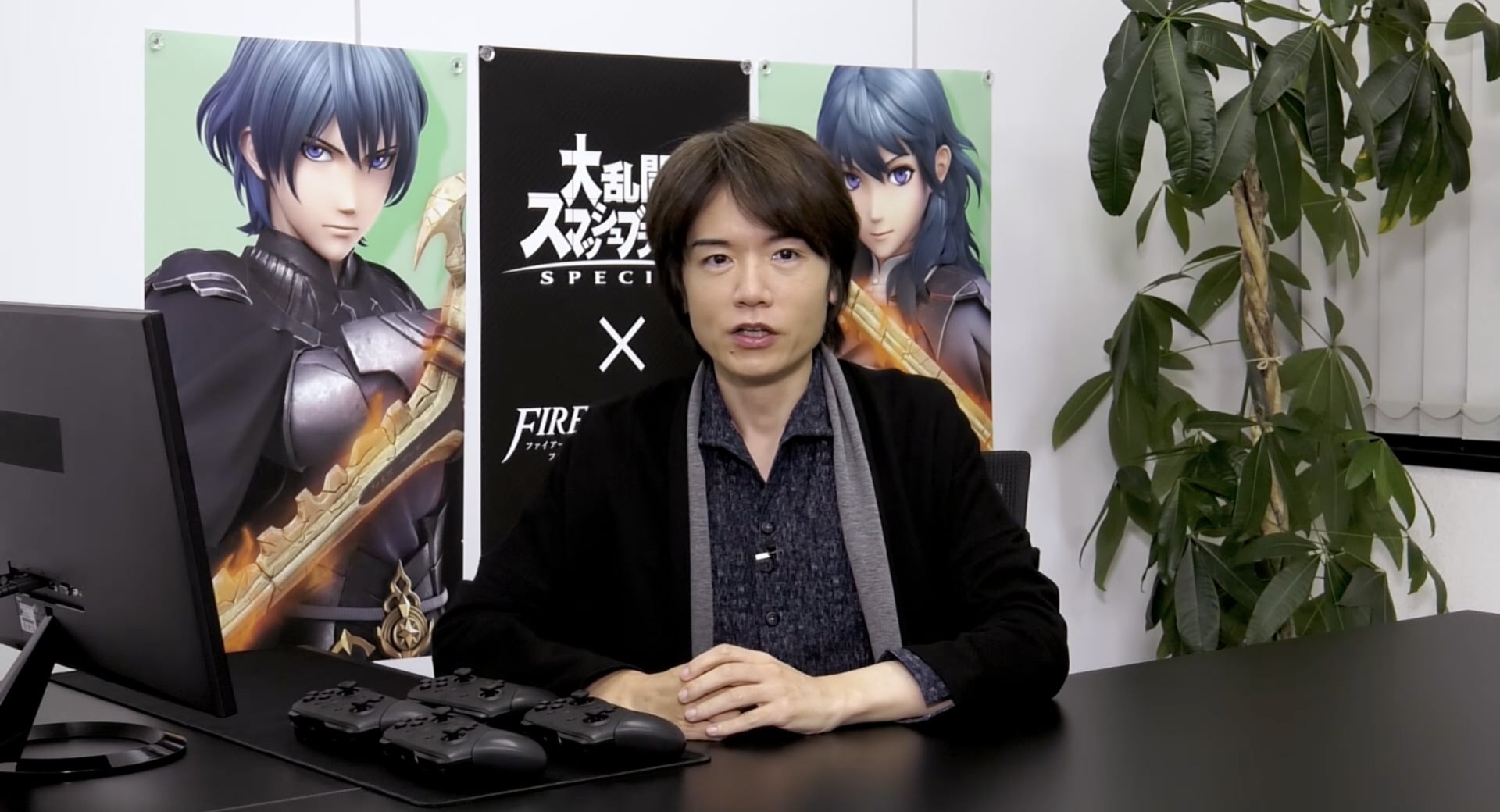
For the last 16 years at Tokyo Game Show, Masahiro Sakurai has handed out awards centered on game design to celebrate games that do things differently. This year, however, was the final year for this event, and in a new interview, he shared a somewhat bleak reflection on the importance of originality as he discontinued the prize.
Sakurai’s Game Designers Award was centered on promoting original game design ideas, regardless of sales performance. Winners of the award, not necessarily limited to a single game each year, have included the original Life Is Strange, Mario Kart: Home Circuit, Viewfinder, and Scribblenauts. However, during his speech at the awards show last month, he painted a somber picture, lamenting, “Though it may sound rather grave, originality doesn’t actually have a strong impact on sales. I think it actually ranks low on the list of priorities for many.”
He compared the problem to the way the novelty of a limited-time drink flavor might fade after it’s been released, although he hopes the games industry hosts enough creative minds to avoid this problem. “There likely aren’t many people who try every single new drink that comes out at convenience stores as soon as it’s released. The more you become accustomed to something, the more you gravitate toward the familiar. Most people tend to only want a taste that matches their preference and is exactly what they expect. But an industry that loses that sort of originality will only die slowly. The industry exists today because there have always been new ideas and experiences, and people making them.”
Reflecting further on the comments in an interview with Denfaminico Gamer, he brings up the design philosophy he brought to creating Kirby and Super Smash Bros. In both cases, their respective genres—2D platformers and fighting games—already existed, but by focusing on new ways to let players act and interact in these genres, the games stand on their own. Yet coming up with original ideas and conveying this to an audience today is more difficult than ever, he admits.
“The first important thing is whether or not you can come up with an original idea,” explains Sakurai. “You might be able to expand on the concept of improving upon an existing idea, but when it comes to creating systems without an easy comparison point, who comes up with that idea? Then, you have to get staff to understand that idea, and it’s difficult to convey that ‘this is why it is fun, because you can do this.’ If you’re a game publisher, it’s difficult to then share that big picture. What are the game’s selling points?”
He continues, “Nowadays, so many games are described as XX-like, or games that resemble another one. In other words, the thing everyone else already wants. But originality means you have to create something that isn’t already what people are after, and be deliberate with that. It’s a high hurdle.”
Something AI only exacerbates, he says. When he first opened the award in 2010, there were only roughly 275 games sold on Steam in a given year, a number now at over 19,000. There are over 8000 titles in this month’s Steam Next Fest alone, many vibecoded with AI and reliant on copying existent ideas.
According to Sakurai, this only makes original ideas more important. “Although 19,000 titles is a lot, I think that number will only grow from now on, because AI will be used to turn them out. Most of them will end up unplayable, and there will be so many that it’ll be impossible to keep track or even understand them. With those AI games, the vast majority will be direct copies of games we’ve seen before. There’s already many of them, even now.
“A little while ago, there was a game called Librarian. It’s a game set in a magical world, where all the books have been jumbled up and you have to put them back. That’s the premise, but the mechanics are simple. So, unsurprisingly, a lot of imitators soon followed. Games like Supermarket Chaos or Needle in a Haystack Simulator have multiplied like crazy. They’re all puzzle games, but that kind of imitation will be simple for AI to conduct. But even if AI can create all these sorts of works, such as by analyzing the atmosphere of games from Fumito Ueda like ICO and Shadow of the Colossus and using that to create something similar, which could happen, but AI would not be able to create whatever Ueda himself will create in the future.”
In other words, though Sakurai fears for the future of game originality, if pioneers of game design continue to find the space to create original ideas, then the game industry will persevere. Even if he will no longer present the award he founded, his hope is that originality will find space to thrive. Simply because, without it, there may not be an industry left.