








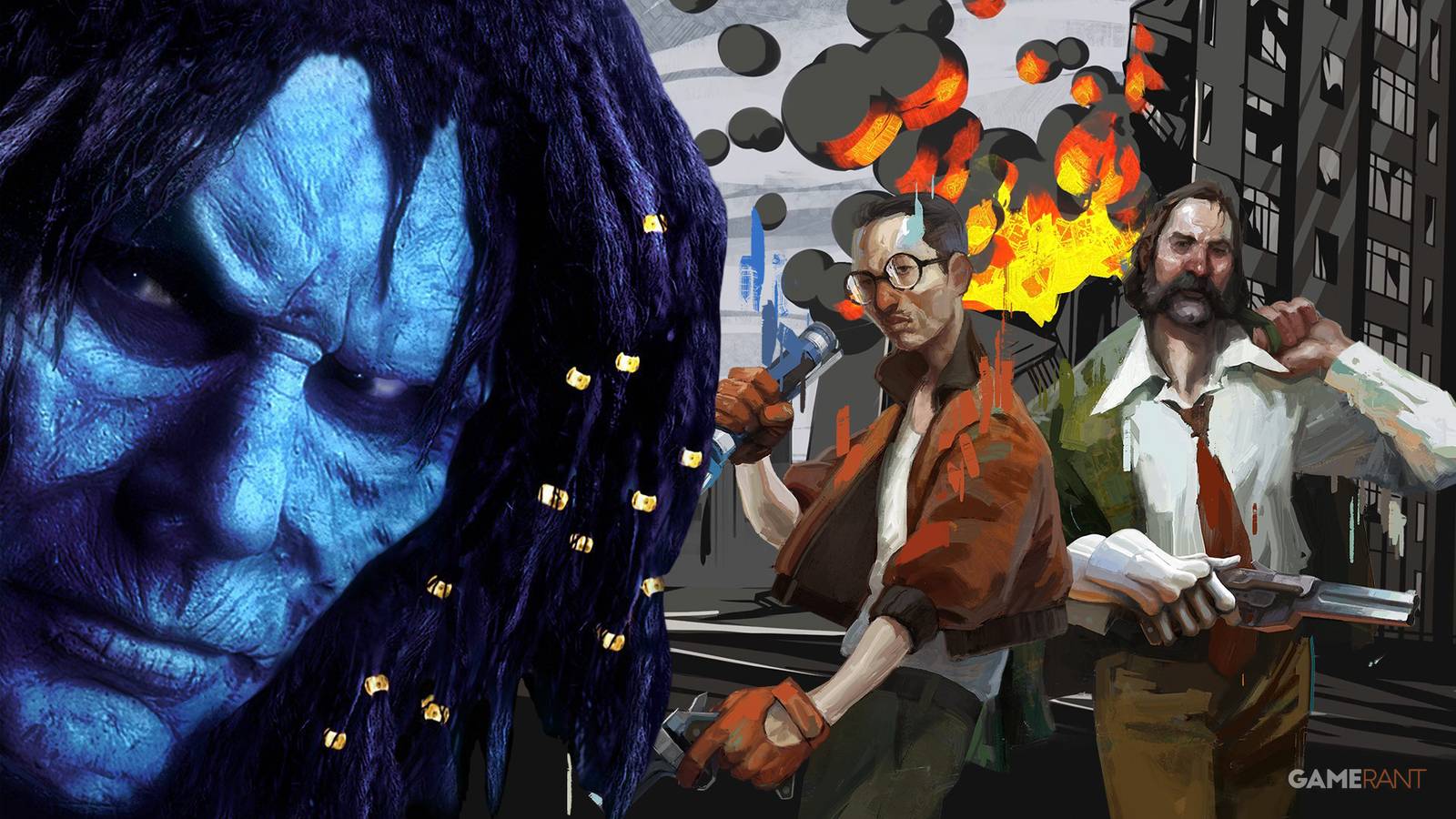
There have always been games with dark or somber themes, but with the advent of Steam and the aggressive growth of the indie sector more broadly, these sorts of titles are more abundant than ever. Games like Disco Elysium and the Frostpunk franchise, for instance, serve as much-needed counterweights to the more polished, sanitized offerings of the AAA space. Their focus on subjects like war, substance use, and poverty are mostly avoided by more mainstream or mass-appeal projects.
Hollow Home looks to follow in the footsteps of these more pensive and ethically complex titles, with developer Twigames Inc explicitly naming Disco Elysium and Planescape: Torment as major influences. The game follows a Ukrainian teenager called Maksym as he comes to terms with Russia’s invasion of his home country. It adopts an isometric camera perspective and oil-painting-inspired art design (this is perhaps where Hollow Home is its most Disco Elysium), lending it a beautiful yet suppressed, damaged atmosphere. Needless to say, the game’s narrative and aesthetic trappings are only the tip of the iceberg, as Hollow Home aims to tell a confronting and discomfiting story about war and its toll on regular people, making it one of the more emotionally challenging games to release on Steam this year.
Best Free Co-Op Games You Can Play On Steam
Are you and your friend looking for free-to-play co-op fun? Then, try out the following fantastic games on Steam.
Hollow Home Is a Choice-Based RPG About Life During Wartime
In February 2022, Russia launched a siege against the Ukrainian city of Mariupol, returning eight years after the first attempt to capture it alongside Crimea. A key industrial center and coastal resort town, Mariupol was highly sought by Putin’s administration: not only was the city critical to Ukraine’s steel and agricultural industries, but also served as a land border between the Russian-occupied territories of Donbas and Crimea, making it a high-value target for Russian forces. After a three-month operation that Red Cross officials described as “apocalyptic,” Ukraine’s army surrendered. As of 2026, Russia still occupies the city, which has reportedly been around 90% destroyed.


Find all 10 pairs
Find all 10 pairs
Regular Cover ArtClean Cover Art
It’s against this harrowing, recent backdrop that Hollow Home takes place. Beginning on the eve of the Mariupol invasion, Hollow Home eases players into a false sense of security—the same fickle feeling that many of Mariupol’s citizens may have felt during this time—as protagonist Maksym prepares for a few days at home without his parents. Young, alone, and without a hint of practical survival skills or meaningful resources, Maksym is forced to explore the ill-fated city, forming alliances, gathering resources, and solving new problems as they arise.
Twigames has said that Hollow Home’s story can branch off into a number of different directions depending on the player’s decisions, indicating that this sort of choice-based structure will form the brunt of the game’s interactive elements. However, Hollow Home also gestures towards some other systems and mechanics. For example, you can collect various items, upgrade skills like Athletics and Sociability, and manage Action Points to complete critical tasks like cooking. These ideas are introduced in a Hollow Home demo that’s currently available on Steam, but only a full playthrough will determine how much they actually evolve and inform the overall experience.
Hollow Home Offers a Much-Needed Alternative to Traditional Depictions of War in Gaming
One of the reasons why I love the Metal Gear Solid games is that, despite their inclusion of action and violence, they ultimately offer a very nuanced, dignified anti-war message. Aside from anomalies like Spec Ops: The Line, I can’t think of many other video games that actually have something interesting or worthwhile to say about war. This isn’t even about taking a moral stance against war (which I do)—war video game franchises like Call of Duty and Battlefield say nothing of value about their subject matter, reducing warfare to cheap and meaningless entertainment.
This isn’t good, which is why it’s so important that the independent scene continues to explore subjects like war in an additive, respectful manner. War might provide certain opportunities for heroism (but through whose eyes?) but it’s a bit strange that this is what IP like Call of Duty identify as what military operations are most about, as it were; it’s as if these series think that action, heroics, adventure, and even fun, are the most essential takeaways from war.
This is demonstrably untrue, and games like Hollow Home serve as poignant reminders of that fact. In modern conflicts, such as those in Ukraine and Palestine, those most affected are often not the soldiers on the battlefield. It’s the regular civilians, with jobs, homes, pets, and so forth, who are upended, disenfranchised, and made impotent. The first casualty of war is justice for everyday people. You don’t need a thorough, well-researched report to tell you this—a conversation with someone who has lived through one of these conflicts will make it clear enough. Works of art like Hollow Home, which specifically hones in on the devastation war brings to an innocent child, can accomplish something similar.


