


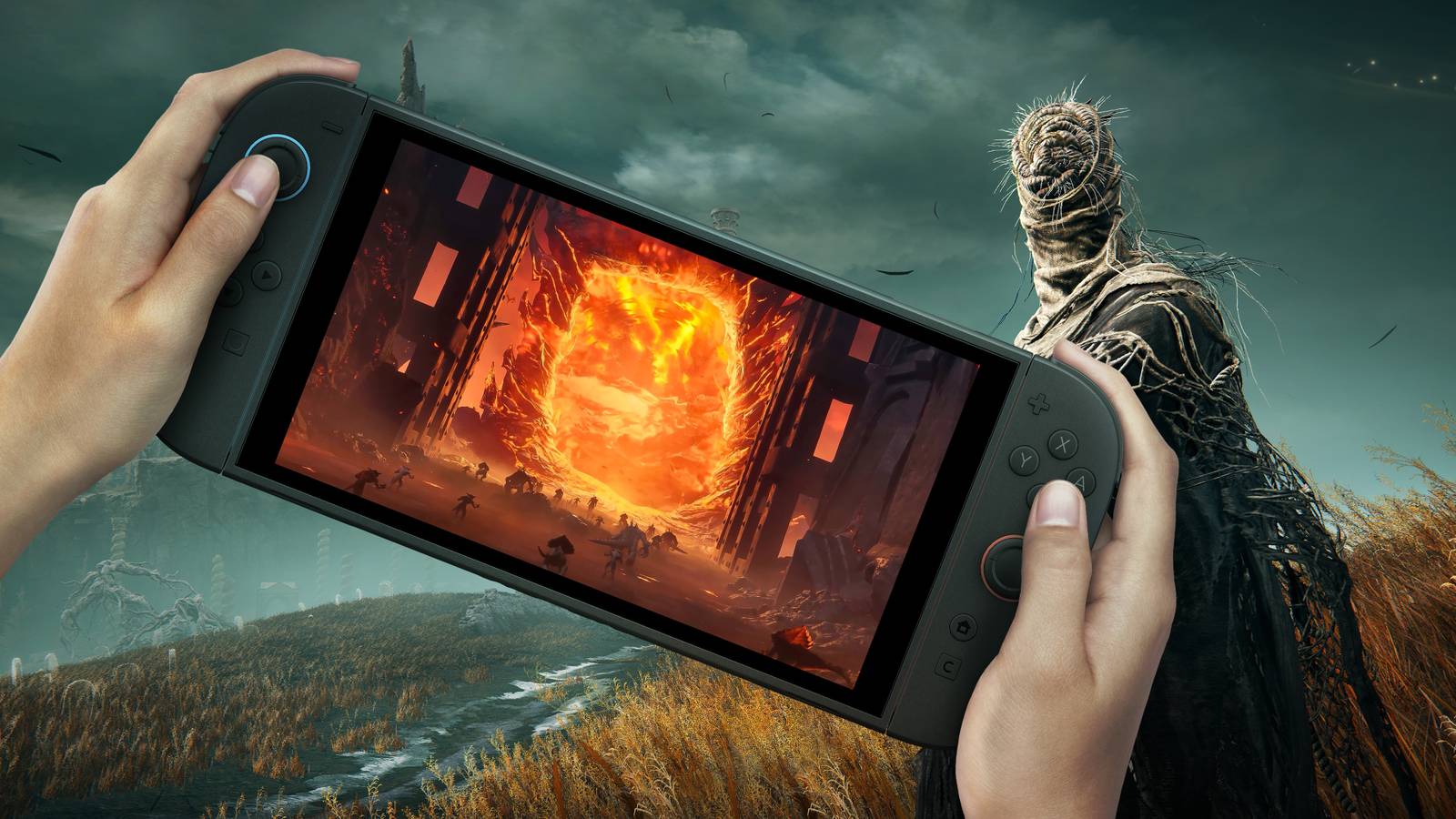
It has been a little over a year since both Oblivion Remastered and the Switch 2 were released, and to everyone’s surprise, we actually got a port of the game to the latest Nintendo hardware. The spec jump was certainly impressive from the previous generation, so while most of the games from franchises like Mario and Animal Crossing didn’t see a major performance hike, more intensive games were certainly expected to run a lot better and be potentially comparable to the other console versions on the market. But, as nice as it would be, a half-inch-thick device simply cannot back the same punch as a fully-fledged gaming PC, and Oblivion Remastered is those performance issues firsthand for those wanting an on-the-go RPG experience.
Now, with only a few more weeks to go until the launch of Elden Ring: Tarnished Edition, the question now becomes: will that game follow the same trajectory, or has FromSoftware managed to cook up some optimization magic to give Switch gamers the Game of the Year-winning adventure they have been waiting on for years? Well, if we look back to the original launch of Elden Ring, across the board, there were some questionable performance metrics coming out from all sides of the gaming spectrum. It may not have been to the same extent as other modern titles that are struggling to get above 60FPS with upscaling, but the grandness of the world proved to be a significant challenge for certain rigs to handle. However, if it manages to run well, then it may just steal Bethesda’s spotlight and set the stage perfectly for the launch of The Duskbloods.
Oblivion Remastered’s Switch 2 Performance Is A Real Worry For Elden Ring: Tarnished Edition
The modern gaming age is plagued by a forbidden word known as optimization. It feels like every other launch comes with the caveat that it just won’t run on your PC or console, at least without some handy upscaling thanks to DLSS and even frame generation should the game support it. For consoles, the optimization issue is certainly easier, due to the lack of variance in the hardware, but that doesn’t mean modern releases don’t struggle to put up acceptable numbers until a post-patch launch comes to fix the wound. Oblivion Remastered for Switch 2 has had a fairly mixed bag, some saying the performance is okay, while others are noting some real issues, especially when the action started to get going.
Eloise Jones notes that during testing, there were some noticeable hitches and pauses as the world loads, as well as some visible choppiness as the world opens up. John Rairdin also cited the open-world sections as the major pain point for performance, finding that dungeon exploration was fairly consistent in both modes, but the larger locations and landscape rendering are where the game suffers most, similarto the other platforms. It is also worth mentioning that there have been some mentions of crashes back to the main menu, and a few frustrating pauses where the console just cannot render all that data in an acceptable period of time, so even outside of the more basic problems related to FPS consistency, you still may end up with a couple of freezes when leaving interior locations.
Part of the issue comes from the aim being 30FPS, which, for an AAA, highly regarded game, can still feel sluggishly slow, and that is if it can maintain that for consistent periods of time. Another factor to consider is the difference between docked and handheld mode, with the former benefiting from a slight bump in resolution and performance, so the overall experience is going to vary a lot depending on how you want to play the game. If we look at some of Bethesda’s other Switch 2 releases, like Fallout 4, the story remains fairly similar, with DLSS doing most of the work, turning an otherwise unplayable mess into something passable for a few short casual sessions.
Elden Ring: Tarnished Edition Has One Big Advantage Over Oblivion Remastered
If we then look to Elden Ring: Tarnished Edition, there is a very good chance that the game could follow the same fate, given how both games are open-world fantasy epics with a lot of effects and a fair amount of action. The port was actually originally delayed until the final release date was locked down, and the hope is with that additional time, the developers have been able to iron out some bugs and solve any additional issues that may have kept the game from performing the way it should. Although there is only so much technical tweaking you can do for a game to run on limited hardware, and while it may be a bit older and have slightly lower system requirements, The Lands Between is going to be pushing the Switch 2 to its absolute limit.
For the most part, I would argue that Elden Ring has always been slightly above par in terms of optimization. At launch, it was a bit of a roller-coaster of stutters and problems, but after a week or so, most of the players found that the game was running pretty well, even on older hardware. I played through the game with well over 60 FPS at all stages, and then chose to go through the DLC on my Steam Deck, which kept up and delivered a consistent experience, albeit slightly laggier than my main PC. So, compared to a 2025 Unreal Engine 5 release like Oblivion Remastered, I would assume that Elden Ring should perform a lot better, though it depends a lot on how complex the handheld tweaks have been and whether the scale of the environments is too much for the Switch to handle.
For the most part, I would argue that Elden Ring has always been slightly above par in terms of optimization.
At the end of the day, if you are someone who is buying Elden Ring: Tarnished Edition, you are not coming for a 120 FPS, 4K playthrough streamed directly to your TV. The consumer base for the Switch 2 is very different from the other consoles and PCs out there, and the players have different values and priorities that decide which games they buy and which ones they don’t. If you say to me that I can get Elden Ring on my Switch, have it run at a consistent 30FPS, and be able to take it on the go with no additional issues, then that sounds like a pretty good proposition to me. However, the word consistent is the important factor, as regardless of whether you don’t mind the slight stutters and lags, trying to take down an Elden Lord with a sub-20 FPS is going to be torturous for even the calmest players.
There is another angle to consider with FromSoftware’s decision to port Elden Ring this late into the game’s lifespan, and that is the upcoming release of The Dusbloods. While we don’t know a lot about the specific technical details, I would safely bet that the game is going to use the same, or an updated version of, the FromSoftware engine that has been iterated on for the last decade. That means that the devs get to effectively test the technology on the Switch 2, with a very low-risk release, and then, when The Dusbloods eventually comes out either at the end of this year or in 2027, at least that game should be in a much more solid state, which will become far more important given the multiplayer component. Yet, even excluding The Duskbloods from the conversation, it is still important that FromSoftware gets the Elden Ring port right to potentially capitalize on an RPG-hungry market waiting for them in the Nintendo ecosystem.

- Released
-
April 22, 2025
- ESRB
-
Mature 17+ / Blood and Gore, Sexual Themes, Violence