





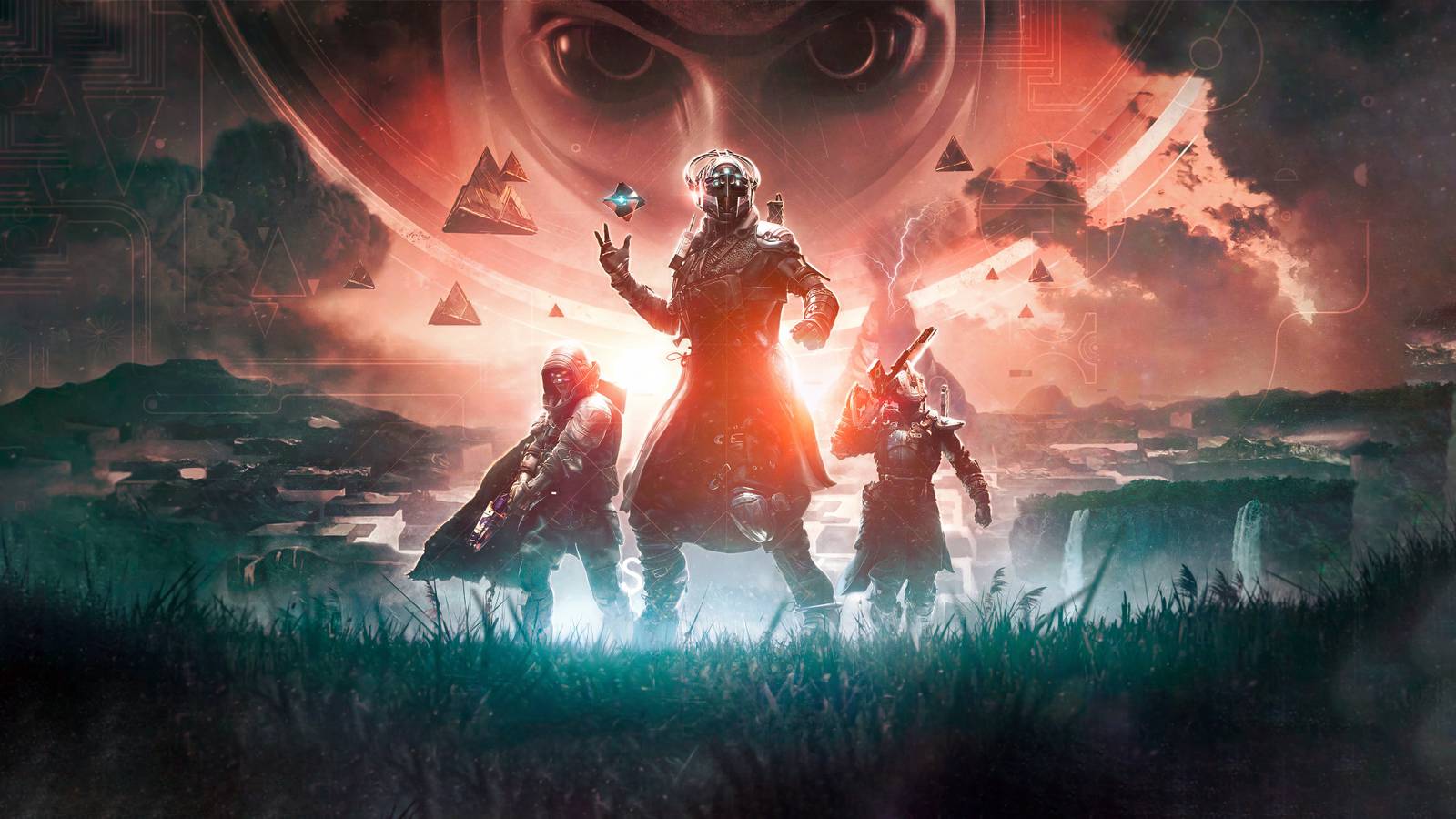
Bungie has been quiet on what the future for Destiny 2 entails for quite some time, leaving current and prospective players in the dark about what comes next for the long-running live-service title. Last we heard, an expected update called Shadow and Order, which was initially intended to drop earlier this year, was delayed to June 9, 2026. That has remained true; the update will be dropping on June 9th, but continued support for the game will end on the same day.
In a blog post from May 21, 2026, Bungie detailed its plan to end active development on Destiny 2, shifting its focus to maintaining the game as it exists today. But how did things get here? At one point, Destiny 2 held immense promise, a vision for the future of living worlds that blended story and gameplay in interesting, novel ways.
Now, it is ending service after nearly 9 years, with disappointment and discontent being the prevailing attitudes over the last several expansions and updates. While many aspects of Destiny 2’s ever-evolving life-cycle could be pointed to as mistakes, these 8 felt the most impactful in spelling its ultimate demise.
There Will Never Be Another Game Like Destiny
Saying farewell to Destiny 2, a one-of-a-kind gaming experience that offered tremendous highs and significant lows.
Content “Vaulting”
Say “Goodbye” to the Story
In 2020, with the release of the Beyond Light expansion, Bungie moved forward with “Vaulting” content for Destiny 2, which entailed removing major portions of the game from play. The Vaulting process excised the original base campaign, as well as all content from multiple prior expansions and updates.
While justification for the removal of this content centered on saving space and saving development time, the actual effect of the vaulting process hurt the game’s reputation, along with both the ongoing player experience and onboarding for newcomers. For veterans specifically, it prevented them from accessing parts of Destiny 2 they had fallen in love with, forcing them to resort to outside resources to relive their favorite moments.
The vaulting of content wasn’t just restricted to the story, as gameplay segments, equipment, and weapons were also vaulted, causing players to feel like their effort through the years had been wasted. Combined with the now-segmented and ephemeral nature of story updates and gear existence, these factors ended up turning Destiny 2 into an experience that always felt incomplete, and at times nonsensical.
New Player Experience
Where Am I, and Who Are These People?

As a side effect of the Vaulting process, the new player experience and onboarding for Destiny 2 became one of the worst for any live-service game, ever, and no real effort was made to address this issue, with onboarding mostly pushed onto players and external sources to bridge the gap.
Starting Destiny 2 as a new player is confusing right from the jump. Where the original story and experience would have slowly introduced the player into new gameplay mechanics and concepts, and built the player’s understanding of the world, characters, and story through multiple missions and cutscenes, most of that stuff was vaulted. Instead of tutorials, breakdowns, and using narrative to guide the players into caring and engaging with the content, new players were shunted to overwhelming maps full of blinking icons and missable, seasonal missions without any guidance.
It should go without saying, but MMOs and live service games cannot live on dwindling populations of existing players indefinitely. A game like this will, inevitably, need new people to gain interest in playing to refresh player engagement and population. It is one thing to ignore the concerns of new players, but Destiny 2 went above and beyond to create an actively hostile new player environment, ensuring that most who dared to try it wouldn’t stick around.
Ignoring PvP
The Most Active and Engaged Members of the Playerbase Are Underserved
Despite issues with Vaulting and player onboarding, Destiny 2 did manage to stick around for a long time thanks to its dedicated player base. For players who were around mostly for the story and the content grind, Destiny 2’s steady schedule of expansion releases and gameplay updates made for new experiences at a regular pace, meaning there was always something for those players to chase or work toward.
PvP players, on the other hand, were left by the wayside for far too long. For a period of over 900 days, no new maps were provided for PvP play, a stark contrast to the almost dizzying pace with which PvE content was being produced at the time. Additionally, gear imbalances and matchmaking issues lead to frustrating player experiences, even when new maps were provided.
While people could speculate on the “why” of Bungie’s refusal to engage with or meaningfully update the PvP experience, it became quite clear that it was never going to be a priority. The availability of dedicated servers and comprehensive leaderboards never fully materialized within the game, all while monetization continued to skyrocket.
Destiny 2 Loses 91% Of Its Player Count in Less Than a Year
Destiny 2 struggles to retain its player base following the release of its Edge of Fate expansion pack, but the bad news don’t stop there.
Built Into a “Fear of Missing Out” Structure
For a Limited Time Only
Part of what kept players coming back to play new updates was Destiny 2’s content structure, which was entirely centered on seasonal content and the fear of missing out on it. While many ongoing games have also utilized FOMO to drive player engagement, Destiny 2’s implementation is quite bleak, with access to entire storylines, gear, titles, and more being fully gated by a timed element.
Taking a break from the game, or never having played it at all, meant that players would never get to experience those moments again once the new season ended. Where other games hold timed events to encourage player engagement, Destiny 2 built its entire structure around this FOMO, which became exponentially more pronounced with the introduction of vaulting. After all, you would never know if your favorite thing would be next on the chopping block.
Stagnant Seasonal Content
Haven’t We Met Before?

The regular disappearance of seasonal content was often frustrating for longtime players, but was doubly so for newer ones. Aside from perhaps never being able to play specific missions or activities at all, the timing of a new player jumping in might also mean an entire year’s worth of content had been revealed to them and advertised to them, only to be taken away mere days after getting into the game when a new update dropped.
Bungie’s initial solution to mitigating players’ concerns over the FOMO structure was not to allow players to engage with older content, but instead to make that seasonal content less interesting. Rather than having meaningful activities for players to engage in from update to update, seasonal activities were homogenized, with content coming across as largely shallow.
After years of this, Bungie eliminated the seasonal content model, replacing it with the portal, a soulless and underdeveloped grind. No regular updates of a similar scale, no unique events — just a cavity where things used to be. Given this was a recent update, it should have been seen as a portent of things to come.
What’s That Weapon?
Identify the silhouettes before time runs out.
Identify the silhouettes before time runs out.
Easy (7.5s)Medium (5.0s)Hard (2.5s)Permadeath (2.5s)
The Portal
Stay a While

Speaking of The Portal, its implementation was a death knell for the live-service title. As the biggest addition to the game in The Edge of Fate expansion, the Portal was a complete abdication of the responsibility to deliver interesting or engaging content for players to experience. While many issues were present with the seasonal content of the past, shifting from that model to one that required the incessant grinding of only a handful of activities for marginal power gains felt like a real slap in the face to players who had been advocating for more interesting content in seasons.
This tedium was further exacerbated by the scaling difficulty that changed rapidly from moment to moment. Despite rewards being solely determined by your power level, activity difficulty is customizable. While this may sound like an interesting idea, there was no mechanical benefit to taking on harder tasks, meaning players necessarily gravitated toward staying in the easiest activities for the fastest gains, pulling players away from the social and exploration aspects of the game in the process.
Disappointing Loot Structure
Woah. This is Worthless!
Loot in Destiny 2 underwent quite a few revisions to its loot structure, but the long-term arc of loot acquisition proved to be underwhelming, especially when compared to its predecessor, Destiny. A great example of this has been the handling of Legendary and Exotic weapons. In Destiny, Exotics are rare and feel wildly different depending on the scopes, barrels, and perks on each one. Getting the perfect weapons should be a special feeling, an exciting event that only has a chance of happening.
Destiny 2, on the other hand, flattened out the variability in Legendary and Exotic performance and oversaturated the space with easy availability through missions or had otherwise tied their availability to seasonal passes. Being able to ostensibly buy what were once the rarest pieces of equipment completely devalues them outside their existence as a stat-stick.
The introduction of crafting also hurt the value of loot, as players could craft the specific weapon they wanted with the exact set of perks they needed. This led to the homogenization of builds across expansions and steered people away from playing content in search of great items.

Destiny 2’s Latest Event Should Have Been a Hit, But Instead it Brings New Frustrations
The Call to Arms event in Destiny 2 should have been a chance to bring lapsed players back before Renegades, but instead it has led to frustration.
Sunsetting
Is This Farewell?

This goes hand-in-hand with the FOMO structure, seasonal failures, and disappointing loot systems in Destiny 2. Sunsetting was the act of assigning an expiration date to gear and weapons that players had worked for. By giving existing gear a time limit, it invalidated the time players spent working on those exotic items. This was, in many ways, an issue of Bungie’s own making.
Many other live-service titles have gear that becomes obsolete or ineffective beyond their initial introduction. Games like Final Fantasy 14 and World of Warcraft allow incrementally more powerful gear to show up as the expansions and updates roll out, making the old stuff less viable than the new. Through the mechanic of infusion, older gear in Destiny 2 could be brought up to the same light level as the gear being used to infuse it.
This did disincentivize players from working heavily toward the latest gear drops, but allowed players to sit with the weapons they loved using most, with players then using that same system to keep their weapons relevant over the game’s entire lifecycle. By introducing sunsetting, years of work and maintenance could be undone in a moment. At some point, Destiny 2 moved away from sunsetting (though they did later reimplement a method of power creep that some players equated with soft-sunsetting), but the damage was done.
Saying Goodbye to Destiny 2
All Things Must End

Destiny 2 is already an interesting game to look back on, as it seemed that the game continually found itself in hot water with its players for some reason or another, only to walk back some of those changes or update the game at a later date. Even the issues and items listed here have mostly been addressed or improved upon over time, with only a handful still affecting the game in its final days.
Destiny 2’s failures are then recontextualized—not as persistent plagues, but as avoidable missteps that colored player perception within the community and without. Sure, Sunsetting isn’t happening anymore, and content isn’t being vaulted in the same way as it was in 2020, but that perception still exists, and it deterred people from engaging with Destiny 2, ensuring its ultimate, though perhaps timely, demise.

Marathon Is Being Review Bombed Yet Again
Bungie’s extraction shooter Marathon is once again being review bombed, though a recent announcement from the studio seems to be the main catalyst.