






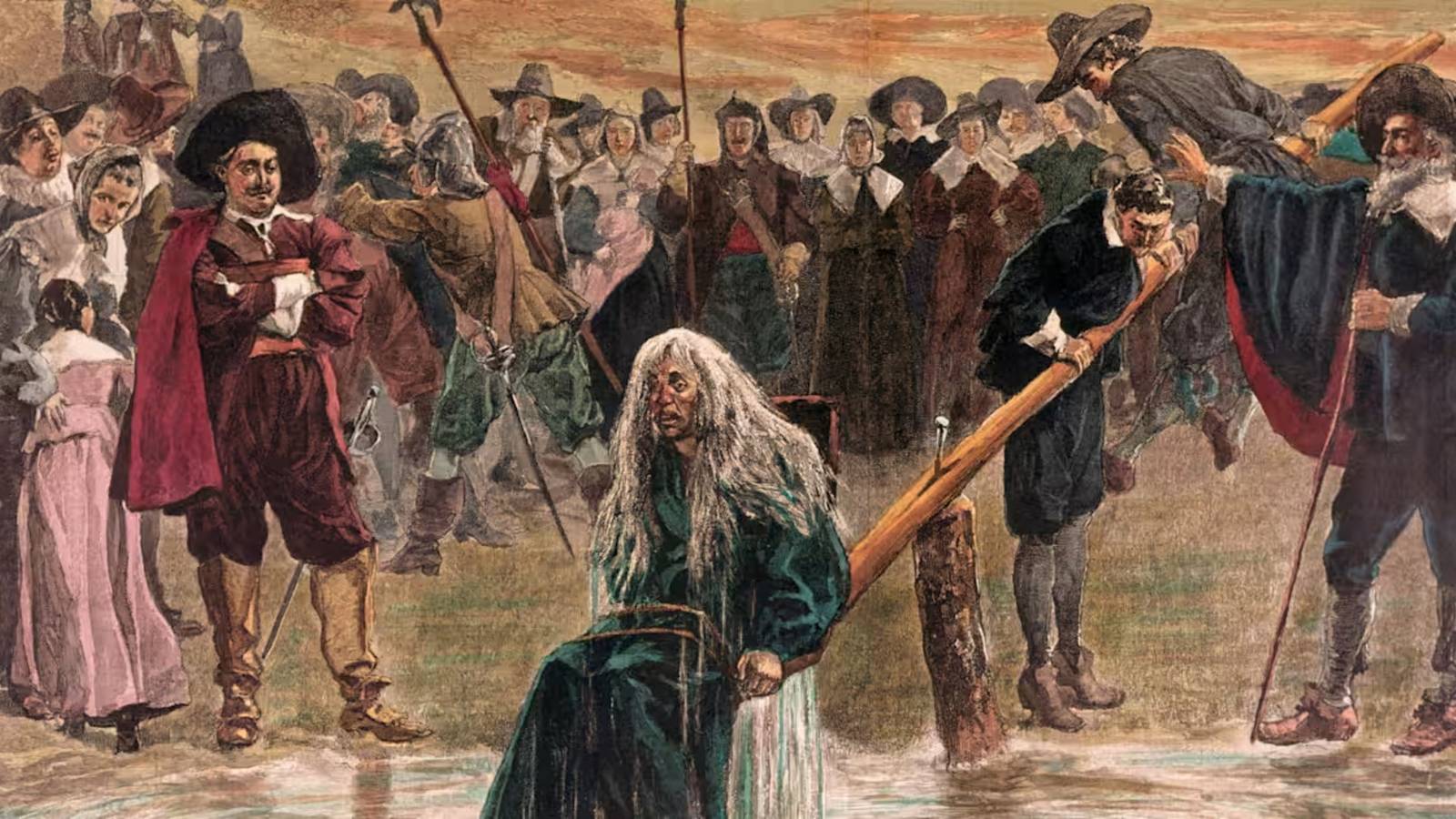
Assassin’s Creed Hexe is mostly shrouded in mystery at this point, but longtime Ubisoft leakers have recently made some interesting claims about its setting. The insiders have alleged that Assassin’s Creed Hexe will be set in 17th-century Germany, in Wurzburg, a city that is famous for its bloody, witch-hunting history.
Ubisoft has previously described Assassin’s Creed Hexe as a “dark” entry in the series that takes place during “a pivotal moment in history.” Fans quickly tracked that moment to the Holy Roman Empire and the Witch Trials, but Ubisoft insiders Rogue and xJonathan have narrowed it down to the Wurzburg Witch Trials. That fits the bill as one of the worst Witch Trials in all history.
Assassin’s Creed Hexe Leaks Release Plans and Surprise Returning Character
An insider leaks several new details about Assassin’s Creed Hexe, including its alleged release window and the return of a fan-favorite character.
The Witch Trials of Wurzburg Killed Nearly 1,000 People

How the Wurzburg Witch Trials Came To Be
Throughout the reign of the Holy Roman Empire, legislative and judicial power was split between lords (kings, princes, dukes, etc.), and the Catholic Church. This subject is far too complex and long-spanning to adequately describe here, but suffice it to say that, during the 17th century, tensions between the Church and various European states were greatly heightened due to the Reformation, a period when millions of Europeans were leaving Catholicism for the newer sects of Lutheranism and Protestantism. This religious conflict, combined with disagreements over Imperial and Papal power, created a hotbed for social strife, crusades, and unfettered discrimination, to put it lightly.

Find all 10 pairs
Find all 10 pairs
Regular Cover ArtClean Cover Art
The Counter-Reformation movement, spearheaded by local leaders and the Vatican alike, was undeniably a galvanizing force for the witch trials of the 16th and 17th centuries. Witch trials had unfolded before, though to a far lesser extent, which is generally attributed to Catholics having relatively greater power in prior centuries. By the time that Assassin’s Creed Hexe reportedly takes place, Catholicism was losing its vice-grip on Europe, so it’s no surprise that its representatives took drastic measures to reestablish control.
One such representative was Catholic Prince Bishop Julius Echter von Mespelbrunn, who presided over Wurzburg during the early 1600s. Mespelbrunn initiated witch trials from 1612-1618, killing an estimated 350 people in the lead-up to the Thirty Years’ War. He was succeeded by his nephew Philipp Adolf von Ehrenberg, who, in 1625, potentially spurred by a particularly bad frost that was blamed on witchcraft, kicked off the Wurzburg trials that are reportedly the subject of AC Hexe.
With Mespelbrunn’s witch trials still in vivid living memory and with Wurzburg being near the German Protestant border, Ehrenberg was able to swiftly rally support for his cause. The new prince-bishop’s mission, by all accounts, was to create a more holy, uniformly Catholic nation, a cause that precluded compunction and, evidently, basic human decency.

Guess the games from the emojis.
Guess the games from the emojis.
Easy (120s)Medium (90s)Hard (60s)
The Wurzberg Trials Were Exceptionally Bloody and Indiscriminate
It’s estimated that around 900 German citizens were killed in Wurzburg between 1625 and 1631, either by execution or while in custody on witchcraft charges. Those suspected of witchcraft were rounded up and tortured for information about potential co-conspirators, resulting in an ever-growing list of accused. What made Wurzburg different from other witch trials of the time, aside from the abnormally high death toll, was its relative lack of discrimination. At first, it was mostly young, single, working-class women who were accused (as was often the case), but the Wurzburg trials also saw the executions of many men and children as young as seven. High-ranking officials and members of the elite were also prosecuted, including Ernst von Ehrenberg, the prince-bishop’s own nephew, who was executed by beheading.
How the Historical Context of the Wurzberg Witch Trials Could Influence Assassin’s Creed Hexe
The 1625-1631 Wurzburg witch trials were unique, but still emblematic of witch hunting as a whole. On the one hand, the investigation and execution of not only men and children, but also upper-class members of society, was highly unusual, as working-class women were the typical scapegoats for the anti-witchcraft movement. At the same time, Wurzburg’s trials were sparked by the same factors as all witch hunts: religious hysteria, desperate bids for political control, and autocratic governance.
Assuming the leaks about Assassin’s Creed Hexe’s setting are true, then both sides of this coin ought to be rigorously examined. The story of Wurzburg is the story of all witch hunts (the horrible practices of the Wurzburg trials were, sadly, used as a blueprint for many subsequent witch trials in other parts of the world). The paranoia and injustice that characterized these events offer fertile ground for any story, but especially one from the Assassin’s Creed franchise, which is explicitly about secret organizations, the underbelly of society, and, often, vigilante justice. Hexe could present a compelling and intimate story of those affected by the events at Wurzburg and elsewhere.
The comparatively widespread nature of the Wurzburg trials could serve to both augment and underscore the brutality of Hexe’s story. Of course, it’s bad enough when young, poor women are being exclusively targeted, but when just about any demographic could be tried and executed for witchcraft with little to no evidence whatsoever, you would imagine that there would be a more widespread feeling of social failure and insecurity. Assassin’s Creed Hexe’s narrative could play into this “nobody is safe” element, using it as one of many pillars to differentiate itself from other games in the Assassin’s Creed canon.


