




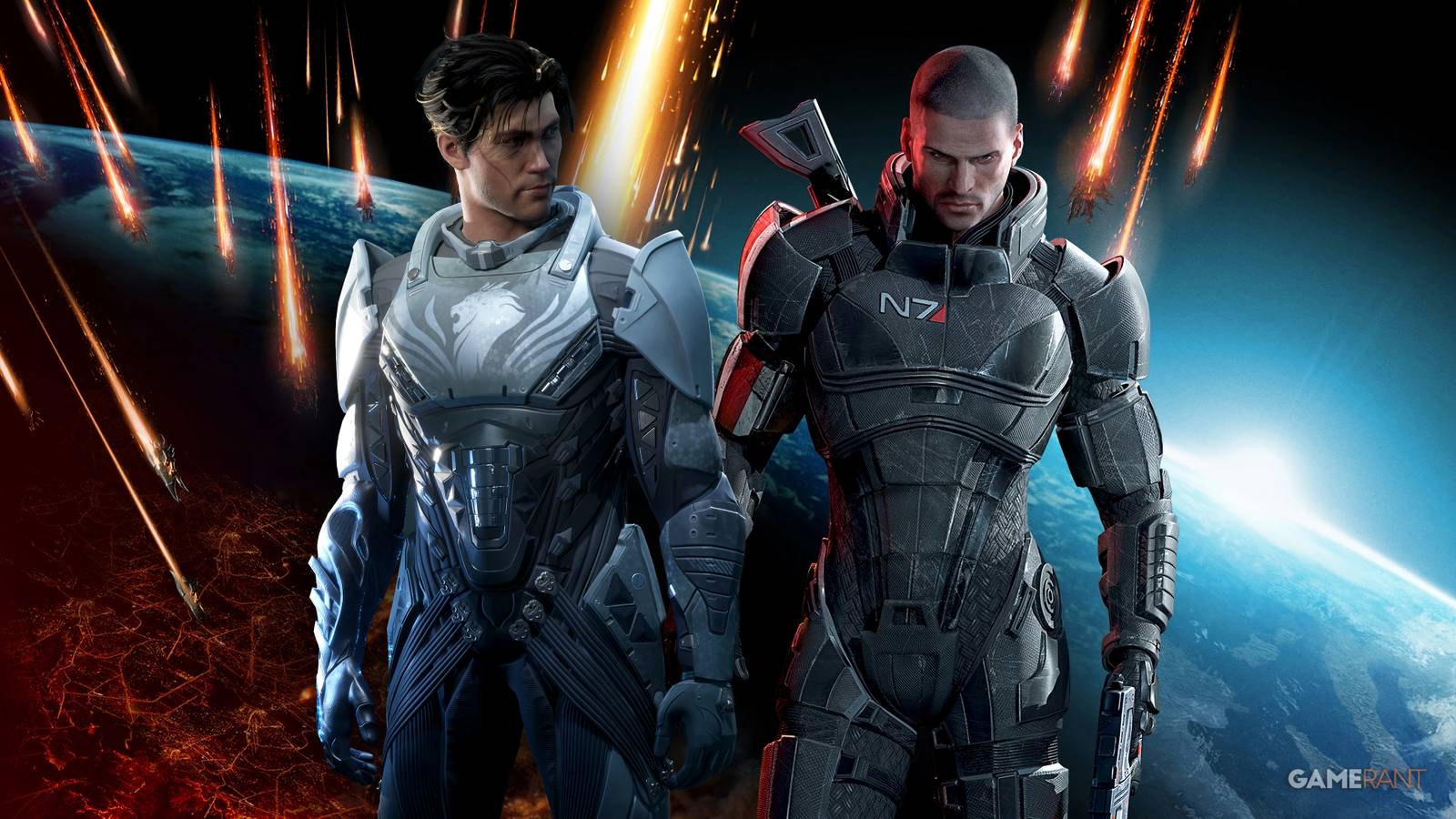
Exodus has been compared to Mass Effect from the moment it was revealed, and, to be fair, that was probably unavoidable. Archetype Entertainment is made up of several former BioWare developers, after all, Exodus is a choice-driven sci-fi RPG with companions, alien worlds, and a massive universe to explore, and Mass Effect is still one of the easiest reference points for that kind of game. If anything, the comparison is a compliment, especially considering how much of a mark BioWare’s own sci-fi RPG franchise left on the genre.
During a recent Future Games Show showcase briefing with Archetype Entertainment and Wizards of the Coast, I asked the Exodus team where they welcome that comparison and where they hope players see the game as its own thing. After getting an answer from each member of the team that was there, it was irrefutably clear that Archetype isn’t running from Mass Effect, but it also doesn’t want Exodus to be seen as a spiritual copy. Between time dilation, dynasty-building, leadership, the Awakened, the Celestials, and a much larger focus on what happens after players leave home, Exodus seems to be aiming for a different kind of sci-fi RPG identity entirely.
Exodus Is Using the Mass Effect Comparison as a Starting Point
Mass Effect is one of those games that any sci-fi RPG is probably going to be measured against in some way, especially if it emphasizes companions, player choice, alien civilizations, and a story set in the furthest reaches of space. BioWare’s trilogy helped set the standard for what a modern spacefaring RPG could look like, and because of that, being compared to Mass Effect is hardly a bad thing. In fact, for most RPG developers, it would probably be an honor. Archetype general manager Chad Robertson seems to feel that way as well, even if he also believes Exodus is built around ideas that Mass Effect never had:
First off, we love the comparison to Mass Effect. It’s an amazing science fiction franchise, and some of us had the pleasure of working on it. I think the thing I’d focus on in terms of what we’re trying to deliver with Exodus that’s unique for us is the overall experience being based on some elements that just weren’t part of that franchise. Specifically, we’ve done these things with the story, with time dilation, for example, that make it stand out and make it feel unique and make the weight of the decisions in the game, we hope, feel much more significant. And we’ve always had a goal of delivering really world-class high-fidelity modern gameplay, and kind of taking a step forward from where Mass Effect left us, as great as it was back in the day, and really kind of taking next steps in all those areas.
If Exodus really can actually make player choice feel weightier through time dilation, that would already give it one major way to stand apart. Mass Effect had plenty of big decisions, sure, but Exodus is working with the idea that some choices may not fully play out until years or even decades have passed back home. Robertson also mentioned modern gameplay, and that’s another area where Exodus has a real opportunity. As much as I love Mass Effect, I have never loved it because of the combat. It was fine for its time, and it certainly got better as the series went on, but the characters, story, and atmosphere were always the real reasons I wanted to stay in that universe.
But that’s where the comparison gets a lot harder for Exodus. Mass Effect made me care about its characters, but it also made me care about its world. It made every new place feel like part of something much bigger, and every conversation seemed to add even more depth to the galaxy BioWare had built. That’s a difficult thing for any new sci-fi RPG to pull off, especially one that is going to be compared to Mass Effect whether it wants to be or not. According to narrative lead Drew Karpyshyn, who also worked on Mass Effect, Archetype seems to believe Exodus is ready for that challenge:
When people talk about Mass Effect, for me, having worked on it, the thing that was impressive about that is just the depth of the universe, and I think that’s what we’ve really taken to a whole other level. There’s so much in our universe, between the Celestials and the Awakened, and can I say Changelings? I guess I just did. Sorry, I don’t know. But there’s just so much stuff we’ve built in and there’s so much to explore, and it’s such a vast universe. That’s what I love. It’s just the depth of the science fiction things that we put in there, the different pieces and how they work together, for me, that’s really what I think people will sort of recognize, is something that was made with care and attention and love by true fans of the genre.
It will certainly be interesting to see just how deep Archetype’s universe really goes once players get their hands on it. Time dilation already feels like the game’s biggest hook, and it gives Exodus a great way to give missions and choices more impact than they normally would. Still, that idea can only carry so much on its own. If the world around it feels empty, then all the years passing in the background won’t mean nearly as much. Exodus needs places worth returning to, factions worth learning about, companions worth keeping close, and enough history behind its universe to make players feel like they’re stepping into a world that could actually exist in reality.
But when it comes to Exodus‘ similarities to Mass Effect, it doesn’t have to run as far away from BioWare’s acclaimed trilogy as possible to prove itself. There’s nothing wrong with Archetype building a sci-fi RPG with companions, choices, strange worlds, and big questions about humanity’s place in the universe. Mass Effect 3 came out over a decade ago, and the genre has had plenty of room to grow since then. If anything, that gives Exodus a chance to take some familiar pieces and push them forward with ideas BioWare never really had the chance to explore in the same way. Game director Chris King compared it to the difference between two other sci-fi giants:
Chad’s favorite sci-fi franchise is Star Wars, my favorite franchise is Star Trek. And the reason I bring that up is, if you look at them, they both have spaceships, they both have aliens, but there are a lot of things different. And that’s sort of how I think about Exodus too. You could probably take an initial glance and be like, “Oh, I see similarities with companions and choices, all of these things.” But I think the kind of story we’re trying to tell and some of the things we’re experimenting with are quite a bit different than things we’ve done in the past. So, the notion of building a dynasty, going on these missions and being separated from people, these themes of what it means to be a leader and how you approach that and how people are going to perceive it. Time dilation. There are all these kinds of things that we haven’t been able to explore in the past that we’re super excited about, and when we start talking about things we want to do here, those are the kind of things we had grasped onto that we hadn’t done prior. So, even though there may be some ingredients that are similar, there’s a lot of stuff that’ll make it feel quite a bit different.
Really, King’s comparison is the right one, because Exodus doesn’t need to pretend its similarities to Mass Effect aren’t there. It only needs to prove those similarities aren’t the most interesting thing about it. That will obviously be much easier said than done, especially with how much love people still have for BioWare’s trilogy, but Archetype seems to be approaching the comparison in the right way. It’s acknowledging what players already see while making the case that Exodus has a different story to tell. If the full game can back that up, Mass Effect may still be the first comparison players make, but it shouldn’t be the last.
- Released
-
2027
- Developer(s)
-
Archetype Entertainment
- Publisher(s)
-
Wizards of the Coast
- Number of Players
-
Single-player
- Steam Deck Compatibility
-
Unknown


