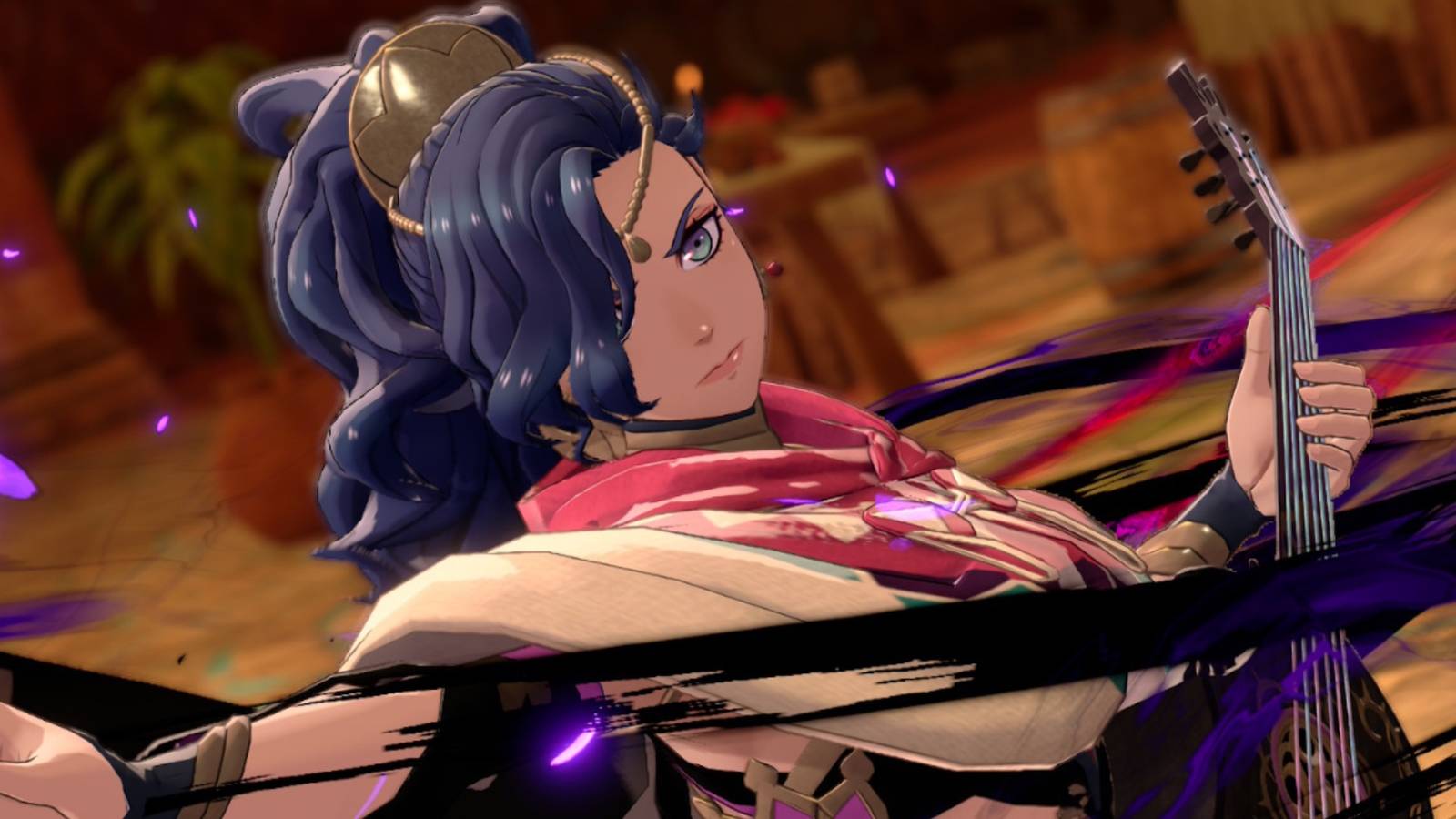

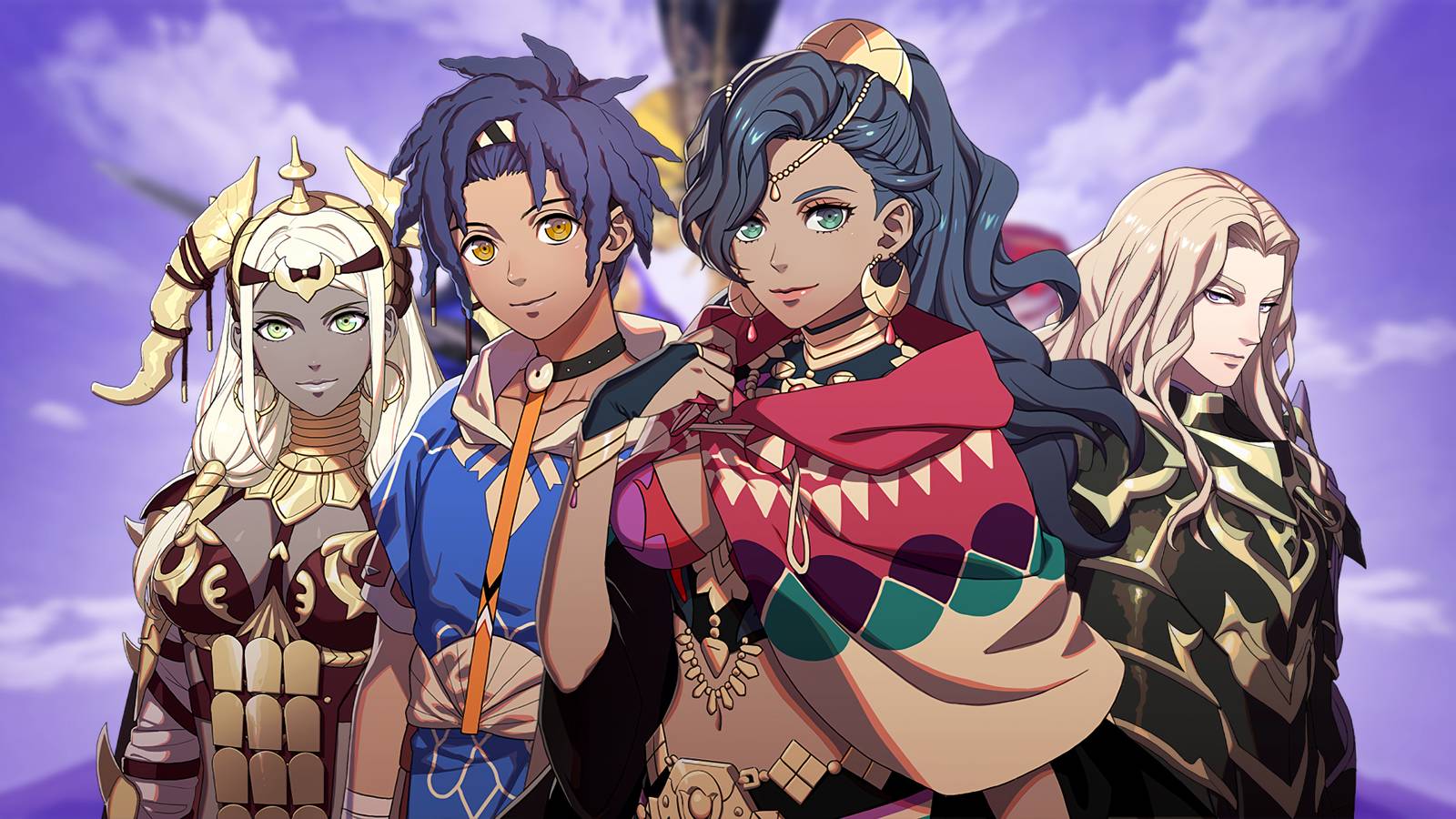
Fire Emblem: Fortune’s Weave is one of the best games Nintendo has released in decades. Set in the same universe as Fire Emblem: Three Houses, Fortune’s Weave is an even more ambitious sequel with a much bolder and ambitious story. Fortune’s Weave features four distinct arcs to play through, all of which have a completely unique story and maps (for the most part). One of the biggest questions within the fandom at the moment is what order to play the game in, and who the actual main character is.
There’s frankly a lot of evidence for each Flame Lord being the true protagonist. Dietrich has a direct connection to Fodlan from Three Houses, Leda has a deeply personal character arc intimately tied to the story’s politics, and Theodora has the closest connection to the War arc that envelops Part 2. That said, there is one clear character who stands above the rest and the official Fire Emblem: Fortune’s Weave manga has confirmed him as the game’s true Lord: Cai.
Cai is the Main Character in the Fortune’s Weave Manga

As far as the Fire Emblem: Fortune’s Weave manga is concerned, Cai is the true main character of the game’s story. In the manga adaptation of Fortune’s Weave, Eshmel and Fortuna are not presented with four obelisks to fix causality with. Instead, Sothis simply reflects on the fact that the “right person” could become a “God,” before directly transitioning into the beginning of Cai’s Path in Part 1.
Chapter 1 of the manga exclusively follows Cai’s story. Dietrich, Theodora, and Leda haven’t even appeared yet outside of a few cameo panels. While it’s possible the manga could end up exploring the alternate routes, the distinct lack of obelisks in the manga heavily implies that Cai’s route is the true path for the story. All four versions of Part 1 ultimately tell variations of the same story, with Parts 2 and 3 being relatively unchanged depending on your chosen Lord, so there’s a high chance the Fortune’s Weave manga will adapt all three Parts solely from Cai’s perspective.
Cai Makes the Most Sense as Fortune Weave’s True Lord
All things considered, Cai is actually the perfect Flame Lord to be the main character. While a strong argument can be made that Theodora’s Path is the most important in setting up Part 2’s conflict and fleshing out the world of the game, Cai’s Path is the best introduction to Dagdan culture and is the most well-rounded arc in terms of balancing the nature of the Gods, the game’s backstory, the and political climate in Dagda while telling a very personal, character-driven plot.
Cai also crosses paths quite often with Theodora – more so than any other protagonist – which makes her presence his Part 2 feel far more natural than it does in Dietrich or Leda’s route. Theodora’s role in Part 2 also simply lends itself better to being a supporting Lord, as opposed to the true main character. There’s also the matter of Bertrand, who Cai has the deepest and best-written connection to, giving him a cleaner link into the story’s War arc.
Cai is also the character who grows the most from Part 1 to Part 3. Not only literally, as he physically goes from a boy to a man over the course of the time skip, but he shows genuine character development and growth. Cai matures a lot throughout Part 1 and into the rest of the story: arguably more so than any of the other Flame Lords. By making him the lead of the manga, Fortune’s Weave has a strong arc to play off of. Dietrich, Leda, and Theodora’s storylines will also surely be covered, but told from Cai’s perspective.
Interestingly, all evidence suggests that Cai actually does not win the Heroic Games in Fortune’s Weave. He beats Leda in every path except her own, but the fact that Theodora always makes it to the final round means that the Queen of Saramis realistically defeats Cai in the semi-finals. That will almost certainly change in the manga, however, with Cai more than likely being given Part 1’s big win. A final battle between him and Dietrich carries far more weight than the last battles in the other routes.

- Released
-
September 17, 2026
- ESRB
-
Teen / Fantasy Violence, Mild Language, Suggestive Themes, Use of Alcohol, In-Game Purchases
- Publisher(s)
-
Nintendo