


I’ll admit up front that I had never played a We Were Here game before Total Mayhem Games started preparing me for a hands-on preview of We Were Here Tomorrow. To be fair, I generally gravitate toward single-player games, although I’m not inherently against multiplayer experiences in the slightest. During Destiny 2‘s heyday, for example, I actually preferred playing with friends, as playing solo just felt a bit too lonely. However, the developer was gracious enough to offer me a copy of We Were Here Expeditions: The FriendShip ahead of the Tomorrow preview, and my immediate takeaway was “How have I missed this?” Then, after playing We Were Here Tomorrow for a whopping 6 hours with creative director Martin Mittner acting (literally) as my partner in crime, I was sold even more on what these experiences offer.
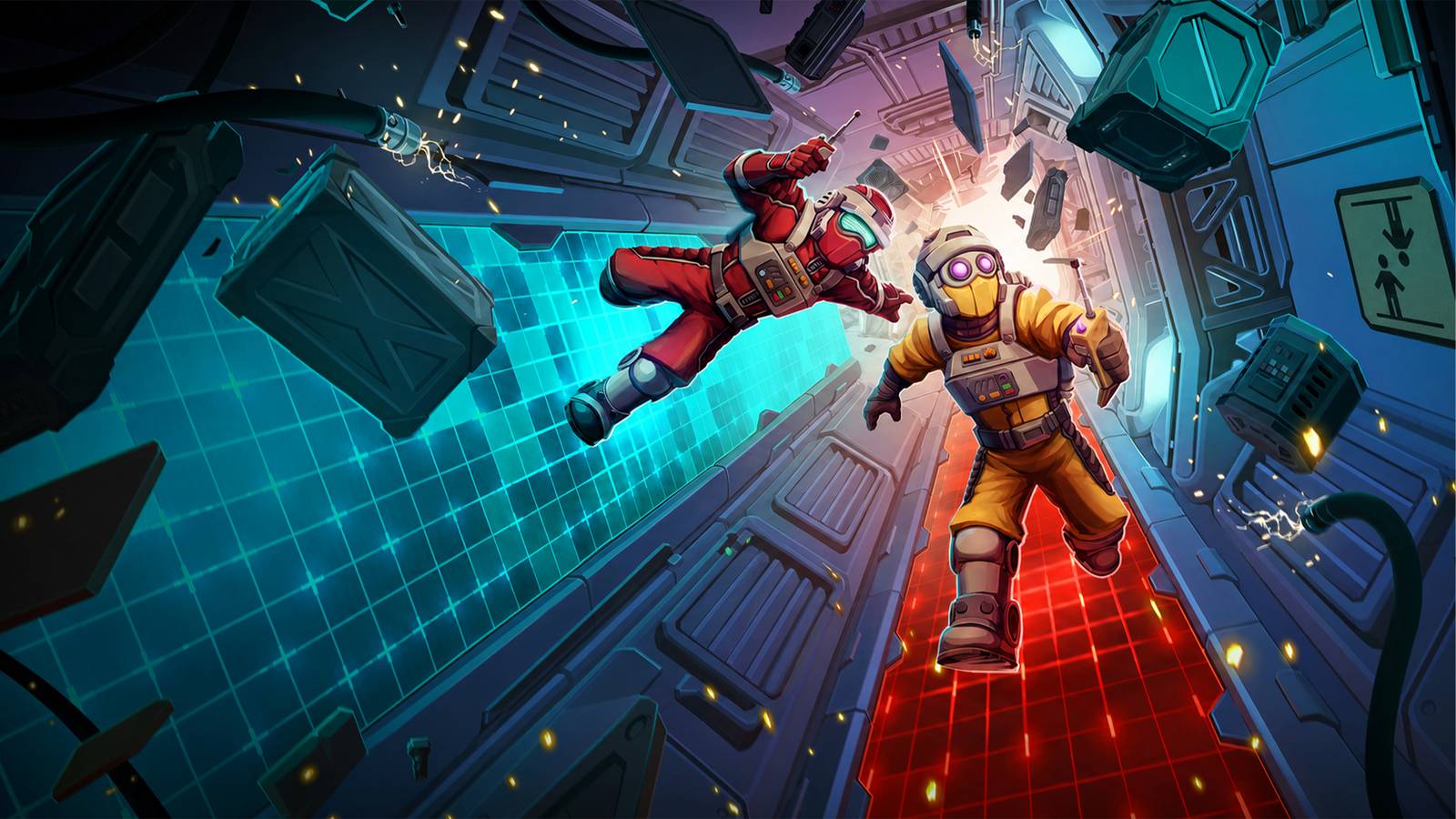
Developed by Total Mayhem Games, We Were Here Tomorrow is a first-person, two-player cooperative puzzle adventure that takes the series in an unprecedented sci-fi direction. The story follows two Explorers who become trapped beneath Antarctica’s ice and awaken inside a mysterious research facility with little memory of how they got there. Recruited to complete the work of a missing research team, the pair must solve increasingly complex puzzles while uncovering the facility’s secrets. Like previous We Were Here games, players are often separated and must rely on walkie-talkies to communicate, share information, and solve puzzles together. This time, however, they also have access to unique futuristic tools that introduce new ways to manipulate their surroundings.
As I had the opportunity to actually play the game with Mittner, when he wasn’t pretending to not know anything about how to get to the next room, he was offering up juicy details about how the game was made, the vision behind it, and what they want players to get out of it. We Were Here Tomorrow had me and Mittner both laughing to the point of tears one minute and brainstorming our way out of a puzzle the next, and I was constantly in utter awe at the attention to detail in its environmental design, the increasing complexity and rewarding nature of its puzzles, and the compelling sci-fi narrative that brings the whole experience together. Even if you’ve never played a We Were Here game before, I can tell you right now that We Were Here Tomorrow is a great place to start, as after spending 6 hours with it, I am confident it is Total Mayhem Games’ best work yet.
We Were Here Tomorrow Is an Excellent Entry Point for Newcomers

We Were Here Tomorrow may be the fifth mainline installment in the We Were Here series and the sixth game overall, but it has already shown itself to be an excellent entry point for newcomers. As Mittner pointed out to me several times during our co-op preview, there are plenty of Easter eggs in Tomorrow for fans of the series to find, but when it comes to puzzles, the latest entry does a great job at showing new players the ropes. Even though I already had some experience with the formula after playing Expeditions: The FriendShip, it was still evident that I wasn’t a professional We Were Here player as I played through Tomorrow, though Mittner was exceedingly patient and kind to me as I got my bearings.
That being said, Mittner did say to me at one point, “I will say that you’re pretty good at this, and I don’t have to hold your hand a lot,” which was, of course, encouraging in light of me wandering around like a fool at times. The reason I bring that up, however, is because he said this only around an hour and a half into our preview, which means you are also more likely to know what you’re doing pretty early on. But I’m also mentioning that passing remark because the only reason I would consider myself partially decent at games like We Were Here Tomorrow is because it shares a lot of similarities with other puzzle games like Portal—though it is still very much its own thing. So, if you’ve also had any experience with those games, you’ll likely find Tomorrow easy to pick up as well.

In fact, not only did Total Mayhem Games confirm its love for Portal in-game with a Black Forest gateau cake Easter egg in Tomorrow‘s tutorial sequence, but Mittner even outright confirmed the Portal influence once I asked him about it. The reason I asked him was because we did a puzzle together that reminded me a lot of Portal, particularly because we had to rearrange pylons to redirect a beam through different targets until we reached the solution we were aiming for. After telling him that the puzzle had me channeling my inner Portal fan and asking whether that was intentional, Mittner replied,
There’s a lot of Portal influence, but we have a lot of our own puzzles that are different from Portal puzzles. What we wanted to do was, with this instance of We Were Here, we’re introducing the abilities, and introducing more physicality, and introducing traversal that’s based on the abilities working together, so that was very much more Portal-like. And I get what you mean, like the sort of reflecting the light through different targets, but I think in Portal, it would be a little bit more timing-based, or it would be physicality driven, and this is more about reasoning the chain of events. But there’s a lot that’s similar between those types of puzzles.
I think that’s ultimately what makes We Were Here Tomorrow feel so familiar to someone like me who has spent plenty of time with Portal, while still managing to offer an entirely different experience. After all, even though I immediately recognized what we were supposed to do with the beam puzzle, actually figuring out how to do it was another matter entirely.

And that’s where, in my opinion, Tomorrow really sets itself apart, because it’s not necessarily enough for one player to understand how a puzzle works. Both players have to be on the same page, and sometimes getting to that point is just as challenging as the puzzle itself. Of course, it probably helped that I was playing with someone who quite literally knew all the answers, but Mittner did a great job of letting me figure things out for myself rather than simply telling me what to do. And anytime he did quietly point something out, I just played along and complimented how smart he was. I also never felt like I was being punished for not having played the previous games, which is something I think newcomers will appreciate just as much as I did.
But while I would absolutely love to do a deeper dive into the mechanics of some of these puzzles, that would defeat the whole purpose of you playing it yourself, because We Were Here Tomorrow‘s puzzles are, after all, the heartbeat of its cooperative gameplay. I will, however, divulge that they get increasingly complex as you progress through the game, to the point where some of them are legitimately challenging, even for people like Mittner who know Tomorrow inside and out. This is largely because, again, one person can legitimately be skilled at We Were Here Tomorrow and know exactly how to do each of its puzzles, but if both players aren’t doing their job and doing it well, they won’t progress until something changes.
We Were Here Tomorrow Introduces Abilities to Make the Space Between Puzzles More Interesting

“Are you seeing what I’m seeing?” I can still hear Mittner in my ears trying to convincingly pull off his impression of a player who has never played We Were Here Tomorrow in his life, as I stood there lifeless, brain-fried after several hours of non-stop gameplay, trying to figure out how to get onto a ledge that our characters were unable to reach by jumping. For whatever reason, at that point, it just wasn’t clicking that I literally held the solution in the palm of my hand: a solitary, floating, shifting cube, and one of the creative ways We Were Here Tomorrow has undeniably distinguished itself from its predecessor.
As Mittner mentioned earlier in response to my Portal comment, We Were Here Tomorrow features unique abilities for each character that can be used to navigate some of the game’s traversal challenges between puzzles, although they can also be used on some of the puzzles themselves. I ultimately chose the cube over the hook, as even though Mittner informed me that each of the two items had story implications, he also said, “You can also just make this decision totally on what the thing does.” In this case, the cube looked cooler to me, and I also liked the thought of being able to throw out a platform for me and him to climb on, as well as hold down any pressure plates that I couldn’t stay on in classic Zelda fashion. He also said, “There’s no bad choice,” so I didn’t feel bad about grabbing the cube in the end.

But the purpose of these abilities was ultimately to add another layer to We Were Here Tomorrow‘s gameplay. Sure, the puzzles make it all engaging enough, but according to Mittner, Total Mayhem Games wanted to make sure the space between those puzzles wasn’t just space for the sake of space but space with a purpose.
What [the abilities] allowed us to do with this game is sort of make the spaces that were between the puzzles into these traversal challenges. So, there are times when we’re together, and the only way forward is for you to throw down a goop block and for me to quick zip to something.
And as I said, there were a handful of times during my play session with Mittner where I felt like my brain just wasn’t working properly. Call it the extended play time (we took breaks, I promise) or the now-cold cup of coffee sitting next to me that I only had three sips of, but I just couldn’t make sense of what was in front of me. Nevertheless, Mittner helped me along, pointing out things in the environment I might not have interacted with otherwise. I will say, too, that we jumped around a lot in our play session, so I didn’t get what I would consider proper training with these traversal challenges before being thrust into them. Still, finding the solution was satisfying in its own right, especially because it allowed me to see just how two players with completely different abilities are more like two halves that make a whole when it comes to these somewhat puzzling situations.

Of course, at one point, I just had to ask Mittner, “Why these two abilities?” After all, Total Mayhem could have gone any direction here, and they chose a cube and a hook. But why? Mittner had the answer.
We made a bunch of different things, and we knew we wanted something sandboxy. So, we thought we would just make QA’s life as difficult as possible by giving you a block that’s one meter on a side anywhere you want and then also allowing you to make platforms anywhere you want. We thought that would be a very good idea and not hard to design at all. But they were the most fun and the most synergistic of all the abilities we prototyped. You can stack the blocks, you can put the blocks on the wall and make platforms. Me, I can pull things, and I can hook things together. But they just worked together well, and they felt good to use.
I couldn’t help but laugh at Mittner’s comment about making QA’s life difficult, especially because I can only imagine how challenging it must have been to design environments around abilities that give players so much freedom. But I think that’s also what makes them such a brilliant addition to We Were Here Tomorrow. Rather than simply giving each player a different tool to use, Total Mayhem has essentially given them two different ways to approach the same environment, and it’s up to them to figure out how those abilities work together.
I also appreciated that neither ability felt inherently more important than the other, which I think is crucial for a game that depends so heavily on cooperation. Even when Mittner clearly knew what we were supposed to do next, he still needed me to do my part, which was sometimes easier said than done. And while I certainly enjoyed the puzzles we tackled during our time together, I found myself looking forward to these little traversal challenges just as much.
We Were Here Tomorrow Is Captivating to Gawk at, Even When You’re Not Doing a Puzzle
I have to say, though, that one of the most impressive things about We Were Here Tomorrow, apart from its creative gameplay, is its environmental design. I was absolutely stunned at what I was seeing at every turn, and it just never got boring. There is nothing in the game that looks like the last area you passed through, it’s all filled with vibrant colors and extreme attention to detail, and it actually feels like a highly, highly interactive world. I can’t count how many times I mentioned to Mittner that I was in awe of the game’s visual design, to the point that I’m pretty sure he didn’t know how to respond to me anymore. It’s just that good.

That being said, he did still offer up a behind-the-scenes scoop on what the team was going for with We Were Here Tomorrow‘s art direction, and the way he described it is exactly how it’s portrayed in the game.
So, a lot of it is a combination of trying to make it relevant to the period, since this is set in the 1980s, and nailing the art aesthetic. We had this sci-fi goal, but we wanted it to be this sort of chonky-wonky aesthetic that we had for the previous We Were Here games, which was a pretty tall order, but our art director had a lot of really awesome ideas about how to make that work. It was kind of difficult. We wanted to do things like brutalism in terms of architecture for this really corporate facility that they’ve got, and then how do you make that sort of cozy and chonky? They’re not synergistic terms.
What’s interesting about all this, though, is that while Total Mayhem Games clearly wanted to make the space between We Were Here Tomorrow‘s puzzles more interesting with its new abilities, I genuinely think those spaces would have been just as enjoyable without them. After all, I found myself stopping to look around constantly, not because I was trying to figure out where to go next, but because I simply couldn’t believe how good everything looked.
And I think that’s a testament to just how much thought went into the game’s environmental design, because even the areas that are ultimately meant to take you from one puzzle to the next feel like places worth spending time in. Don’t get me wrong, I’m glad the traversal challenges are there, but I would have been perfectly content just wandering through Tomorrow‘s environments and taking it all in. The fact that Total Mayhem managed to make those spaces as fun to interact with as they are to look at is just icing on the Black Forest gateau cake.
We Were Here Tomorrow Is Certainly Something Special

Going into my hands-on preview of We Were Here Tomorrow, I really didn’t know what to expect, especially considering my limited experience with the series. But after spending six hours playing it with Mittner, I can confidently say that it’s one of the most enjoyable cooperative experiences I’ve had in a long time. Its puzzles are challenging and rewarding, the new abilities make exploring its environments even more enjoyable, and its visual design is something I genuinely couldn’t stop talking about. And while I certainly appreciated having someone who knew the game inside and out guiding me through it, I think experiencing everything for the first time alongside someone else might be even more enjoyable.
But perhaps my biggest takeaway from We Were Here Tomorrow is just how much fun I had playing something that absolutely requires another person. I generally prefer experiencing games at my own pace, but Tomorrow reminded me how enjoyable it can be to work through challenges with someone else, especially when you’re laughing one minute and celebrating a hard-earned solution the next. Needless to say, I’m already looking forward to playing it again, and I think newcomers and longtime fans alike have plenty to be excited about. Oh, and one last thing. Mittner assured me that “No penguins were harmed in the making of this game,” which is a strangely specific reassurance that I’m choosing not to question.

- Released
-
October 20, 2026
- ESRB
-
Everyone / Mild Fantasy Violence, Users Interact
- Developer(s)
-
Total Mayhem Games
- Publisher(s)
-
Total Mayhem Games