



We’re living in some strange times, and I’m severely understating that. To, so often, hear about and even witness game developers being harassed because a game hasn’t launched in someone’s personal timeline is mind-boggling, to say the least, as it simply makes no sense. Time is precious to everyone, that’s undoubtedly true. But for me to ever feel that my time is more precious than that of the hardworking game developers I’m waiting on, to the point that I storm their houses, castles, and social media platforms demanding answers with a slew of insults and curses in tow, is just downright unacceptable behavior. Now, the looming release of Grand Theft Auto 6 has me gravely concerned that Rockstar Games has only seen the tip of the harassment iceberg, especially if the game gets delayed yet again.
To be clear: this is a video game we’re talking about here, not some life or death situation where manic behavior is understandable and even acceptable at times. It’s a piece of entertainment that we get to enjoy because a team of devoted developers (working in an unprecedentedly unstable industry, I might add) are committed to producing a product worth buying. That, to me, is a privilege, but it does not inherently make me privileged to dehumanize people, especially when those people haven’t done anything to personally wrong me, those I love, or humanity at large. That reality shouldn’t need repeating, but as Grand Theft Auto 6 inches closer to release, it’s becoming increasingly clear that some people still haven’t quite grasped it.
Rockstar Games Job Listing Teases Ambitious Plans for Grand Theft Auto 6 Online Mode
A handful of Rockstar job listings hint at some of its big plans for the Grand theft Auto 6’s highly anticipated online mode.
Dev Harassment Isn’t Hypothetical, It Has Already Happened
Before I dive into why Grand Theft Auto 6 presents such a strong case for an argument against game dev harassment, it’s worth mentioning that these frustrations aren’t borne out of one or two recent comments made by disgruntled fans. Game developer harassment is something that has now gone on in the modern era for more than a decade, as the world has become increasingly online and given access to platforms where they can speak their mind and essentially say whatever they want, often without notable consequences. Opinions are louder and more unbridled than they’ve ever been, and some of those unafraid to let them loose have frequently been found aboard the bully ship headed straight for game devs.
Gamergate 2014
The origin point for modern game dev harassment was none other than Gamergate, a 2014 online harassment campaign that targeted women and marginalized people in the video game industry under the pretense of a debate over “ethics in games journalism.” During this period, developers like Zoe Quinn, critics like Anita Sarkeesian, and others were doxxed, threatened, and driven offline after social media networks and forums struggled to moderate the attacks, highlighting the limitations of existing content policies and platform accountability mechanisms.
Gamergate is often viewed as an early example of organized online harassment and networked extremism. It revealed how loosely coordinated online groups could weaponize social media for intimidation and disinformation, foreshadowing later digital culture conflicts and political radicalization trends in the mid-to-late 2010s. As a result, major gaming and social media companies were prompted to strengthen anti-harassment tools and policies, and yet the harassment has continued and even grown since.
Social Media Dogpiling and Target Campaigns
Gamergate was already bad, but things have only gotten worse. These days, game developers regularly receive death threats, sexual harassment, and verbal abuse over delays and design decisions, simply due to the universal speech platform that is social media. And the problem isn’t just that it happens, but how quickly it spirals. One negative comment turns into three, those three turn into ten, and before long it becomes what’s often described as “dogpiling,” a high-volume wave of harassment where large groups converge on a single target all at once. At that point, it turns into a full-on mob, and no terms of service, moderation system, or reporting tool is fast enough to stop it before the damage is already done.
What makes it all even more unfortunate is that game developers can’t really defend themselves, as it usually makes things worse. What generally should have been a minor exchange instead often turns into a full-blown incident, and the aftermath only reinforces the idea that once a situation reaches that level, there’s no clean way out. Speaking up can escalate things, staying silent can be interpreted as guilt, and in this case, the resolution itself ended up fueling even more harassment and sending a message that the loudest voices in the room can dictate the outcome.
Why Grand Theft Auto 6 Makes This Worse
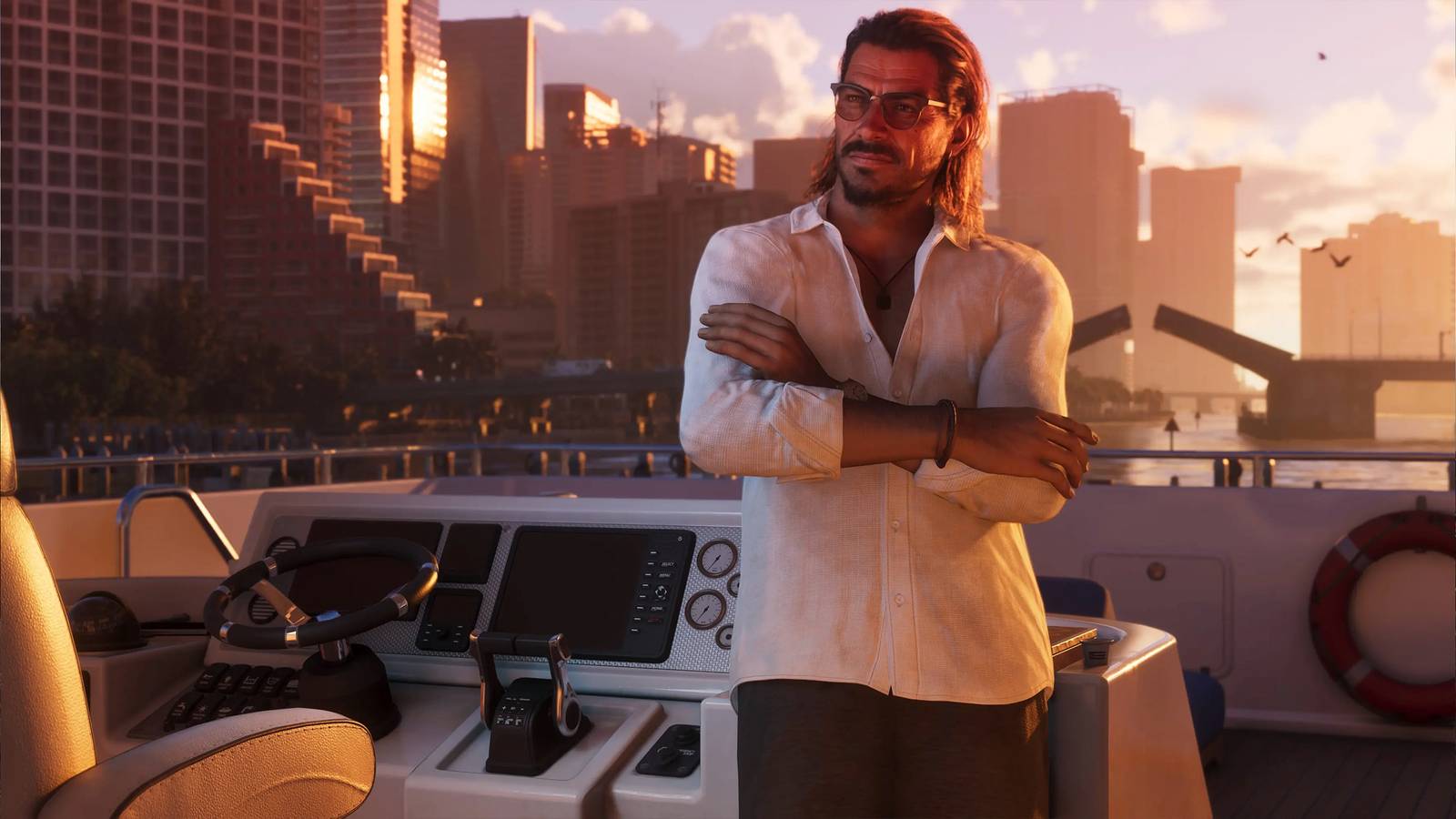
And, of course, Grand Theft Auto 6 is now the best current example we have of modern game dev harassment, and there’s a reason why. There are plenty of highly anticipated games coming out soon—like the Fable reboot, 007 First Light, and Saros—but every single one of them pales in comparison to Grand Theft Auto 6 when it comes to just how anticipated they are. When the game finally launches, it is bound to be one of the most internet-breaking, platform-exploding game releases of all time, and a lot of that comes down to how long it’s been since Grand Theft Auto 5 was released and how much pressure has been building after the sequel’s multiple delays.
These days, game developers regularly receive death threats, sexual harassment, and verbal abuse over delays and design decisions, simply due to the universal speech platform that is social media.
I’d naturally prefer to be able to say that Rockstar won’t be harassed at all, but the truth is, the harassment has already been happening for years. At Gamescom 2023, a fan rushed onto the stage uninvited and began shouting into Geoff Keighley’s microphone, demanding to see and play GTA6. Security quickly removed him, and Keighley acknowledged how “disappointing” it was for such a “special night” to be ruined by someone who couldn’t control themselves about a video game.
A similar individual interrupted a live TV/game show broadcast in Germany, again, demanding information about GTA 6. The interruption tried to get by being framed as a “question,” but it was really just another forced moment like the Gamescom 2023 incident. To make matters sound more unreasonable, this wasn’t even a gaming event tied to Rockstar or Grand Theft Auto 6, which just goes to show how anticipation for the game has begun to spill over into completely unrelated spaces, as well as how some people are willing to hijack any platform they can get access to.
There have also been recorded incidents of individuals approaching and filming people they believe are Rockstar employees in public, pressuring them for Grand Theft Auto 6 information. Many of them aren’t public-facing spokespeople, and others may not even work on GTA6 at all. To top it all off, they’re being confronted in everyday situations, not in professional settings like a scheduled Q&A, a press conference, or a private interview.

One of the more recent incidents involved a TikTok creator traveling to Edinburgh, Scotland, where Rockstar North is located, with the goal of getting some answers. He filmed himself standing outside the studio yelling questions at people about GTA 6, referencing delays that weren’t even announced by shouting things like “When’s the next delay?” and “When’s the next trailer?” His behavior was widely criticized, but what is beyond me is the fact that there were still some online commenters who defended it. Really, that just speaks to where we are more than how much the world wants to play Grand Theft Auto 6.
The Bigger Problem: Entitlement Culture
It’s a privilege to be able to play video games, and it should be seen as such, regardless of when it finally happens.
At the heart of all of this is something much bigger than any one game, studio, or controversy. It’s entitlement. Somewhere along the way, a portion of the gaming audience stopped seeing games as creative works made by people and started seeing them as products they are owed on demand. When a game like Grand Theft Auto 6 gets delayed, it’s no longer part of a development process, and it’s instead treated like a broken promise. When information isn’t shared, it’s no longer part of a marketing strategy, but instead treated as something being withheld. And once that kind of mindset takes hold of a passionate fan, it becomes easier to justify behavior that should never be justified in the first place.
It’s a privilege to be able to play video games, and it should be seen as such, regardless of when it finally happens. These interactive escapes from reality are created for us, but not because we’re owed them. What any studio stands to gain from me purchasing their video game aside, I stand to gain the game itself, and that remains true until the developer confirms it has been canceled—perish the thought. The good news for fans of GTA6 is that it will eventually get here, even if it’s delayed one or four more times. We’ve been repeatedly reminded that Grand Theft Auto 6 is still in development, and seeing as how Rockstar Games is one of the most successful game developers on the planet, it’s safe to say we’ll get the sixth entry to one of the biggest franchises in gaming history—just as soon as it’s finished, and the studio is ready to hand it over.
Do me a favor: don’t harass game devs anymore. Whether it’s Rockstar Games or an indie developer working on the sequel to their hit debut title, no one deserves to be treated the way the people in this industry so often are. At some point, it has to stop being excused as passion and start being recognized for what it actually is. No game, no delay, no design decision, and no marketing silence justifies harassing the people making the thing we claim to care about. The game will release when it’s ready. Until then, the bare minimum expectation should be simple: act like the people behind it are human beings, because they are.



- Released
-
November 19, 2026
- ESRB
-
Rating Pending – Likely Mature 17+