



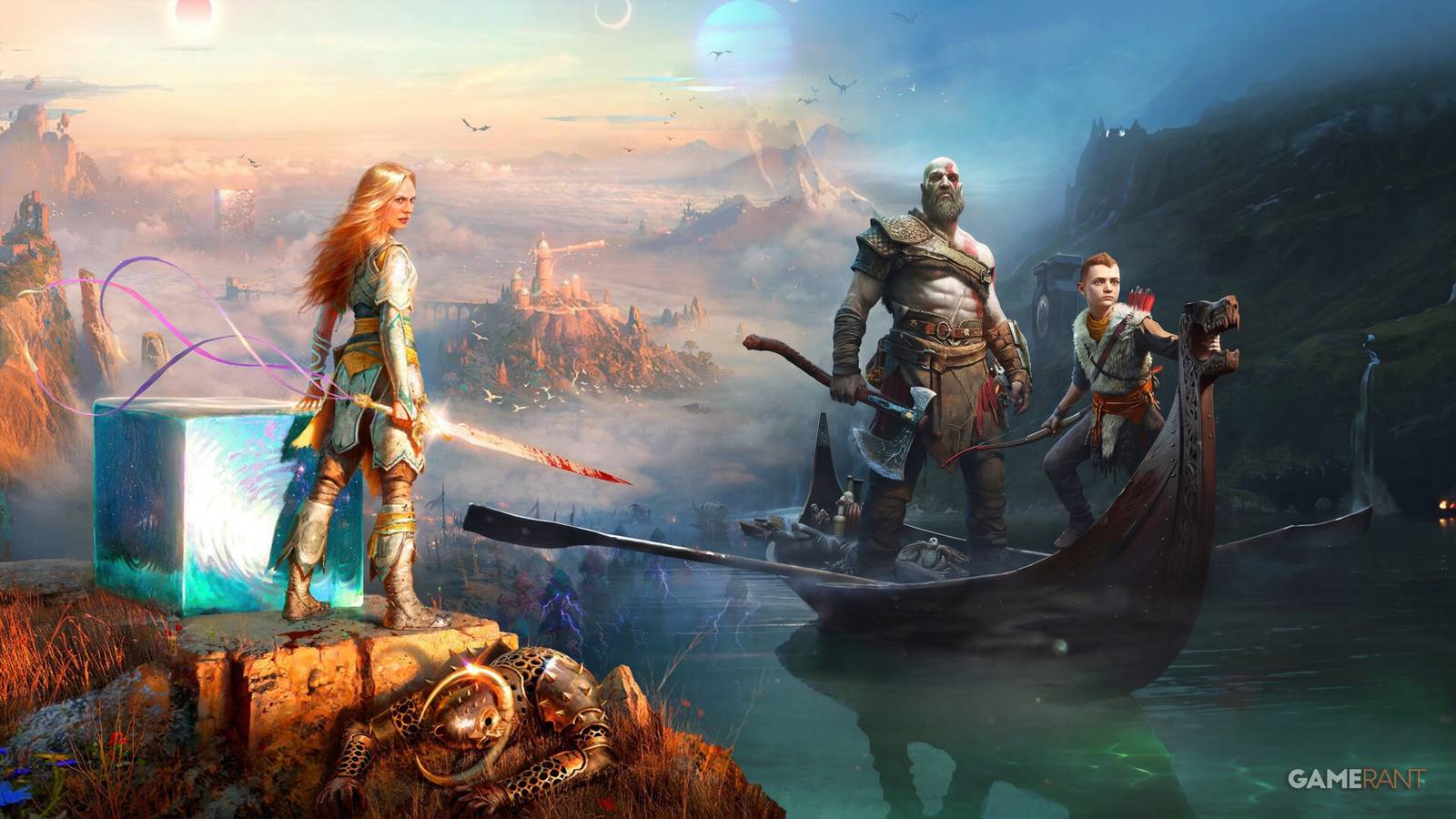
God of War Laufey has been one of the most exciting announcements of the year so far, and it might finally bring forth some answers to a question that has been left unanswered since 2018’s chapter: who blew the horn to summon Jormungandr? This has been gnawing at my brain for years, and I’m definitely not alone in having a deep desire for answers. God of War Laufey is taking the franchise to a brand-new realm with Faye as the main character, but that doesn’t mean it can’t address one of the biggest mysteries from Kratos and Atreus’ journey.
This time around, the series takes players to the Everywhen, an afterlife for dead gods. God of War Laufey‘s Everywhen opens the door to some wonderfully compelling possibilities, and what’s even more fascinating is that Faye’s story appears to run parallel with Kratos and Atreus’. If she is still able to somehow reach the Norse realm while being stuck in the Everywhen, then it’s possible that she could have been helping and watching over Atreus and Kratos all along.
God of War 2018’s Horn Mystery May Never Be Solved, But God of War Laufey Holds a Lot of Promise
During the first Norse God of War game, an unseen source blows the horn to summon Jormungandr. The sound causes Jormungandr to shift and move around, which no longer makes him an obstacle in Kratos’ path. It’s a major moment in God of War, but it has never been made clear who made the move to help Kratos. Naturally, this has sparked plenty of theories about whom the mysterious helper could be.

Choose cover art to complete the equations.
Choose cover art to complete the equations.
Easy (15s)Medium (10s)Hard (5s)
A Look at Some of God of War’s Most Popular Horn Theories
- Kratos blowing the Gjallarhorn in Ragnarok rippled through space and time, which could be heard in the past in the first game.
- Baldur blew the horn as a way to track down Kratos and Atreus.
- Atreus from the future blew the horn.
- Angrboda was responsible, since she is tied closely with Jormungandr’s lore.
All of these are solid theories, but director Cory Barlog has remained purposefully tight-lipped about the one responsible for blowing the horn. It’s not like God of War Laufey has to give an answer to every single question that the past two God of War games have raised, but the horn mystery is something that fans have been waiting to get answers to for a long time.
God of War Laufey has revealed that Mongolian and Egyptian mythologies will be present with confirmed villains Begtse and Sekhmet. They are both war-focused deities in their respective pantheons, so it will be interesting to see if the game’s god lineup is focused mainly on war gods.
It’s also possible that Barlog just really enjoys the discourse and theories that this has ignited. Sometimes mysteries are more fun when they are left unsolved. However, God of War Laufey‘s story feels like it’s primed and ready to dive into some trippy beyond-the-veil storylines that could make for a trilogy that’s even more emotionally deep than players even realized.
God of War Laufey’s Everywhen Sets the Stage to Finally Get Answers About the Horn
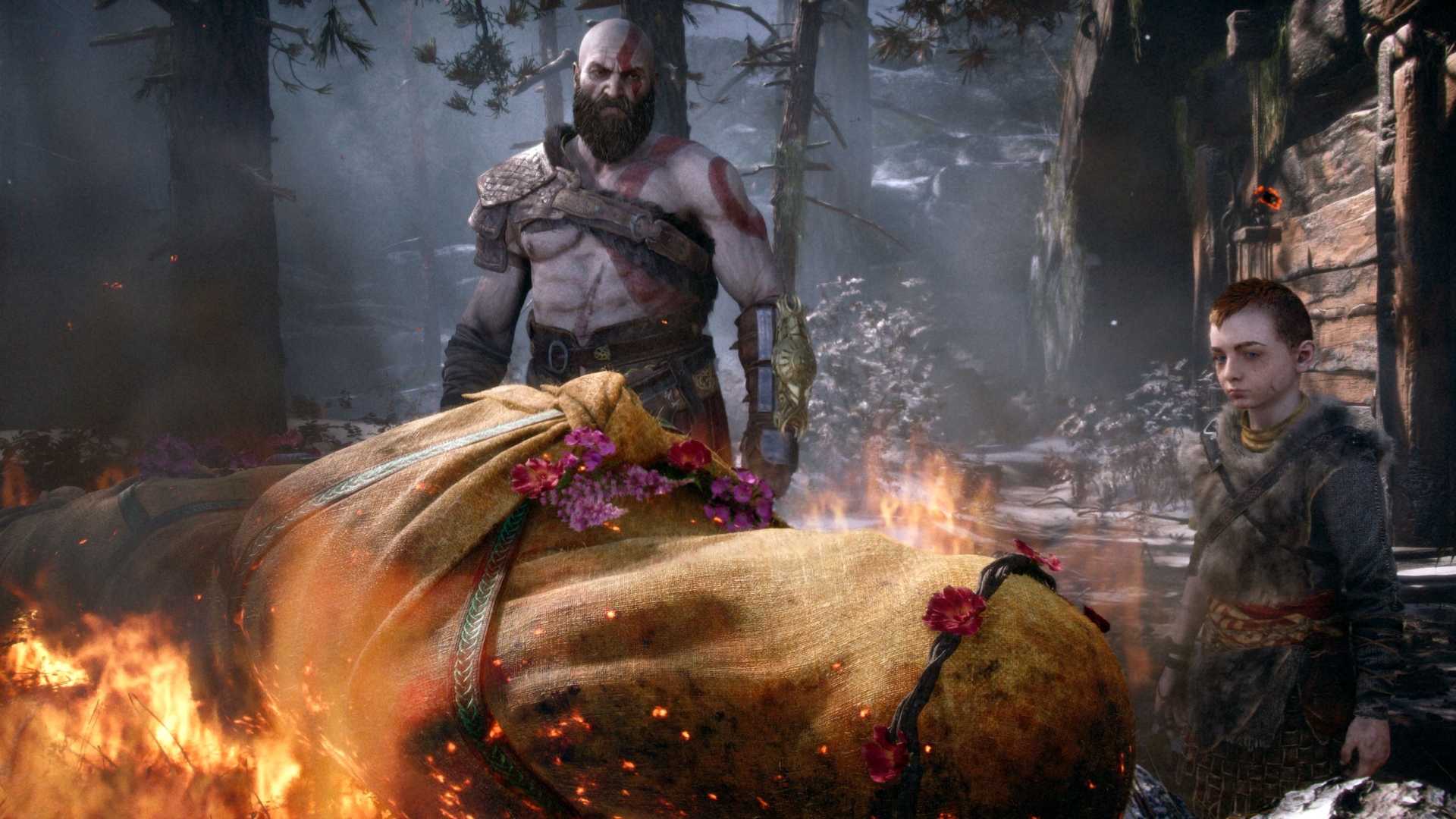
Since God of War Laufey isn’t a prequel and runs parallel with the other Norse games’ timelines, this opens the door for plenty of moments where the veil between worlds grows thin and Faye can see where Kratos and Atreus are on their journey. One of the main reasons I’m convinced that this is the case is because of Faye’s vision of Kratos in the Everywhen. Of course, it could simply be an illusion caused by the shock of being in a new world, but it’s also possible that it’s actually his spirit shifting into the Everywhen to help her.
-
 Santa Monica Studio
 -
 Santa Monica Studio
 -
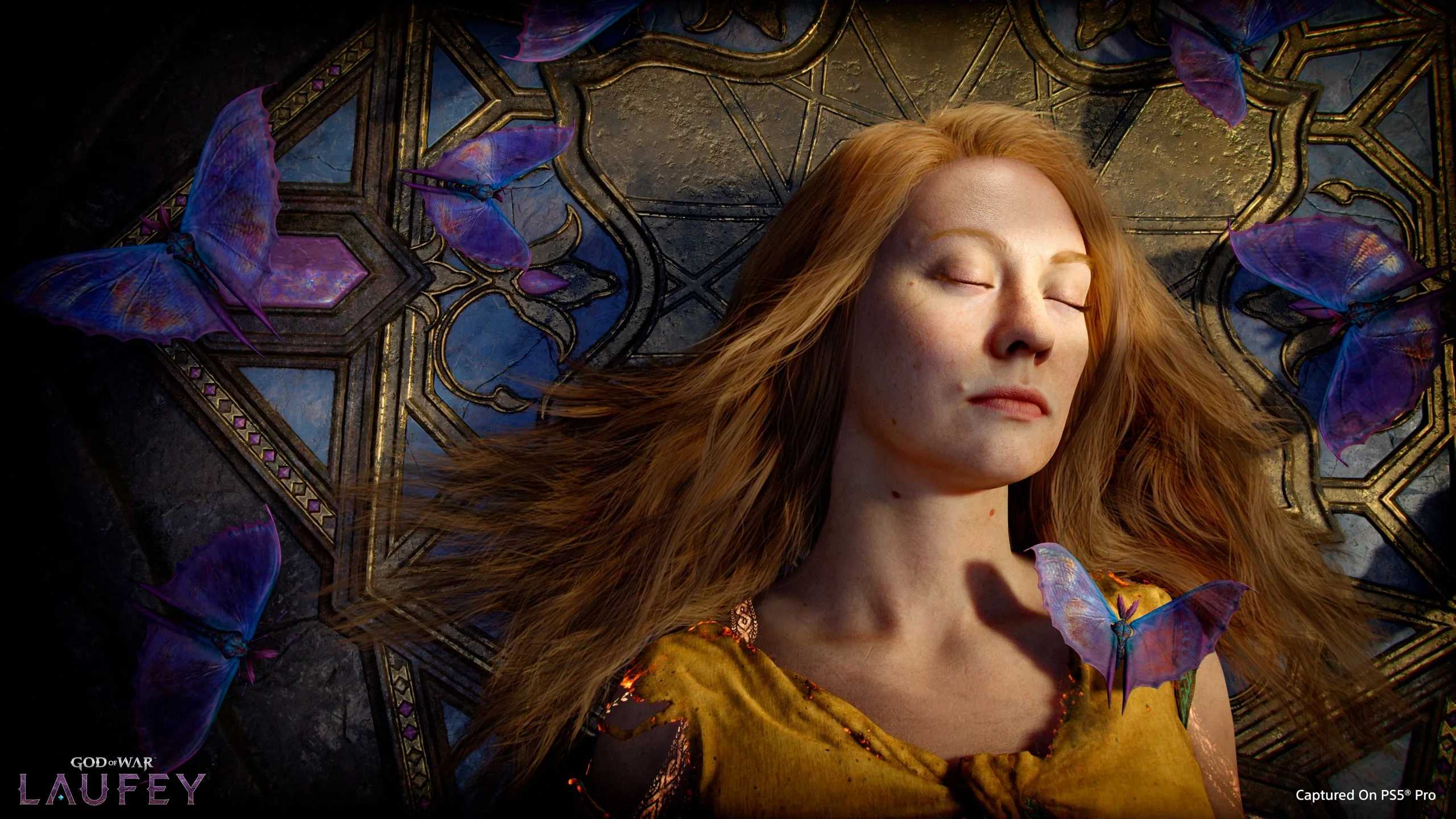
This current God of War era has leaned incredibly hard into the mind-melting magical aspects of Norse mythology, so this isn’t as far-fetched as it sounds. Based on the first two Norse games, it’s clear that Kratos isn’t aware that any of this is happening, so it’s not like he can appear in the Everywhen at will. However, Kratos and Faye’s bond as husband and wife could be so strong that they are still connected in a deeply mystical way despite being separated by death.
Two new side characters will accompany Faye on her journey: Phranque, a gelatinous cube, and Rue, a pair of ribbons attached to a mystical sword that is stuck in Phranque. There are already theories that the sword could be the legendary Excalibur.
Faye, on the other hand, is well aware of both realms now. If a vision of Kratos can appear in the Everywhen, then it means Faye can potentially reach the Norse realm and be the one to awake Jormungandr. She’s the perfect candidate to be the one who blew the horn, and it would add a much deeper layer to one of the most important moments in the God of War franchise.
Why Faye Needs to Be the One Who Blew the Horn
This isn’t a given, but if God of War Laufey reveals that Faye was the one who blew the horn this whole time, it will be one of the most emotionally impactful moments in the entire series. It turns a seemingly strange and head-scratching moment into an emotional gut-punch, because it shows that Faye never left their side, even if she can’t be with them physically. There are going to be plenty of gods in God of War Laufey that are going to make assisting Kratos and Atreus a lot more difficult, but that would only make her story that much more powerful.

Only time will tell if Faye was the one who blew the horn. God of War Laufey‘s release date is just as much of a mystery at the moment, but there are already leaks and rumors suggesting that the game could arrive as soon as spring 2027. Claims like these should be taken with a grain of salt, but early 2027 would be really exciting. If that’s the case, then fans may finally be getting an answer to the horn mystery, and Faye being responsible would make it well worth the wait.


- Publisher(s)
-
Sony Interactive Entertainment
- Number of Players
-
Single-player