




Despite the nearly twenty years that have passed since its launch, Rockstar co-founder Dan Houser still thinks Bully is an open-world game that’s “unlike any other games out there”—and I can’t help but agree. Sure, the open-world genre has only swollen in size since 2006, and that goes for budgets more than it does world space. But Bully‘s boarding school story still feels more distinct than most recent worlds that are a hundred times larger, and I can’t help but feel a sense of tangible loss when I consider that.
Speaking to IGN at San Diego Comic-Con, Houser’s overall point was simple enough, but the longer I’ve sat with it, the sharper it has stung, especially when it comes to the AAA space. Open-world games in that bracket have spent two decades chasing scale and stacking up square mileage, all while circling back to the same four or five essential settings. And ultimately, I think what Houser and a mostly forgotten Rockstar game have exposed—almost by accident—is how much the genre has stopped being about a sense of place at all.
Weird Open Worlds Vs. Risk Managed Settings
-

-

-
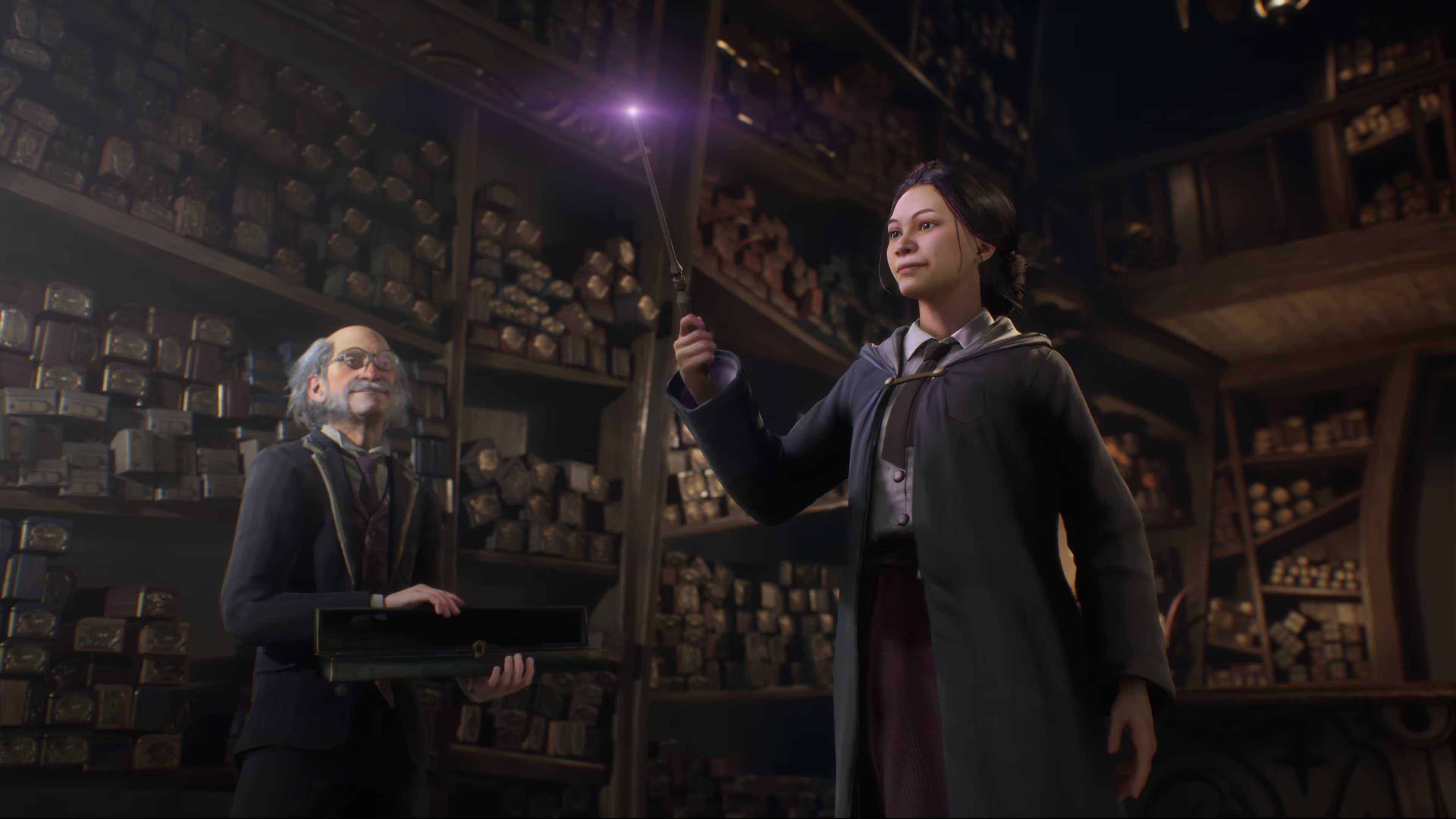 Image via Warner Bros. Games
The first open-world game I was explicitly allowed to play (I had snuck several others before) was Toy Story 3, specifically its free-roam “Toybox” mode. I understand that’s a bit of a hard pivot, but bear with me. I was eight—far too old for such things in my mind—and I remember it fondly as not necessarily great, but as distinctly strange; a licensed movie tie-in that had a budget, still made money, and broke the mold of what a licensed game was supposed to be all the while.

Guess the games from the emojis.
Guess the games from the emojis.
Easy (120s)Medium (90s)Hard (60s)
Back then, there was room for games like that; games odd enough that one reviewer in the time since has called it a “My First Open World Game.” The proof of that is in the pudding, as Avalanche Software, the studio behind the title, managed to feed that experience straight into Disney Infinity a few years later. Most recently, it developed Hogwarts Legacy—which is interesting, to say the least (more on that later).
That’s sort of the problem, though; fast-forward to 2026, and there has never been more to play—including more strange and singular indie stuff to play—than there is right now. But when one looks at the big-budget open-world space specifically, it’s plain to see that a genre that was once fizzy has gone flat. The largest, most expensive worlds keep landing on the same few templates—the fantasy kingdom, the post-apocalyptic wasteland, the modern crime city, the wilderness survival map—each prettier than the last, sure. But each is harder to tell apart, too.
Bullworth Was Done Right, and It Was Enough
-
 Image via Rockstar Games
 -
 Image via Rockstar Games
 -
 Image via Rockstar Games
Houser’s explanation for why Bully endures is disarmingly plain, but it diagnoses a malady present in the entire modern genre. As he states, “I think people are always looking for games that play like normal games, but with different tone and different setting. And Bully really found that.” The load-bearing word there is different, and given how unique Bullworth Academy is, it managed to work as the premise, the punchline, and the emotional engine. Protagonist Jimmy Hopkins’ ordinariness is the whole appeal, and the chance to claw out respect across a school’s cliques—Jocks, Nerds, Greasers—makes Bully‘s tonality and setting feel lived-in rather than laid out.
Part of that is design specificity, as Houser and other former Rockstar staff have described funneling their school memories—as bullies and bullied alike—into the fiction. But as you layer on Steven Olds’ art direction, the freedom of expression in gameplay, and the clever script, that specificity evolves into something more. The result is a unique world made “with integrity,” to borrow Houser’s phrase, rather than a safe, consumer-proven one that’s been assembled via checklist.
Of course, that kind of game was as truly radical then as it feels now, and just as other sources like GamesRadar had previously put it, Bully faced its fair share of pushback and moral panic at the time. In fact, that same panicky wave swallowed another boarding-school game, the horror title Rule of Rose—whole, pulling it from shelves across parts of Europe, only surviving today as a pricey collector’s oddity. Fortunately, Rockstar’s already controversial clout and the game’s obvious sincerity carried Bully through in the end.
Protagonist Jimmy Hopkins’ ordinariness is the whole appeal, and the chance to claw out respect across a school’s cliques—Jocks, Nerds, Greasers—makes Bully‘s tonality and setting feel lived-in rather than laid out.
That said, I think sincerity is the most important signal there, as Rockstar Games Presents Table Tennis—a straight-faced ping-pong sim from the studio best known for carjacking—also came out in 2006. Officially, it was a tightly executed showcase for the new RAGE engine that would go on to power GTA IV and Red Dead, but the spirit of the thing was risky even still; fueled by a sense of whim that didn’t preclude quality. Sam Houser said table tennis “fitted the bill” because it was interesting and nobody had nailed it in a game.
What’s Changed About the AAA Open World
Table tennis aside, these once foundational pillars of the “different” game—integrity, sincerity, risk—are what I think many modern AAA open worlds are missing as they continually fail to distinguish themselves from one another. And there is no single villain to blame; rather, there is a set of pressures that all pull in the same direction, despite the odd genius of Elden Ring or Breath of the Wild that proves the format can still feel electric and strange. The real trouble is concentrated at the top, above the genre that is the “open world,” where the biggest budgets inspire the least daring.
Nowhere is that clearer than the template grinding gamers now call “Ubisoft-like.” It’s a routine most gamers intuitively understand now: climb a radio tower, clear a camp, hoard collectibles, and repeat until the credits roll or their interest utterly gives out. Ubisoft perfected it across games like Assassin’s Creed and Far Cry, and by the time everyone else had copied it, a genre predicated on the self-evident rewards of exploration had hardened into a chore list because collectively, players (myself included) just kept buying it.
The Trend in Gaming Economics Won’t Allow It
The modern business standard for these big companies makes developmental timidity seem brutally sensible, even for a company like Rockstar. GTA 6 has reportedly cost billions of dollars to develop, and while that’s the very top of the budget spectrum, the point stands that these games are becoming very expensive to produce. So, when a single title puts so much on the line, of course, the decision-making would tilt hard toward loss aversion; no executive looking to widen profit margins would ever green-light a 300-million-dollar experiment about a fifteen-year-old surviving detention.

The other gravity well is live service, the decade-long stampede to turn every big release into a multiplayer vehicle that continually prints cash, like Fortnite or GTA Online. It’s such a drive that even after former Sony boss Shawn Layden warned that the live-service road is littered with studios that chased Fortnite and got flattened, Sony still can’t stop stepping on rakes to chase the trend. When all that creative energy is poured into retention funnels and battle passes, dreaming up the next unique setting and experience seems like a pipe dream.
An Ode To Weird Worlds
Ultimately, I’m not sure anyone has a broad spectrum grip on what’s changed, let alone the cure. But from a place of experience and insight few people have ever occupied, Houser put his finger on something tangible: the big-budget end of the genre has drifted steadily toward the safe and the proven, and it has lost some of its nerve along the way. That drift is why a twenty-year-old game like Bully can still feel more alive than a brand-new continent rendered in eye-watering detail.
Frankly, the studio behind my own first “avowed” open world proves that point well, as Avalanche Software took its weird little Toybox and leveraged it to build Hogwarts Legacy—a gorgeous, shallow, and exceedingly safe fantasy world—the exact sort of timid time sink the whole genre keeps surrendering to. So here’s to the games that show us what we’re missing, all these years later; the ones that took real money and spent it on something strange because its developers wanted to. Long live weird games that take risks, and long live Bully.

- Released
-
October 17, 2006
- ESRB
-
T For Teen due to Crude Humor, Language, Sexual Themes, Use of Alcohol and Tobacco, Violence
- Developer(s)
-
Rockstar Vancouver
- Engine
-
RenderWare, Gamebryo