


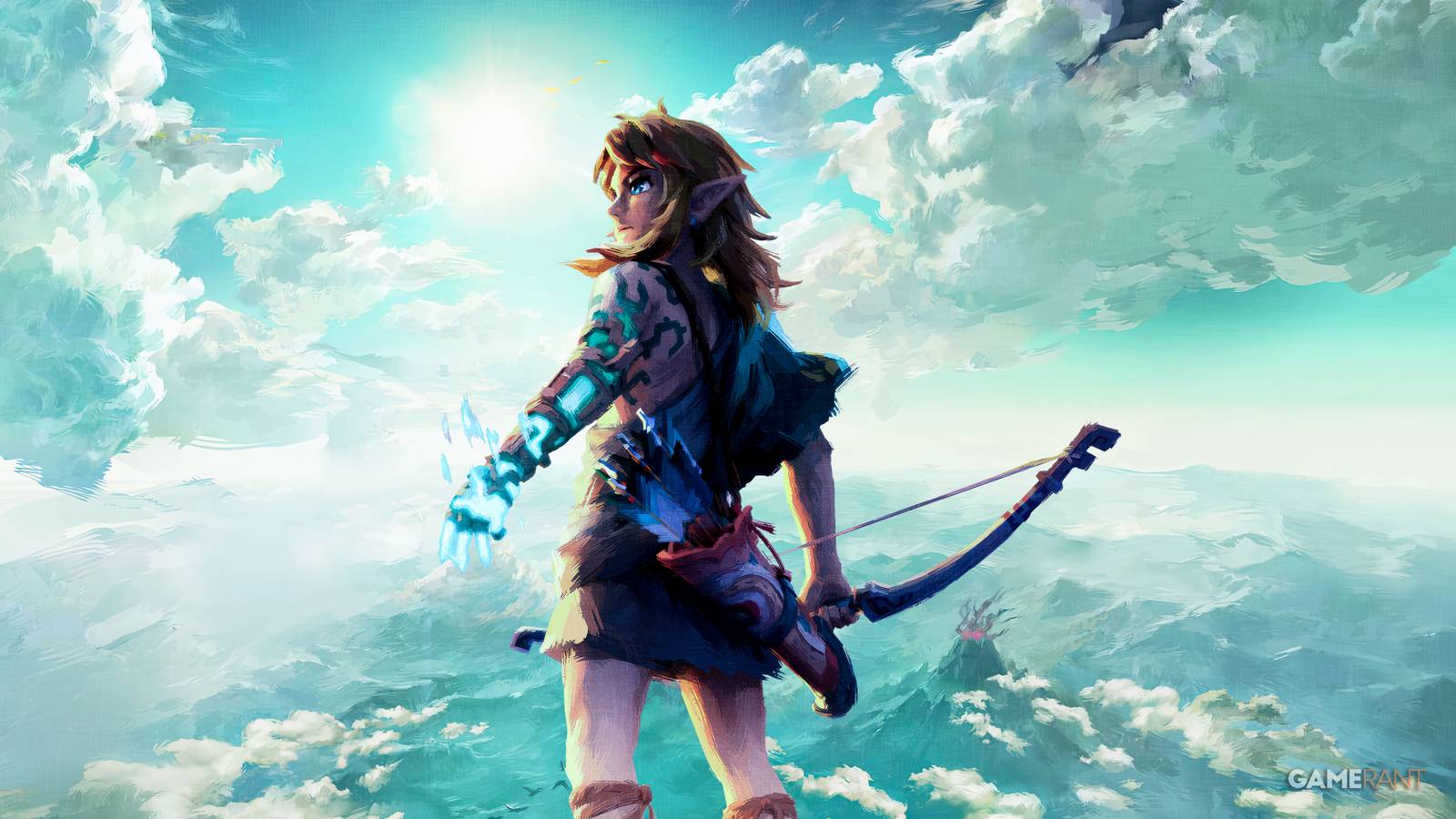
With The Legend of Zelda, Nintendo has spent nearly forty years building incredible games in this franchise around unique gameplay mechanics, from the humble hookshot to the world-altering Sheikah Slate. As such, it’s no surprise that Ultrahand, the physics-warping grabber at the heart of Tears of the Kingdom, might be the most impressive of the entire lot. That said, the smartest move the next open-world Legend of Zelda game could make is to leave that iconic Tears of the Kingdom ability behind entirely.
That may sound like heresy to modern fans of the franchise, especially given how thoroughly Ultrahand defined that title and swallowed the discourse for the better part of a year. But Nintendo has long treated its signature mechanics as one-and-done experiments, and there is a strong case to be made that this grabber has already run its course. I’d argue that clinging to it now might diminish the exact quality that made Ultrahand thrilling in the first place.
Tears of The Kingdom’s Ultrahand Was Innovation at Its Finest
Of course, that sentiment is not to bash Ultrahand, as the mechanic is ingenious, turning Tears of the Kingdom‘s Hyrule into an even greater sandbox for construction governed by consistent, trustworthy rules. Every object carries weight, every joint relates to the load it carries, and the physics engine mostly honors whatever contraption players bolt together, however unhinged the design. That underrated reliability may be unglamorous, but it’s a generational foundation on which everything more spectacular can be built.
Ultrahand gave real authorship to the player, too, all whilst feeling rewarding no matter how it’s used. It meant that two players might never solve a shrine quite the same way, and that bridges, mechs, siege catapults, and flying machines that had no business staying airborne all emerged from the same small handful of tools. A mechanic with that kind of systemic freedom is difficult to design and easy to underestimate, and it is a large part of why the mechanic aged so gracefully over the months that followed.
Nintendo has long treated its signature mechanics as one-and-done experiments, and there is a strong case to be made that this grabber has already run its course.
Metatextually, Ultrahand also provided so much content to enjoy online. Within days of launch, the internet was littered with clips showing off walking war machines, elaborate Korok-torture devices, and vehicles that defied both physics and good taste. It was incredible, a rare time when opening up social media turned out to be fun, and it certainly didn’t hurt that every clip was also a first-rate free advertisement for the game.
Ultrahand Had Its Time in the Sun
The thing is, the next open-world entry for this franchise—whatever that may be—would be the third act for an idea like Ultrahand, not the second. The Legend of Zelda: Echoes of Wisdom arrived with the Tri-Rod, Bind and Reverse Bind in 2024, a tool and pair of abilities that revived the object-grabbing core of Ultrahand inside a smaller top-down adventure. Of course, that doesn’t mean it’s the exact same thing, but watching Zelda haul a boulder out of the earth with a green tether felt awfully familiar nonetheless.
And in a sense, Echoes of Wisdom suffered from that familiar feeling. Players and reviewers alike noted that Bind often felt redundant once the echo system could conjure beds, platforms, and monsters on command, leaving the grabber more like a tool many players had forgotten they were carrying than a core gameplay conceit. Despite the marked differences between Bind and Ultrahand in actuality, I’d say that it remains a fairly loud signal that this concept is approaching its ceiling.
Ditching Ultrahand Is the Smart Move
Ultimately, the strongest argument for retiring Ultrahand comes down to opportunity cost, as Nintendo’s flagship mechanics work best when they own the entire game. They should shape puzzle design, traversal, and combat from the foundation up, and though Ultrahand fully earned that spotlight in 2023, something else should take over from here. Bolting that onto a fresh headliner alongside something new risks delivering two half-realized systems in place of one exceptional one.
I’d argue that clinging to it now might diminish the exact quality that made Ultrahand thrilling in the first place.
I’d wager that also rings true in terms of the hardware The Legend of Zelda relies on, too. The Switch 2 is a serious step up from the original console, yet Ultrahand’s constant physics simulation certainly seems like a budget complexity that might be better spent on something new and more surprising. Clearing that overhead by doing away with the system might give the next big idea room to breathe instead of forcing it to share a stage it should be commanding outright.

Doing away with Ultrahand would also track with the natural progression of this franchise, historically speaking. The franchise consistently reinvents itself mechanically: the Ocarina of Time, Wind Waker‘s sailing, the trains of Spirit Tracks; each of these systems anchored exactly one game before the series politely showed it the door. Ultrahand has already had its defining showcase, and the pattern says its natural successor is something we have not seen yet.
A fresh slate really does mean there’s no limit to what might come next, but the rumor mill seems to be offering a tempting preview of what the next big gameplay gimmick might look like. Persistent leaks about the next open-world game point toward some form of dimension-shifting traversal, which sounds like the sort of reality-bending hook that could reinvent puzzle-solving the way Ultrahand did through building. Of course, Nintendo has announced precisely nothing, at least not yet, but regardless of whether that specific concept pans out or not, the appetite for a clean-slate mechanic could hardly be clearer.
Room to Build Something New
Again, none of this is a knock on Ultrahand, which has more than earned its place among the series’ great tricks and toys. The point is that its brilliance came from arriving unannounced and rewriting the rulebook, and no amount of iteration can recapture that feeling by running the same trick a third time. Reverence and repetition are two very different things, and this series has always understood the gap between them.
The Legend of Zelda has never been a franchise that clings to its own best ideas, choosing instead to bury them and dig up something stranger. The best move Nintendo could make with Ultrahand is to treat it as a finished chapter and trust itself to write a far better one from scratch. After all, that trust—more than any single gadget—is the reason we keep showing up for each new vision of Hyrule.